Premium clothing trims are rarely what a customer notices from three metres away. They show up the moment the garment is in someone's hands: the weight of a button, the cool touch of a metal aglet, the density of a woven label, the sound of a zipper. Heading into 2026 the direction is clear. Premium no longer means a big logo; it means construction, careful finishing and a confident brand point of view. Here are ten trims that lift perceived value far more than they cost.
1. Natural-material buttons
A plastic button gives itself away at a glance: uniform, light, with a glossy edge. Mother of pearl, corozo, coconut and wood have a natural structure, and every button is slightly different. On a shirt, a 10–11 mm four-hole pearl button is the surest signal of quality. On a jacket or coat, corozo gives a depth of colour polyester struggles to imitate. Explore our natural buttons, including Trocas, Akoya and river shell, corozo, wood and coconut.
 Mother-of-pearl buttons River 02
 SHELL 17 WHITE – Classic 4-hole river shell buttons, durable and designer-made
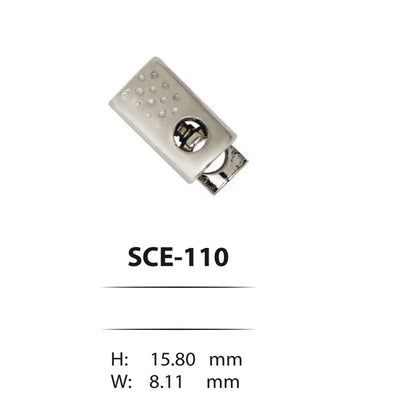
 Metal cord and elastic stoppers 110 – single hole (5 mm), dotted design
2. A woven jacquard label instead of a printed one
A jacquard label is woven, not printed, so it does not fade or peel in the wash. Fine weaving holds logo detail down to roughly 4 mm, and a dense damask looks and feels high-end. Add a centre fold or folded ends and the label sits neatly without scratching.
3. Metal cord ends
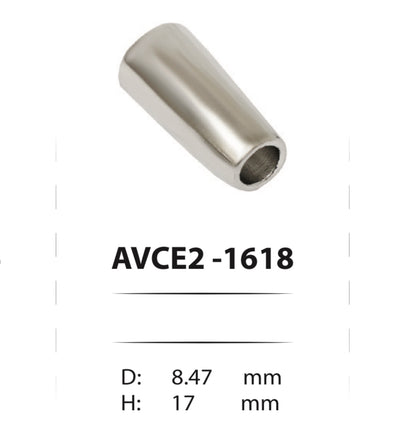
Plastic or heat-shrink aglets are the default. A metal aglet in gold, silver or matte black instantly turns a basic hoodie into something that feels boutique. It is also practical: the weight helps stop the cord vanishing into the casing. Browse our metal cord ends and stoppers in several lengths and finishes.
4. A metal logo badge
A small metal plate, say 3 x 0.8 cm, on a pocket, waistband or bag creates recognition without a single word of copy. It works especially well on denim, knitwear and leather goods. Metal logo badges are made to order, so get in touch for a sample.
5. Logo elastic
On underwear, swimwear and activewear, a jacquard elastic with the brand name is where the logo is naturally on show. It combines function and branding and looks far more expensive than plain elastic. Minimums are higher, so it suits styles that repeat.
6. A zip puller with character
A standard slider looks standard. A metal puller in antique brass or gunmetal, or one carrying your logo, turns the zipper into a feature. On jackets and bags it is the detail customers touch most often.
7. Grosgrain or satin hanger loops
Hanger loops in the shoulder seams of dresses and blouses are a small detail that says "this garment was thought through". Grosgrain has a pronounced rib and holds its shape; satin is softer and more luxurious. A branded ribbon with your name is the next level. See the ribbons and tapes in our range.
8. Contrast or heavier topstitching thread
Visible topstitching in a heavier thread, whether classic golden tan on jeans or tone-on-tone on a coat, highlights the cut and signals precision. There is no hiding place here: contrast thread exposes every wobble, so it only works with good execution.
9. One finish for all metal trims
One of the commonest mistakes that cheapens a garment is mixing finishes: a gold button, a silver zipper, a black aglet. Choose one finish, such as antique brass or gunmetal, and apply it to every metal detail on the style. Consistency reads as a design decision. For metal in contact with skin, choose nickel-free options.
10. A care label that doesn't scratch
It sounds minor, but it is the number one reason customers cut labels out, losing both the care information and your brand. A soft satin or woven composition label in the side seam rather than at the neck shows respect for the wearer. Remember that composition labelling is mandatory under Regulation (EU) 1007/2011.
Choosing which details to use
You do not need all ten at once. In fact, too many "premium" touches backfire and the garment starts to look overworked. A better approach is to pick two or three details based on the garment type and where the customer touches it:
- Shirt: pearl buttons, a centre-fold woven label, a soft care label.
- Hoodie: metal aglets, a jacquard main label, a metal badge on the pocket or cuff.
- Jeans: button and rivets in one finish, contrast topstitching, a waistband patch.
- Dress: satin hanger loops, an invisible zipper with a fabric-matched slider, natural buttons.
- Jacket: a characterful zip puller, metal eyelets and buttons in a single finish.
Before bulk production, put a sample with standard trims next to one with premium trims. The difference is usually obvious, and the extra cost per piece is often smaller than you expect.
What does "premium" cost?
| Detail | Impact on perception | Complexity |
|---|---|---|
| Natural buttons | High | Low, from stock |
| Metal aglets | High | Low, from stock |
| Jacquard label | High | Medium, made to order |
| Metal logo badge | Very high | Medium, needs a mould |
| Logo elastic | High | Higher, larger quantities |
| Single metal finish | Medium | Low, just planning |
Tip: start with stock details (buttons, aglets, ribbons). They deliver the biggest effect for the lowest spend. Add branded metal hardware once the style has proved itself.
FAQ
What is the cheapest way to make a garment look more expensive?
Change the buttons. On a shirt or jacket, natural buttons cost little per piece but change the whole feel.
Should every metal trim carry a logo?
No. One or two branded details are enough; the rest are better kept clean and in a single finish.
Can I order a set of trims in one finish?
Yes. Bul-tex manufactures and supplies trims and can put together buttons, aglets, rings and zippers in a matching palette. Contact us for a proposal. You will find more ideas in the Buttons section.