A metallic thread woven label is one of the quickest ways to signal luxury: as the garment moves, the metallic yarn catches the light and the logo glints. Behind that effect, though, lie technical trade-offs – metallic yarn is stiffer, more expensive and not right for every detail or every spot in a garment. This article explains what Lurex actually is, how it is woven into a label, where its limits lie, and when you are better off achieving the same feel with gold-coloured polyester, satin or a metal plate.
What Lurex is
"Lurex" started life as a trade name, but the word is now used for metallised yarns in general. Modern metallic yarn is usually not real metal: a thin polyester film is coated with aluminium by vacuum deposition, tinted (gold, silver, copper) and slit into very narrow strips. These can be used alone or wrapped around a polyester or nylon core yarn for extra strength.
The result is a light, non-tarnishing sparkle – far more practical than the historic threads of real gold and silver, which darkened over time.
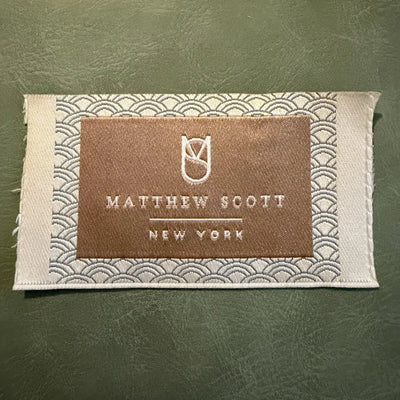
 Jacquard woven label LBL 0024 8 x 4.5 cm – gold effect, premium wavy design, with logo
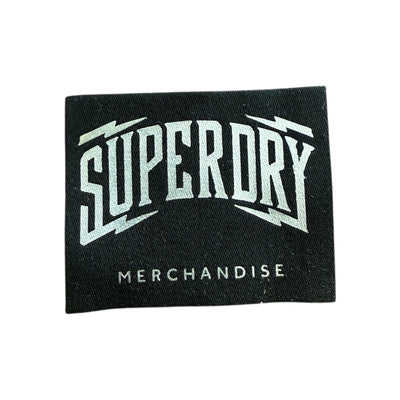
 Jacquard woven label LBL 0046 5 x 5 cm – black background with gold letters, premium design, soft style, with logo
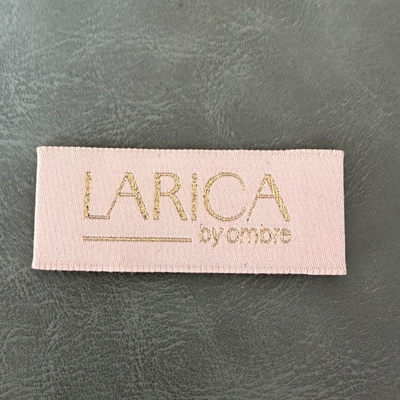
 Jacquard woven label LBL 0060 5 x 2 cm – ecru base with gold lettering, soft premium design, with logo
How it looks in a woven label
In a jacquard label, metallic yarn is normally one of the weft colours – used for the logo, a border or a single detail. The warp and the other elements are standard polyester yarns. Options include:
- Metallic logo on a dark ground – the classic: black or navy with gold lettering.
- A metallic border or line – subtler, good for minimalist brands.
- An all-metallic ground – striking, but the stiffest and most expensive option; rarely a good idea next to the skin.
The limits: why it is not always a good idea
Stiffness and itch
Metallic yarn is flatter and stiffer than polyester thread. The more area it covers, the stiffer the label and the more likely it is to irritate skin, especially at the neck. Stiff synthetic yarns are one of the common reasons labels feel scratchy.
Less detail
Metallic yarn is usually thicker than the fine yarns used for HD weaving, so very small text and hairlines get lost. A logo for metallic thread should be bolder and simpler.
Cost
Every extra colour or speciality yarn adds to the cost of a woven label, and metallic yarn is among the pricier ones. It also adds set-up time.
Care
Metallised film dislikes high heat and bleach. Ironing straight onto the label on a hot setting can distort or dull the yarn. Iron from the reverse and wash at up to 40 °C.
Decision table
| Situation | Lurex | Alternative |
|---|---|---|
| T-shirt neck label | Only as a small detail | Yellow ("gold") polyester thread – soft, no shine |
| Evening dress, blazer, coat | Yes – the label sits on the lining, not the skin | — |
| Lingerie, babywear | No | A soft-edged satin label |
| Jacket, bag, accessory | Possible | A metal label – a stronger luxury accent |
| Very small logo or fine text | No | HD jacquard in a contrasting colour |
| Gift packaging, hang tag | — | Gold foil on the hang tag |
A gold effect without metallic yarn
Many labels described as "gold" actually use an ochre-yellow polyester yarn that reads as golden against a dark ground. It is soft, holds more detail and costs less. Our labels collection includes jacquard designs with a gold effect and gold lettering on black or ecru grounds – a handy way to see the effect in person before deciding whether you need real metallic shine.
Preparing artwork for metallic yarn
- Limit the metallic area. Metal works best as an accent – the logo or a line, not the whole label. Around 15–30% of the surface is usually enough.
- Thicken the lines. Fine serifs and lines under roughly 0.5 mm get lost. Go for a bolder typeface and simple shapes.
- Pick a contrasting ground. Gold shines most on black, navy, burgundy and bottle green. On white or beige the effect is more muted.
- Check the reverse. In jacquard weaving the metallic yarn also floats on the back. If the reverse will show (a folded label, a loop), see how it looks.
- Specify the shade. Gold comes in many tones – pale, rich, rose, antique. Give a sample or reference, not just the word "gold".
Combinations that work
- Jacquard label + metal plate. The woven label carries the brand at the neck, while a small metal plate (nickel or gunmetal) sits on the outside of a sleeve or pocket. The shine is where people see it, not against the skin.
- Satin + a metallic touch in the logo. A soft printed satin label, with metallic yarn limited to a single thin line.
- Metallic yarn in tape. A narrow metallic edge in a jacquard tape for hanger loops or waistbands.
- A folded label. The metallic logo faces out, while the soft back sits against the skin.
Tip: ask for a sample and wear it sewn into a real garment for a full day. Itch shows up after hours, not at your desk.
FAQ
Is gold thread real gold?
Almost never. Modern metallic yarns are metallised polyester with an aluminium coating and a tinted lacquer.
Does Lurex tarnish?
Metallised yarns do not oxidise like real metal, but they can lose their shine with bleach, high temperatures and harsh detergents.
Can I order a label with metallic thread?
Bul-tex manufactures woven labels to customer designs. Describe the effect you are after via our contact page and we will suggest an option – metallic yarn, "gold" polyester, or a combination with a metal label. For more premium detail ideas, see our manufacturing articles.