Activewear labels have a harder job than any other label: they must survive sweat, friction, stretch and frequent washing, while staying unnoticeable during a run, a yoga class or a heavy lifting session. A sportswear customer notices a scratchy label on the very first workout – and often cuts it out, along with your brand and care information. This guide goes garment by garment through where to put the label, what it should be made of and when it is better to have no sewn-in label at all.
Why activewear is different
- Movement and friction. When running, the edge of a neck or waistband label rubs against the skin thousands of times per session.
- Sweat and salt. Moisture softens the skin and makes it more sensitive to edges; salt on the edge of a stiff label acts like sandpaper.
- Stretch. Jersey with elastane stretches 50% or more; a non-stretch label sewn flat onto it restricts movement and can pop the seam.
- Close fit. Leggings and sports bras are skin-tight, so any label shows through the fabric.
- Frequent but cool washes. Sportswear is washed often, usually at 30–40 °C, without fabric softener.
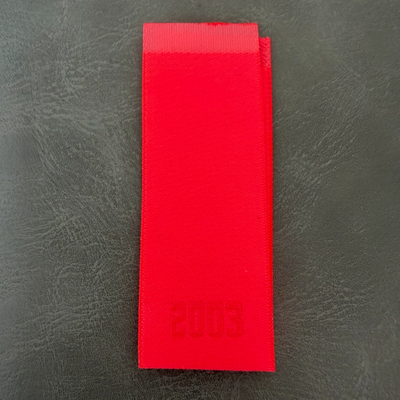
 Satin label 3 cm x 6 cm - color print
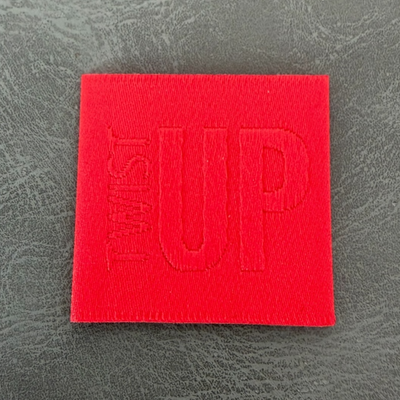
 Satin label 6 cm x 3 cm – printing on satin ribbon
 Woven label 10 cm x 1.5 cm – satin print
Three approaches to branding and information
1. A soft sewn-in label
A soft printed satin label or a slim woven label with a well-sealed edge, sewn where it will not rub. The cheapest and most flexible option, well suited to small brands and short runs.
2. Tagless
The information is heat-transfer printed straight onto the fabric – a thin, stretchy layer that moves with the garment. We cover the pros and cons of this method in our article on tagless garments in the labels section.
3. TPU, silicone and reflective logos
For external branding, sports brands use TPU labels (transparent, flexible, heat-applied), 2D/3D silicone transfers and reflective logos. They do not chafe, they stretch and they look technical. They need a heat press and the right temperature, time and pressure, and they are made to order.
Garment by garment: where to put the label
| Garment | Branding | Content and care |
|---|---|---|
| Leggings | Transfer or small logo on the outside at the back waist or thigh | Soft satin in the side seam of the waistband, never centre back; or printed inside |
| Sports bra | Transfer below the neckline or on the back | Printed inside, or satin in the under-band at the side |
| Running tee | Printed inside the neck plus a chest transfer | Satin in the side seam, 8–10 cm above the hem |
| Shorts | Flag label on the leg or a transfer | Satin in the side seam of the waistband |
| Sweatshirt / hoodie | A woven neck label is fine, plus a flag or metal label outside | Satin in the side seam |
| Running jacket | Reflective logo, metal or woven label outside | Booklet label in a pocket or the lining side seam |
Rules for sewn-in labels on sportswear
- Side seam beats centre back. Centre back at the neck and waist is the highest-friction zone in motion. A label in the side seam, 5–10 cm above the hem or below the waistband, is barely felt.
- Soft material, small size. A satin label around 3 × 6 cm or smaller; avoid stiff taffeta.
- The edge decides. Ultrasonic cutting or a centre fold, so no raw cut edge faces the skin.
- Sew one end only. A label caught in the seam by its top edge moves with the fabric and does not restrict stretch.
- Use a stretch stitch. When attaching to elastane jersey, use a coverstitch or zigzag and polyester thread that can take the stretch.
Field test: give samples to three people to train in for a week and wash normally. If anyone cuts the label out, change the material or the position – before production, not after.
External branding that works on sportswear
- A slim woven flag label – sewn into a hem or sleeve seam, visible and durable. Works well on sweatshirts, shorts and tops.
- A small metal label – fine for hoodies, anoraks and gym bags, but not for leggings and bras, where it is felt against the body and against equipment.
- A reflective logo – useful for evening running gear. Note that a decorative reflective logo does not turn a garment into high-visibility clothing under EN ISO 20471, the standard for personal protective equipment.
- A silicone 2D/3D transfer – a raised, flexible logo with a premium feel.
What to put on the care label
Performance fabrics – polyester and polyamide with elastane – dislike heat. Typical instructions are wash at 30 or 40 °C, no bleach, no fabric softener (it clogs technical fabrics and reduces moisture wicking), no tumble dry or low heat only, and low-temperature ironing if at all. Correct washing extends the life of elastane; missing instructions are the most common reason customers shrink their leggings in the dryer.
Trims around the label
The label is only one part of a sports garment. Waistband and bra-band elastics must cope with the same conditions – a soft knitted elastic with good recovery matters as much for comfort as the label does. For hoods and joggers, see our accessories – cord stoppers, cords and cord ends.
FAQ
Can leggings have no care label at all?
Composition is mandatory and must be durable and legible – if you do not want a sewn label, it can be printed inside. Care instructions are not mandatory in the EU but are strongly recommended.
Are woven labels suitable for sportswear?
Yes, if they are slim, soft, well sealed at the edge and placed outside or in a side seam rather than centre back at the neck.
Labels from Bul-tex
In the Bul-tex labels collection you will find soft printed satin labels, slim jacquard labels suited to flag or side-seam use, and small E-series metal labels for external branding on hoodies and tops. TPU, silicone and reflective transfers are not stock items – for those, and for labels made to your design, contact us via the contact page.