

Buying wholesale sewing trims is one of the easiest ways for a workshop to protect its margin without raising prices for customers. Buttons, zippers, elastics and thread look like small change individually, yet over a year they add up to a serious line in the budget. The difference between buying "five buttons when I need them" and running a planned stock is not just the unit price; it is also the lost time, the extra trips to the shop and the alterations that sit waiting because a single zipper is missing. This guide explains how wholesale packs are sized, when buying in bulk genuinely pays off, and when it is smarter to order exactly what you need.
How trims are sold wholesale: the units
The first surprise for ateliers moving to a wholesale supplier is that nothing is counted by the piece. Each trim category has its own trade unit, driven by how it is manufactured and packed.
| Trim | Typical wholesale unit | Why |
|---|---|---|
| Buttons | A gross (144 pcs) or packs of 100 / 1,000 | Counted by weight and bagged in standard quantities |
| Elastics | 25 m roll (sometimes 50 m) | Woven or knitted and wound on fixed-length rolls |
| Zippers | Packs of 10, 50 or 100 in one length and colour | Produced in batches by gauge, length and colour |
| Ribbons and tapes | 25–100 m rolls | Also a woven, roll-based product |
| Snaps, eyelets, rivets | Sets of 100, 500 or 1,000 | Each unit has 2–4 parts set with a press or machine |
| Thread | Industrial cones of a fixed length | Many times larger than domestic spools |
In our own range, for example, elastics come on 25 m rolls, while buttons are sold in quantities that depend on the model. Once you know the unit, comparing quotes becomes easy: divide the price of a 25 m roll by 25 and you have the real price per metre to set against what your local haberdasher charges.
 Metal zipper closed-end brown / gold teeth T5 PMZ1008
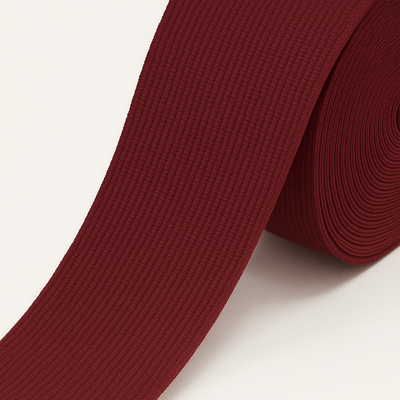
 Wide white knitted elastic band
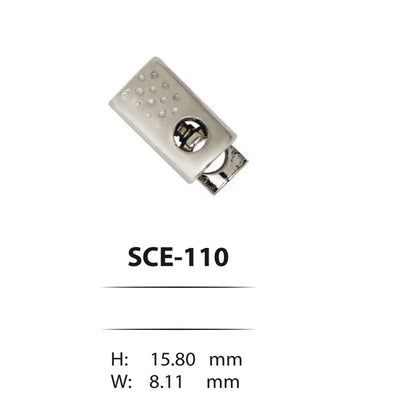
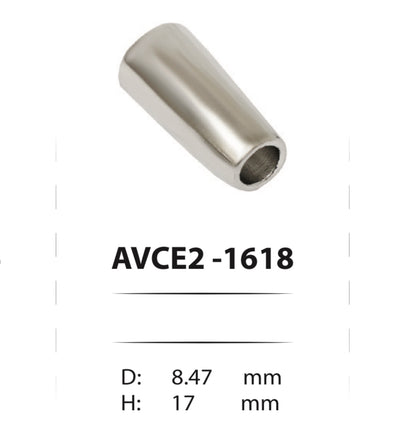
 Metal cord and elastic stoppers 110 – single hole (5 mm), dotted design
When wholesale really pays
Wholesale does not automatically mean cheaper. It pays when three conditions are met at the same time:
- You use the item regularly. Black 2–3 cm elastic, white 10–11 mm shirt buttons and closed-end No. 3 coil zippers in 18–20 cm are items an alterations shop reaches for every week.
- The item does not date. Neutral colours (black, white, ecru, navy, beige) and classic sizes never go out of style. This season's trend shade can sit in a box for years.
- You can store it properly. Elastic loses stretch in sunlight and heat, and metal trims dislike humidity. Without a dry, dark shelf, a large quantity can deteriorate before you use it.
Rule of thumb: if you use at least half of a trade unit within three months, buy wholesale. If not, buy less or split the order with a fellow workshop.
What to stock in bulk and what to buy as needed
Stock in bulk (core inventory)
- Sewing thread in core colours (black, white, navy, grey, beige) in No. 120 for light and medium fabrics and No. 80 for heavier seams.
- Elastic in three or four widths: 1 cm (cuffs, lingerie), 2–2.5 cm (skirts, children's trousers), 3–4 cm (joggers), 5–6 cm (wide waistbands).
- No. 3 coil zippers in standard lengths and neutral colours, plus invisible zippers for dresses and skirts.
- White and black 10–11 mm shirt buttons and 15–17 mm trouser buttons.
- Trouser hooks and bars, which come up constantly in alteration work.
Buy as needed (per job)
- Decorative metal buttons and natural-material buttons for a specific design.
- Fashion-colour zippers and ribbons.
- Metal buckles, rings and pullers that depend on a client's design.
- Branded trims, which are never "stock" items but made to order for a specific label.
Price breaks and how to use them
Most manufacturers and wholesalers drop the unit price in steps, for instance at 100, 500 and 1,000 pieces. The reason is simple: packing, order handling and shipping cost roughly the same for a small and a large order, so the cost spreads across more units. Plan purchases by the quarter rather than by the week. One larger order instead of four small ones usually saves on both the unit price and delivery.
Watch out for the "next break" trap. If you need 300 buttons and the price at 1,000 is 20% lower, you are really paying for 700 buttons you may never use. Compare the total spend, not just the unit price.
Organising your workshop stock
- Boxes by category and size. Zippers by length and colour, buttons by diameter in millimetres, elastics by width.
- Reorder points. Set a minimum for each core item, for example "reorder below 5 m of black 3 cm elastic".
- First in, first out. Use older elastic rolls first, because the rubber inside ages over time.
- Keep the supplier code. When you reorder, a code (PEL or WE for our elastics, PUB for shirt buttons) guarantees the same colour and size.
Opening a trade account with a supplier
Most wholesalers work with businesses and ateliers, offering invoices, payment terms for regular customers or better conditions for repeat orders. To get started, prepare:
- Your company or sole-trader registration details.
- An approximate monthly volume by category, which helps you get a realistic quote.
- A list of 10–20 key items you buy constantly.
- Delivery preferences. For orders outside Bulgaria we ship with DHL Express across the EU.
Bul-tex manufactures and supplies trims for the garment trade, from zippers and elastics to buttons and metal accessories. If you buy steady volumes or want to set up regular deliveries, get in touch and we will suggest sensible quantities.
FAQ
How big does an order need to be to count as wholesale?
There is no universal threshold. For elastics a single 25 m roll is already a trade unit; for buttons it is a gross or a hundred. What matters is buying in the manufacturer's unit rather than repacked retail quantities.
Can I mix colours in one pack?
Usually not. A roll or pack is one colour and one size because that is how it is produced. You can, however, combine different items in one order to reach a better overall total.
Is it worth splitting an order with another workshop?
Yes, especially for items sold in larger units. Two ateliers using the same black elastic can easily share several rolls and both benefit from the lower price.
You will find more practical advice for workshops in the Manufacturing section of our blog.