


The ISO 3758 care labelling standard has a new edition: ISO 3758:2023 changes published on 6 December 2023 replace the 2012 version. For most shoppers the differences are barely noticeable, but for brands that prepare their own label artwork they matter. There are new symbols, several familiar ones have been redrawn, and the list of solvents for professional cleaning has been expanded. Here is a summary of what is new, why it happened, and what to do with your care labels at your next reorder.
Why the standard was revised
Care symbols have two "owners". One is the international standard ISO 3758; the other is GINETEX, the association that holds the symbols as registered trademarks in many countries and licenses their use. Over the years small graphic and definitional differences built up between the two. The main goal of the 2023 revision is closer alignment with the GINETEX symbols, so a single label is correct both under the standard and under the practice established across the European industry.
The second reason is practical: the way we do laundry has changed. Cold-wash programmes are mainstream and steam irons are everywhere. The standard needed a way to describe those situations precisely.
 Satin label 14 cm x 5 cm - satin print
 Woven label 8.5 cm x 7 cm – Gold effect, jacquard
 Satin label 6 cm x 3 cm – printing on satin ribbon
What is new at a glance
| Change | What it means | Does it affect your label? |
|---|---|---|
| New symbol: hand wash at ambient temperature | Wash by hand in unheated water | Yes, if you sell delicates: silk, wool, lingerie |
| New symbol: iron without steam | Ironing is fine, but steam may stain or distort | Yes, for viscose, silk, printed or appliqued items |
| Redrawn: hand wash, do not wash, do not bleach, do not iron | Artwork aligned with GINETEX | Yes, if your label artwork is an old file |
| New solvents for professional cleaning | Expanded dry cleaning definitions | Rarely; mainly the letters inside the circle |
| Scope exemptions and usage examples | Clarifies where the standard does not apply and how symbols may be adapted | Indirectly, for whoever designs the label |
The new symbols in detail
Hand wash at ambient temperature
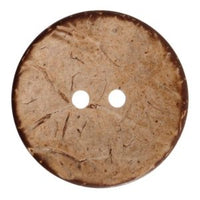
Until now the hand wash symbol meant a maximum of 40 °C. That ceiling is too high for many delicate items: wool jumpers can felt and silk can lose its lustre. The new symbol lets you say "cool water only" clearly, without extra wording. It is also handy for garments with natural buttons or trims that dislike heat, such as coconut or wooden buttons.
Iron without steam
An iron symbol with steam crossed out solves an old problem: how to say "iron, but dry". Steam leaves water marks on some viscose and silk fabrics, lifts heat-applied transfers and can distort flock or rubber prints. Brands used to spell this out in words; now there is a symbol for it.
The redrawn graphics: why your old file is no longer enough
The changes to "do not wash", "do not bleach" and "do not iron" are in the drawing: line weight, the shape of the cross, the proportions of the wash tub. To a consumer the difference is small, but if your labels go to markets where retail partners check compliance, it is better to use current artwork. On woven labels in particular, fine detail reproduces differently, and the updated artwork stays clearer at small sizes.
Tip: the next time you reprint your care labels, ask your designer to swap in the current symbol set rather than copy the old file. Done at a reorder, the change costs nothing extra.
Quick refresher: how the five symbol groups read
Before updating your label, it helps to recall the logic of the system, because the new symbols slot straight into it:
- Wash tub: washing. The number inside is the maximum temperature in °C, a hand means hand wash, and bars underneath mean a gentler cycle (one bar for delicate, two for very delicate).
- Triangle: bleaching. An empty triangle allows any bleach, two diagonal lines mean oxygen bleach only, and a crossed-out triangle means no bleach.
- Square: drying. A circle inside the square is tumble drying (dots show the heat level); lines inside mean natural drying on a line or flat.
- Iron: ironing. One dot is about 110 °C, two about 150 °C, three about 200 °C.
- Circle: professional cleaning. Letters indicate the dry cleaning solvent, and W stands for professional wet cleaning.
The 2023 additions do not change this grammar; they extend it, so the way you train staff and explain care to customers stays the same.
What has not changed
- The five main symbol groups remain: washing, bleaching, drying, ironing and professional cleaning.
- The order of symbols on the label is the same.
- Dots in the ironing and drying symbols still indicate temperature levels.
- Bars under the wash tub still mean a gentler cycle.
- In the EU, care symbols remain voluntary. Regulation 1007/2011 requires fibre composition, not care instructions. In practice nearly every brand includes them anyway, because without them complaints are hard to defend.
Checklist: what to do now
- Audit every care label in your current collections and note which ones use old artwork.
- Review delicate styles. Would the ambient hand wash symbol be more accurate?
- Review printed and appliqued items. Iron without steam could prevent complaints.
- Do not bin existing stock. Standards do not require recalling goods already produced. Update at your next order.
- Update your website too. If you show care symbols on product pages, change them there as well so nothing contradicts the label.
Symbols and label material
Care symbols are usually printed on satin or textile tapes that withstand repeated washing. At very small sizes the artwork should not be overly fine, or the symbols smudge in print. We recommend a symbol height of roughly 5 to 6 mm for legibility. Our catalogue includes clothing labels, woven, satin and printed, which Bul-tex manufactures to customer designs. For help choosing the right instructions in the first place, see our other articles about labels.
Updating the care labels for your collection? Drop us a line and we will prepare a label with current symbols in the right size and material.


