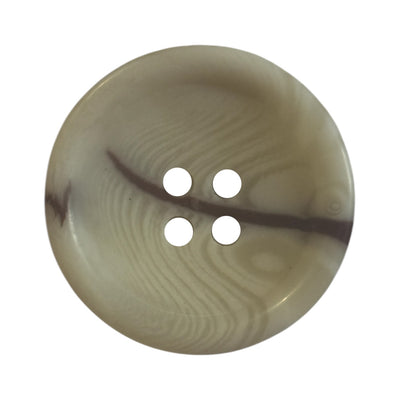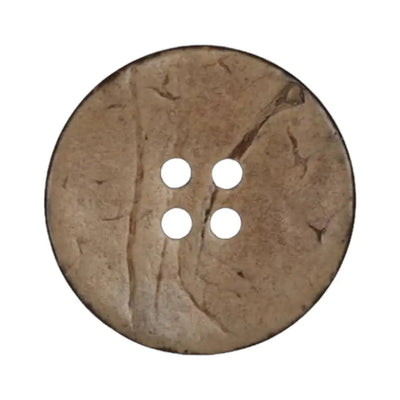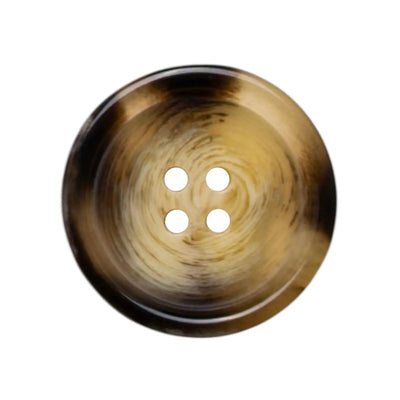

Button manufacturing countries are spread across the globe, but not evenly: each region has specialised in a material, a price tier or a type of customer. Italy means luxury and design, Asia means scale and price, Ecuador means corozo from the tagua nut, and the islands of Southeast Asia mean mother-of-pearl. Understand this map and you will know what to expect from a supplier in terms of minimum quantities, lead times and quality. Here is a short tour of the world's button geography.
Italy: Button Valley between Bergamo and Brescia
In northern Italy, between Bergamo and Brescia, lies a district the trade calls "Button Valley". Its centre is the small town of Grumello del Monte, Italy's largest button manufacturing hub. The tradition runs deep: as early as 1771 a privilege for a button manufactory was granted in Bergamo to one Giovanni Valania.
Where Italy excels:
- Design and innovation – new shapes, effects and material combinations, with fresh collections every season.
- Working with luxury houses – logo buttons, exclusive designs, precise colour matching.
- Top-tier corozo, horn, polyester and metal – the raw material is often imported, but finishing is done locally.
The drawbacks are price and minimum order quantities for custom work, which often exceed what a small label needs.


Asia: the scale
The vast majority of the world's buttons are now made in Asia, chiefly in China, where whole towns and districts specialise in buttons and small trims. India is strong in horn, coconut and handmade buttons, while Vietnam, Indonesia and the Philippines are strong in natural materials.
- Pros: low unit price, enormous choice, the ability to run very large batches.
- Cons: several weeks of sea freight, higher minimums for custom colours and designs, harder communication when something goes wrong, and more complicated REACH and nickel checks on metal parts.
Ecuador: the home of corozo
Corozo buttons are made from the nut of the tagua palm, often called "vegetable ivory". Ecuador is the leading exporter of tagua. There the nuts are collected, dried and often sliced into blanks, which are then exported to factories in Italy, Germany, Asia and elsewhere to be turned into finished buttons. It is a good reminder that a button's "origin" often involves at least two countries: one for the raw material and one for the processing.
Shell and coconut: the tropical belt
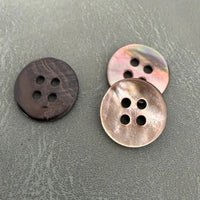
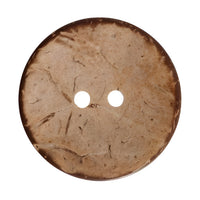
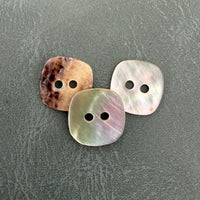
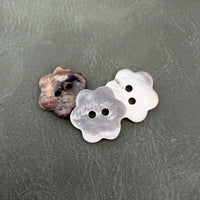
Marine mother-of-pearl (trochus, akoya) comes mainly from the Indian and Pacific Oceans, and processing is highly developed in Vietnam, the Philippines and Indonesia. Coconut buttons are made where coconuts are grown – the Philippines, Indonesia, India, Sri Lanka, Vietnam – with the shell a by-product of the food industry.
What "origin" really means for a button
On garments, the "Made in" label usually reflects the place of the last substantial transformation. With buttons the chain is even more fragmented. A corozo button may start life as a nut gathered in the Ecuadorian rainforest, be sliced into blanks on the spot, be shaped and dyed in Italy or Asia, and finally be stocked and sold by a European supplier. A shell button may come from a shell harvested in the Pacific, be processed in Vietnam and be re-polished somewhere else entirely.
For a brand this has two practical consequences. First, when you write about sustainability or origin in a product description, be precise: "corozo from Ecuadorian tagua" is more honest than "Italian buttons" if only the finishing happened in Italy. Second, when there is a quality problem you need to know which stage is responsible – the raw material (cracks, natural spots) or the processing (dye, polish, holes). A good supplier can walk you through the chain for a specific item.
Production map at a glance
| Region | Strong materials | Typical customer | What to expect |
|---|---|---|---|
| Italy (Bergamo–Brescia) | Corozo, horn, polyester, metal | Luxury and premium brands | High price, design-led, seasonal collections |
| China | Polyester, metal, everything | Mass production | Low price, big runs, long transit |
| India | Horn, coconut, wood, handmade | Eco and boutique brands | Natural look, lot-to-lot variation |
| Vietnam, Philippines, Indonesia | Shell, coconut | Shirts, lingerie, eco ranges | Wide range of natural materials |
| Ecuador | Tagua (corozo raw material) | Button factories | Blanks rather than finished buttons |
| Bulgaria and the EU | Stock, finishing, made-to-order | Small and mid-sized brands, ateliers | Short lead times, smaller quantities |
Why close matters: the case for Bulgaria and the EU
For a small or mid-sized European brand, the most expensive part is often not the button itself but time and risk. This is where a supplier inside the EU has the edge:
- Lead time. Stock held in Bulgaria reaches customers across the EU within days by DHL Express, whereas sea freight from Asia takes weeks plus customs clearance.
- Minimum quantities. When the supplier holds stock, you can order exactly what your first run needs and reorder later, rather than buying a year ahead.
- Checking before you commit. You can see and handle a sample, lay it on the fabric and approve the colour in person.
- Compliance. EU rules such as REACH apply directly to an EU supplier, and getting documents is quicker.
- Claims. If a lot is not right, it is sorted with a phone call rather than international correspondence.
A practical approach: many brands mix both models – core buttons that repeat every season are bought in volume, while seasonal, special and urgent items come from a supplier close by.
Choosing a supplier by region
- Pin down the material. For shell, corozo and coconut the chain starts in the tropics anyway – the question is who finishes and stocks it.
- Pin down the quantity. Below a few thousand pieces per design, a European stockist is almost always the more sensible choice.
- Pin down the deadline. If the collection drops in three weeks, Asia is not an option.
- Check the paperwork. Ask for material information and REACH compliance and, where needed, an OEKO-TEX certificate.
For more on garment production in the region, see the Manufacturing section of our blog.
Bul-tex is a Bulgarian manufacturer and supplier of garment trims with stock on hand: natural buttons in shell, corozo, wood and coconut, polyester buttons and our full button range. For fabric-covered buttons made to order and for production quantities, contact us.