Buttons in Bulgarian folk costume are rarely just buttons. In traditional dress, every fastening element – from the tiny hook on a headscarf to the massive silver buckles on a belt – tells you something about the wearer's age, marital status, region and wealth. Many of these details are not buttons in the modern sense at all: for a long time garments were tied, belted and hooked. In this article we look at how the costume was fastened, what the metal ornaments symbolised and how folk dress inspires designers today.
Before buttons: ties, belts and hooks
Traditional Bulgarian costume is built from rectangular pieces of cloth that need almost no fastening. The shirt goes on over the head and is tied at the neck with a cord, the sleeveless overdress is girded with a belt or sash, the apron is tied on and the headscarf is wrapped. Where something has to be held in place, small metal hooks and pins are used. Museum descriptions of women's dress note, for example, that before buttons came into use the cloth under the chin was fastened with a small hook.
The reason was practical. Fabrics were homespun, precious and worn for years. A tied garment adapts to changes in the body, is easily handed on to another family member and needs no expensive metal parts.
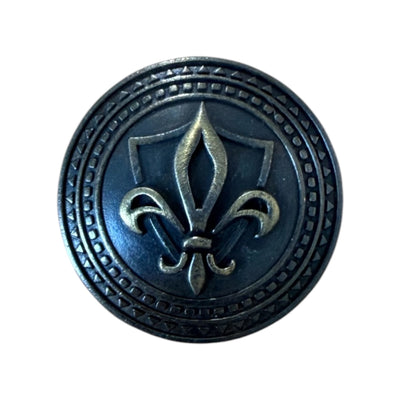
 Metal buttons 0201-01-303 – 22 mm Antique silver
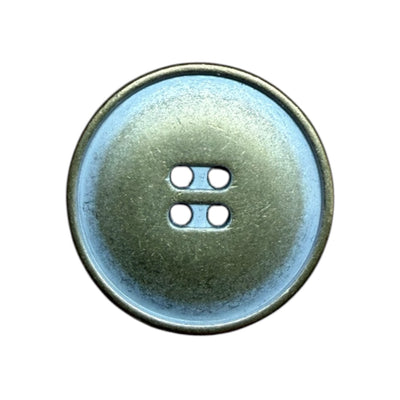
 Metal shank buttons 23972 Col 116 – Antique brass 22 mm
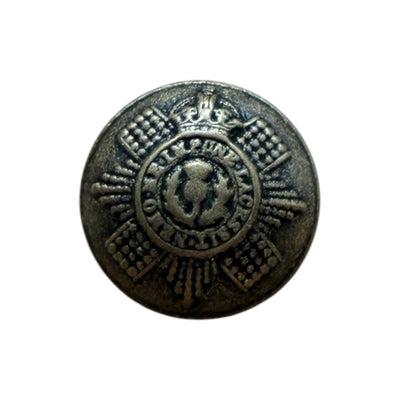
 Metal buttons N23G592 Col 2586 – Antique brass 2 0 mm
Pafti: the most precious fastening
Pafti are large metal belt buckles made of two symmetrical halves that hook together. They were most often made of silver or bronze, sometimes gilded, by goldsmiths and silversmiths. Decoration was engraved, repoussé or worked in filigree, often set with coloured stones or glass.
- Who wore them: traditionally, married women. Pafti were often part of the wedding gifts and signalled that a woman had entered a new status.
- Symbolism: the motifs – rosettes, plant ornament, birds, solar circles – are linked to fertility, protection and prosperity. Worn at the waist, they were believed to guard a woman's womb and strength.
- Value: pafti were also family wealth – inherited, and in hard times pawned or sold.
Buttons as ornament
When metal buttons came into wider use, they were often used less for fastening than as decoration. In the jewellery worn with women's costume, buttons appear alongside forehead ornaments, earrings and pendants. Rows of small metal studs were sewn onto festive garments, and coins – a symbol of wealth – completed the picture.
On men's clothing (waistcoats, woollen coats and long jackets), a key role was played by gaitani – braided woollen cords that specialist tailors used to create elaborate ornament along edges and pockets. The same cord was knotted into braided buttons and loops – an early, soft version of the button and buttonhole, made entirely of textile.
A mini glossary of folk dress
| Term | What it is | Function |
|---|---|---|
| Pafti | Two-part metal belt buckle | Fastening and status jewellery |
| Toka | General word for a buckle or clasp | Fastening a belt or garment |
| Gaitan | Braided woollen cord | Ornament and fastening loops |
| Knotted button | Button tied from cord | Fastens through a loop |
| Hook | Small metal hook | Holding a headscarf or garment |
| Poyas | Woven sash wrapped round the waist | Girding, sometimes worn under pafti |
Regional differences
Bulgaria has several major ethnographic regions, and their costumes differ in cut, colour and decoration. Broadly speaking, in wealthier trading and craft towns metal ornament – pafti, clasps, sewn-on coins – was more abundant and refined, while mountain areas leaned towards woollen elements, braided cord and woven decoration. The shape and size of the pafti, the motifs and the technique often reveal where a costume comes from. If you want to see specific examples, regional ethnographic museums around the country hold rich collections.
Worth remembering: folk dress is a living tradition with regional nuances. If you are designing a collection inspired by a particular area, talk to a local museum or community cultural centre – the details matter to the communities that keep them alive.
Old pafti today
Original pafti are museum and collector pieces, but many are still kept in families. If you have a pair, store them dry in a soft pouch, away from rubber and wool, which speed up the tarnishing of silver. Clean them very gently – aggressive polishing wipes out engraved detail and the patina that is part of their story. If you are unsure of their value, consult a museum or a specialist.
Modern pafti replicas are usually made from alloys with silver or gold plating. They are great for folk dance ensembles, weddings and themed collections, but where they touch the skin directly it is wise to check that the metal meets the nickel limits.
Folk heritage in contemporary design
Folk motifs return to fashion every few years – from embroidered shirts to waistcoats and belts. Here is how to carry the spirit of the costume through trims without making a fancy-dress outfit:
- Metal buttons with antique finishes. Old-silver or antique-bronze buttons echo the metal studs and coins on festive garments.
- Statement buckles. One expressive buckle on a belt or dress can play the role of modern pafti.
- Braided and cord closures. Cord loops and knotted buttons bring back the textile fastenings of traditional tailoring.
- Ribbons and trims. Woven ribbons in red, black and white are a natural continuation of braided cord and woven ornament.
- Ties instead of buttons. A shirt tied at the neck, or a sash instead of a belt, is the most authentic way to borrow the costume's construction.
Choosing trims for a folk-inspired collection
- Pick one lead metal – silver-tone or warm gold – and keep it consistent across every element.
- Prefer matte and antiqued finishes to mirror shine; old metal is rarely polished to a gleam.
- Pair the metal with natural materials – linen, wool, wood.
- On childrenswear, avoid heavy dangling metal ornaments; buttons must be securely sewn on.
- Check that metal parts are nickel-free or comply with the REACH limits, as folk-style belts and buttons are often in direct contact with skin.
At Bul-tex you will find metal buttons in antique finishes and decorative buckles, as well as ribbons for trimming and ornament. Read more about metal trims in our Buttons section. If you are preparing a folk-inspired collection and need custom trims, get in touch.