
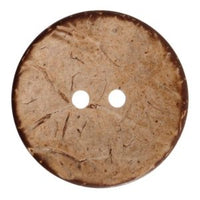


Buttons for linen shirts need to speak the same language as the fabric: linen is natural, slightly irregular, visibly textured and creases beautifully. A shiny plastic button looks out of place against it, whereas coconut, wood, shell and corozo continue the natural, hand-made feel. This buyer's guide walks through the materials, recommends size and colour for each linen garment, and explains how to choose a button that will survive the frequent washing linen tends to get.
Why natural buttons suit linen
- Texture. Linen has an uneven, lively surface. A button with natural figure (wood grain, the fibrous structure of coconut, the iridescence of shell) follows the same logic.
- Colour. Natural linen tones such as ecru, sand, olive, white and blue sit well with the warm browns of coconut and wood and the pearly sheen of shell.
- Weight. Linen is light to medium weight. Light natural buttons do not drag the front down.
- Positioning. People buy linen for the natural material. A natural button confirms that promise.


The materials one by one
| Material | Look on linen | Washing | Best for |
|---|---|---|---|
| Coconut | Warm brown, visible texture | Good; avoid long soaking | Shirts, dresses, summer trousers |
| Wood | Warm, artisan feel | Moderate; gentle, no soaking | Dresses, waistcoats, kidswear |
| Shell (trocas, agoya, river shell) | Pearly, bright, refined | Very good | Shirts, blouses, dressier linen |
| Corozo | Matte, dense, can be dyed | Good; no hot water | Linen jackets, trousers, suits |
| Melange polyester | Imitates natural materials | Excellent | Budget production lines |
Coconut
Coconut buttons are the classic for linen. They are light, practical on thin fabrics and give a summery, coastal character. They come with two or four holes and in a wide size range; ours run from 9 mm for shirts to over 30 mm for outerwear. Coconut copes with hand and machine washing but should not soak for long, because the material absorbs water.
Wood
Wooden buttons give the strongest artisan feel and are excellent on linen dresses, waistcoats and children's clothes. Choose lacquered or sealed wood if the garment will be washed often, and avoid soaking and drying on a radiator.
Shell
If a linen shirt needs to look more formal, for example a white linen shirt worn under a jacket, shell is the right call. White trocas or river shell on white linen looks fresh; grey or brown shell looks more contemporary. Shell handles washing very well.
Corozo
For linen jackets, suits and trousers, corozo is the more serious alternative to coconut. It is dense, takes colour and can be matched tone-on-tone to the cloth.
Size and colour by garment
Linen shirt
10–11.5 mm (16–18L) on the front, 9–10 mm for a button-down collar. Coconut or shell. For an ecru or sand shirt, coconut; for white or pale blue, white shell or river shell.
Linen dress
On a shirt dress, 11–15 mm; on a dress with a decorative button row, 15–20 mm. Wood or coconut for everyday styles, shaped shell for something more feminine.
Linen trousers
15–18 mm on the waistband, four holes for strength. Corozo or coconut.
Linen jacket
Around 20 mm on the front and 15 mm on the cuffs. Corozo matched to the fabric or a shade darker, or coconut for a more relaxed look.
Children's linen
Flat wood or coconut buttons with no sharp edges, sewn on very securely.
Washing: what to watch
Linen gets washed a lot; summer shirts and dresses are often worn once and go straight into the machine. So the button has to survive many cycles. A few practical rules:
- Wash at 30–40 °C. Higher temperatures do linen no favours and harm natural buttons.
- Button up the garment and turn it inside out before washing so buttons knock less against the drum.
- Do not leave linen with coconut or wooden buttons to soak for long.
- Avoid high-heat drying; when ironing, go around the button, not over it.
- In production, test one garment through 5–10 washes before approving the button.
Tip: if the care label allows a 60 °C wash, choose shell or polyester. Coconut and wood are better suited to garments washed at up to 40 °C.
Common mistakes
- Buttons too large for thin linen, so the front distorts under their weight.
- Shiny plastic buttons that cheapen a natural fabric.
- Dark wooden buttons on white linen without a wash test; some stains can bleed.
- No reinforcement under the button on very fine linen; add a small piece of fusible interfacing.
Example: a linen capsule collection
A small label is preparing a five-piece summer capsule in ecru, sand and olive: a shirt, a shirt dress, wide-leg trousers, a linen jacket and a children's dress. Rather than five different buttons, it picks two materials so the collection reads as one. Four-hole coconut in 11 mm for the shirt and shirt dress, 15 mm for the children's dress and 18 mm on the trouser waistband. For the jacket, dark brown corozo, 20 mm on the front and 15 mm on the cuffs, a shade darker than the olive linen. The result is a single palette of warm browns, a simple order and a consistent natural-materials story that can be told in every product description.
Thread and buttonholes
For linen, use polyester or poly-cotton thread in the fabric colour or slightly darker. Buttonholes on thin linen fray easily, so stitch them densely and check the length against button thickness: coconut and wood are often thicker than plastic buttons of the same diameter.
Browse our coconut buttons, wooden buttons and natural shell and corozo buttons. You will find more material guides in our buttons section, and for production orders for a linen collection, get in touch with Bul-tex. We ship across the EU with DHL Express.


