Buttonhole elastic is the simple fix for the most common problem with children's trousers: the length is right but the waist is far too big, or the other way round. Children grow in height and around the waist at different rates, so trousers with an adjustable waist can be worn for a season or two longer. In this article we explain how buttonhole elastic works, where it's used besides kidswear and how to fit it into an existing waistband step by step, with concrete measurements and advice on buttons.
How it works
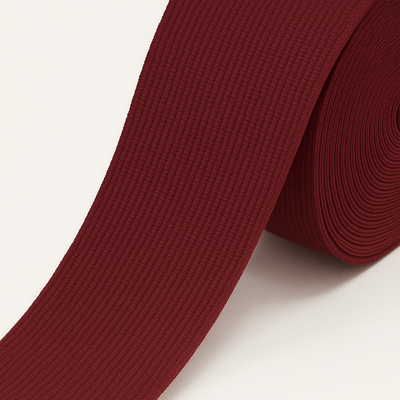
Buttonhole elastic is a flat knitted elastic, usually 15–25 mm wide, with holes spaced evenly along the centre, typically every 1.5–2.5 cm. The elastic runs through a channel inside the waistband. Its ends come out through small openings on the inside of the waistband, and a button is sewn next to each opening. You button the elastic at whichever hole gives the right waist size. As the child grows, you unbutton and move to a hole further along. No sewing, no cutting, and the trousers grow with the child.


Why it's worth it
- Longer garment life. Children's height and waist don't change in step. An adjustable waist covers a few centimetres of difference, often enough for a full size.
- Slim, tall children. Buy for length and take the waist in.
- Hand-me-downs. Trousers pass from the older child to the younger one without alterations.
- A selling point. For kidswear brands, an adjustable waist is a concrete benefit parents look for.
Where else it's used
Beyond kids' trousers, buttonhole elastic is used in maternity wear, where the waist needs to expand month by month, and in adaptive clothing, where the circumference has to change easily. Some sewists also add it to women's trousers and skirts with waistbands to bridge the gap between sizes.
What you need
- Buttonhole elastic slightly narrower than the waistband (for a 3 cm waistband, 2–2.5 cm elastic)
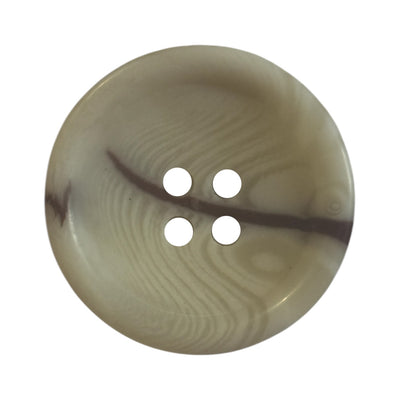
- Two flat two-hole buttons, 12–15 mm (around 18L–24L); a larger button holds more securely
- A safety pin to thread the elastic
- A sewing machine with a buttonhole function, or hand stitching
- Strong polyester thread
Step by step: into an existing waistband (for example on jeans)
- Mark the positions. On the inside of the waistband, mark two vertical buttonholes, one on each side, usually 2–3 cm in front of the side seams. That way the elastic gathers the back, where most of the excess is.
- Sew vertical buttonholes. Each buttonhole is the width of the elastic plus 2–3 mm. Sew them through the inner layer of the waistband only, never through the face. If the waistband is a single layer, you'll need to add an inner strip as a channel.
- Cut carefully. Open the buttonholes with a seam ripper, with a pin across the end so you don't cut too far.
- Thread the elastic. Using a safety pin, feed the elastic from one buttonhole round the back of the waistband to the other. If belt loops get in the way, work slowly around the seams.
- Sew on the buttons. Sew one button right next to each buttonhole on the inside, about 1 cm towards the front. Wrap a small thread shank so it buttons easily.
- Button and try on. Button the elastic so the trousers sit comfortably. Have the child squat and sit; the waistband shouldn't dig in.
- Leave room to grow. Trim the elastic so at least 6–8 cm of free end with holes remains on each side for future letting out. The tail stays inside the waistband.
Tip: if you're making new trousers, plan the buttonholes at the cutting stage. It's easier to sew them before the waistband is assembled, and the inner facing can be a lighter fabric to reduce bulk.
Common questions when fitting it
How wide should the elastic be?
5–10 mm narrower than the inside width of the waistband, so it moves freely and doesn't roll. On 3–4 cm children's waistbands that means 2–2.5 cm elastic.
Can I punch holes in ordinary elastic?
Not recommended. Cutting a hole in ordinary elastic severs the elastic threads, so it starts to fray and lose power. In factory-made buttonhole elastic the holes are formed during knitting, without any cutting.
Which button should I choose?
A flat two-hole polyester button: light, cheap and it won't break in the wash. Metal buttons aren't needed, and shank buttons are hard to push through the holes.
For kidswear brands: what to tell customers
If an adjustable waist is part of your product, say so clearly on the swing tag and in the online description. State the adjustment range in centimetres (for example "waist 52 to 58 cm") and add a short instruction: "unbutton the elastic inside and button it on the next hole". Check safety too: the buttons are on the inside, but they must be sewn on securely because young children can reach them. A button pull test is good practice on every production run.
Alternatives to buttonhole elastic
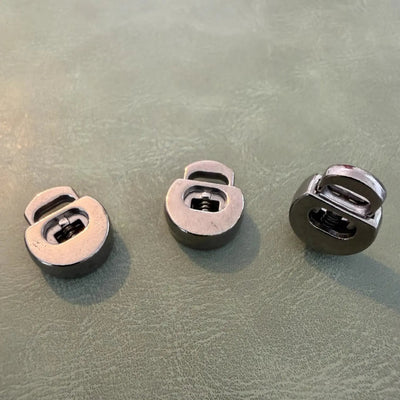
- Drawcord with a stopper. A cord in the waistband channel, tightened with a cord stopper, also adjusts the waist. Good for sports trousers and shorts.
- Waistband with snap fasteners. Two rows of snaps on the waistband give two waist positions.
- Back-only elastic. Partial elastic in the back half of the waistband: a classic solution on kids' jeans, though not adjustable.
Buttonhole elastic and Bul-tex
Bul-tex manufactures and supplies flat woven and knitted elastics from 1 to 10 cm wide, in white, black and colours. We don't currently stock buttonhole elastic; for production quantities contact us through our contact page. For buttons, see our polyester buttons; for cord stoppers as an alternative, our accessories; and plain elastic for casings is in our elastics collection. Find more on kidswear and elastic in our elastic guides.