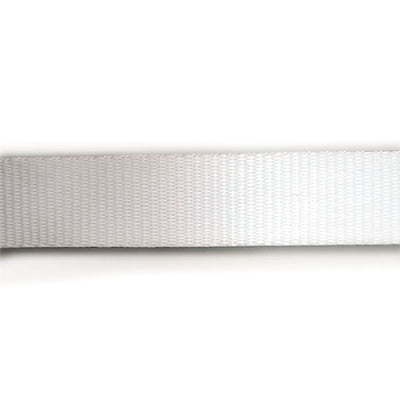
Webbing for bag straps is a strong, non-stretch woven tape used for handles, shoulder straps, belts, backpack straps and pet collars. At first glance all webbing looks alike – flat, dense, shiny or matte. The real difference lies in the fibre: nylon, polyester, polypropylene and cotton behave very differently under load, in sunlight and in water. Pick the wrong one and the strap stretches, fades or frays within a season. Below we compare the four main materials and show how to choose webbing together with the buckles and rings it has to work with.
Materials compared
| Property | Nylon | Polyester | Polypropylene | Cotton |
|---|---|---|---|---|
| Breaking strength | Very high | Very high | Lowest of the synthetics | Moderate |
| Stretch under load | Some give, absorbs shock | Minimal | Creeps under sustained tension | Minimal |
| UV resistance | Moderate, yellows over time | Best | Poor without stabiliser | Moderate, fades |
| Water absorption | Absorbs, slackens when wet | Barely absorbs | Doesn't absorb, floats | Absorbs heavily, dries slowly |
| Hand feel | Soft, smooth, glossy | Slightly firmer | Coarse, "plasticky" | Soft, natural |
| Cost | Higher | Mid-range | Low | Mid-range |


What this means in practice
Nylon
Nylon and polyester sit in the high-strength class. Nylon has a little spring that absorbs shock loads, which is why it is the classic choice for climbing and technical straps. On a bag, though, that stretch is more of a drawback: a heavy backpack on nylon straps can visibly lengthen, especially when wet. Nylon absorbs water and loses some strength when saturated.
Polyester
Polyester offers the best UV stability and barely absorbs water. It doesn't stretch noticeably and holds its colour. That makes it the best all-round choice for bags, backpacks, beach accessories and anything used outdoors.
Polypropylene
Polypropylene is cheap, light and floats, so it shows up on promotional totes and beach products. Under sustained tension, however, it creeps – slowly lengthening over time. Without a UV stabiliser it fades and turns brittle in the sun. Fine for budget runs, not for a bag expected to carry a laptop for years.
Cotton
Cotton webbing gives a natural, matte look and is popular for eco bags and canvas totes. It absorbs water and shrinks on the first wash, so wash or dampen and press it before cutting.
Decision tree: which webbing for which product
- Will the product carry more than 5 kg or live outdoors? → polyester.
- Does it need to absorb shock (climbing, towing)? → nylon.
- Promotional item, low price, will get wet? → polypropylene.
- Eco look, light shopping tote, natural fibre? → cotton, or cotton herringbone tape for slim handles and ties.
Width and thickness
The most common widths for bags are 20, 25, 30, 38 and 50 mm:
- 20–25 mm – small crossbody bags, key straps, pet leads.
- 30–38 mm – standard tote handles and backpack straps.
- 50 mm – wide shoulder straps that spread the weight, waist belts.
Thickness is usually 1.2–2.5 mm. Thicker webbing is stronger, but it struggles to pass through adjusters and needs a heavier machine to sew.
Matching buckles and rings
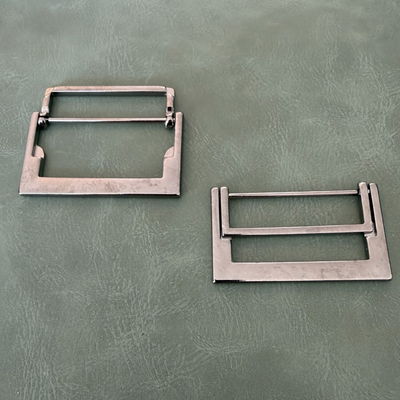
The most common mistake is ordering webbing and hardware separately and finding they don't fit. The inner opening of a ring, buckle or slider should equal the webbing width or be 1–2 mm wider. 25 mm webbing in a 25 mm opening works; 25 mm webbing in a 30 mm opening twists and slips. Sliders must also suit the thickness – webbing that is too thick simply won't grip.
At Bul-tex you can pair webbing with buckles – metal, fabric-covered and polyester, in 2–6 cm widths – and flat metal rings and D-rings from 1 to 6 cm in our rings collection. If you are making an adjustable strap, see our other articles on accessories.
How to sew webbing
- Seal the ends. Cut synthetic webbing with a hot knife or briefly pass a lighter over the end so it doesn't fray. Hem cotton instead.
- Use the right needle and thread. A 100–110 needle (denim or leather) and strong polyester or bonded nylon thread.
- Sew a box-X. At load points – where the strap meets the bag or wraps around a ring – stitch a rectangle with both diagonals. Allow an overlap of at least 3–4 cm.
- Lengthen the stitch. A 3.5–4 mm stitch avoids over-perforating the webbing and looks more professional.
Tip: test a finished handle by hanging twice the expected load from it for 24 hours. If the stitching or webbing deforms, change the material or reinforce the seam.
Common mistakes with webbing bags
- Webbing narrower than the hardware. It slides around in the ring, twists and wears its edges.
- Too short a seam at load points. A 1–2 cm overlap with a single straight seam is the number one reason handles tear off.
- Unwashed cotton. After the first wash a cotton handle shortens by a few centimetres and pulls the bag out of shape.
- Polypropylene on heavy bags. It looks fine on the shelf but stretches and fades within months.
- Unwanted thread contrast. Light thread on dark webbing shows every wobble. Use matching thread unless you want a decorative stitch.
FAQ
What width is most comfortable for a shoulder strap?
For a light bag, 25–30 mm; for a heavy or laptop bag, 38–50 mm, ideally with a shoulder pad.
Can I dye synthetic webbing?
Polyester and polypropylene barely take ordinary fabric dyes. Order the colour you need instead.
How much webbing do I need for one tote?
Two handles of 55–65 cm plus 4 cm at each end for stitching – roughly 1.3–1.5 m per tote.
What we stock
In the tapes and ribbons collection you will find Trega webbing – a sturdy tape for straps, handles and belts in several widths and colours – and cotton herringbone tape from 0.6 to 5 cm for lighter handles, ties and binding. For production runs or a specific colour, contact us.