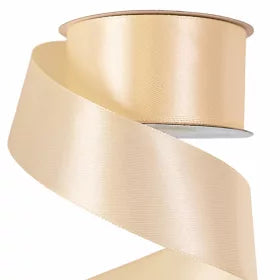
Ribbon materials differ far more than a shop shelf suggests: two satin ribbons in the same colour and width can have completely different drape, sheen and behaviour in the wash, because one is polyester and the other silk or acetate. Most modern ribbons are made from synthetics – polyester, nylon and rayon – but natural fibres still have their place in luxury packaging, weddings and eco brands. In this article we compare the main materials, explain when each is worth it and show how to identify a ribbon's fibre when the label is missing.
First: fibre and weave are not the same thing
The most common confusion is treating "satin", "grosgrain", "taffeta" and "organza" as materials. They are actually weaves – ways of interlacing the yarns:
- Satin – long floating yarns on the face, giving a smooth, glossy surface.
- Grosgrain – crosswise ribs from a heavier weft, matte and dense.
- Taffeta – a smooth, crisp plain weave with a slight rustle.
- Organza – open, sheer and stiff to the touch.
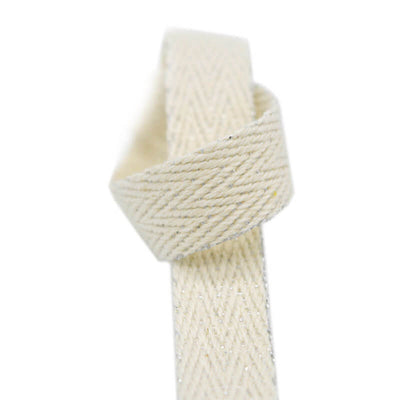
- Herringbone – a diagonal zigzag, typical of cotton tapes.
- Velvet – a cut pile on the face.
Any of these weaves can be made from different fibres. So a "satin ribbon" might be polyester, silk or acetate – and both the price and the performance will differ.


The materials one by one
Polyester
The most widely used ribbon fibre today. It holds colour extremely well (it is dyed with disperse dyes at high temperature), doesn't shrink, resists creasing and is washable. Cut ends can be heat-sealed because the fibre melts. The downside: its sheen is a little "harder" than silk and the drape is less fluid.
Nylon (polyamide)
Soft, strong and with a pleasant silky lustre. It is used for velvet ribbon, fine stretch trims and lingerie. It absorbs slightly more water than polyester and can yellow after long sun exposure. It can also be heat-sealed.
Silk
The luxury choice: a natural pearly lustre, a soft drape and beautiful bows. It is used for bridal bouquets, premium jewellery packaging and couture. The drawbacks: high cost, sensitivity to water spotting, sunlight and perspiration, and it cannot be heat-sealed – ends must be hemmed or cut on the diagonal.
Cotton
A matte, natural look with a pleasant handmade feel. Cotton tapes, especially herringbone, are favourites for eco packaging, childrenswear and craft. They tolerate hotter washes but can shrink 3–5% the first time. They cannot be heat-sealed.
Acetate
A semi-synthetic made from cellulose, with a lovely sheen close to silk at a lower price. You often see it in linings and higher-end decorative ribbon. It is sensitive to high heat and certain solvents (acetone, for example) and loses strength when wet. Hand washing or dry cleaning is recommended.
Viscose (rayon)
A cellulose fibre with a soft drape and a matte to gentle sheen. It takes dye beautifully but shrinks and creases. It appears in decorative and fashion ribbons where a soft drape matters.
Comparison table
| Fibre | Sheen | Drape | Colourfastness | Washing | Heat-sealable | Price |
|---|---|---|---|---|---|---|
| Polyester | Medium to high | Medium | Excellent | Yes | Yes | Low |
| Nylon | High, soft | Good | Good | Yes | Yes | Low to mid |
| Silk | Pearly | Excellent | Moderate | Delicate | No | High |
| Cotton | Matte | Medium | Good | Yes, shrinks | No | Low to mid |
| Acetate | High | Good | Moderate | Hand wash | Partly | Mid |
| Viscose | Matte to soft | Very good | Good | Delicate | No | Mid |
Myths and facts
- Myth: "Satin is a fibre." Fact: satin is a weave; the fibre is most often polyester.
- Myth: "Natural is always better." Fact: on a garment that is washed often, polyester ribbon keeps its looks longer than silk.
- Myth: "Any ribbon can be sealed with a lighter." Fact: only synthetics such as polyester and nylon. Cotton and silk burn rather than melt.
- Myth: "Polyester looks cheap." Fact: a dense double-faced polyester satin looks excellent and is used by plenty of premium brands.
Which material for which use
- Washable garments and accessories: polyester (satin, grosgrain), or cotton if you want a matte look.
- Childrenswear: polyester or cotton with OEKO-TEX certification; the grosgrain ribbons in our ribbons collection are certified to OEKO-TEX Standard 100.
- E-commerce packaging: polyester satin, grosgrain or organza – affordable, durable and available in many colours.
- Weddings and luxury packaging: silk or acetate if the budget allows; otherwise double-faced polyester satin.
- Eco brands and handmade goods: cotton herringbone tape in natural shades.
- Hair accessories: nylon or polyester for a soft drape and sealable ends.
How to identify the fibre: the burn test
If you don't know what a ribbon is made of, cut 2–3 cm and carefully light it over a non-flammable surface (hold it with tweezers, away from your face):
- Polyester: melts and shrinks from the flame, leaves a hard black bead, slightly sweet smell.
- Nylon: melts, leaves a hard bead, smells a little like celery.
- Cotton and viscose: burn quickly, smell like paper, leave soft grey ash.
- Silk: burns slowly, smells like burnt hair, leaves crumbly ash.
- Acetate: melts and burns, smells of vinegar.
Tip: the burn test gives a good indication, but blends can be misleading. For products you sell as finished goods, rely on your supplier's declaration. For more on dealing with cut ends, see our other articles in the ribbons section.
Price versus value
The price gap between polyester and silk ribbon can be several-fold. So ask a simple question: how long will the ribbon live? For packaging the customer will throw away, polyester is the logical choice. For a bridal bouquet that will be kept for years, or the neckline of a pure silk dress, the pricier fibre is justified because its drape and lustre match the fabric.
What we stock
At Bul-tex you will find polyester satin ribbon from 0.3 to 7 cm, grosgrain in the same range, polyester organza from 1 to 3 cm and 100% cotton herringbone tape from 0.6 to 5 cm – all in a wide range of colours. If you need a specific shade for a collection or larger quantities, get in touch.