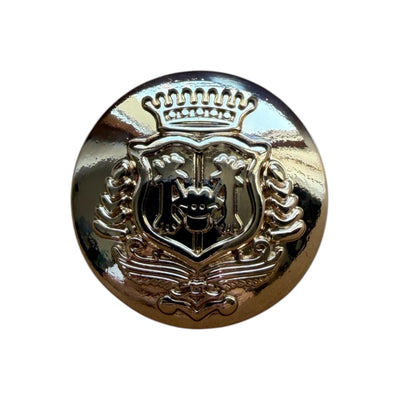
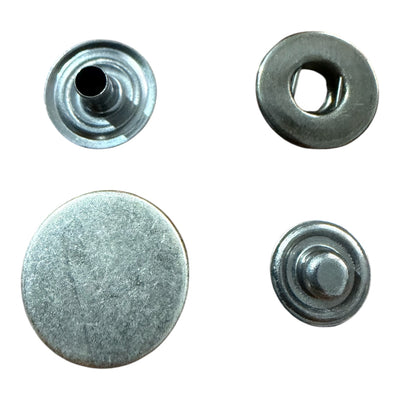
Matte vs shiny metal buttons is usually treated as a matter of taste, but the texture you choose decides how your hardware looks after a season of wear. Will scratches from keys and bags show? Will every fingerprint stay put? Will the matte finish polish itself shiny on the most-touched spots? This article looks at texture separately from colour, covering mirror polish, satin (brushed), sandblasted, hammered and soft lacquer finishes, and explains which is practical for which garment.
Texture and colour are two different things
Colour comes from the plating: nickel, gold, gunmetal, black. Texture comes from how the surface is treated before or after it. The same light gold can be mirror, brushed or sandblasted and look like three different colours, because a matte surface scatters light and makes the tone softer and darker. So when you approve a sample, approve the combination of colour and texture, not just the colour.
 Brushed metal buttons 51001210 Col 100021 – Light Gold 18 mm
 Metal buttons with logo 0076 Col 101926 – 18 mm with matte grey finish
 Luxury sew-on snap fasteners 47105 – 20 mm Gun Metal matte
The five main textures
1. Mirror polish
The button is tumbled with abrasive media and then with soft media until the surface reflects. It is the classic look for blazers and uniforms. Downside: it shows every fine scratch and every fingerprint.
2. Satin / brushed
The surface is worked with an abrasive belt or brush in one direction, leaving fine parallel lines. Soft lustre, an industrial kind of luxury. Upside: scratches running with the grain are almost invisible. Downside: scratches across the grain stand out.
3. Sandblasted
A fine abrasive (sand, glass beads, corundum) is fired at pressure to create an even, velvety matte surface. Upside: hides small scratches in every direction. Downside: greasy fingerprints and dirt show as dark patches and are harder to clean, and edges gradually polish up with wear.
4. Hammered and textured relief
The texture is built into the die itself, whether cast or stamped. The uneven surface breaks up light and reflections. Upside: the best at hiding signs of use. Downside: a more artisanal look that doesn't suit every garment.
5. Soft-touch and matte lacquer
A lacquer goes over the plating, giving a matte, sometimes rubbery feel, often in colour. Upside: modern look, no fingerprints. Downside: heavy friction can wear through the lacquer and expose the metal beneath.
What each texture hides
| Texture | Scratches | Fingerprints | Wear-polishing | Cost guide |
|---|---|---|---|---|
| Mirror polish | Very visible | Visible | No, already shiny | Baseline |
| Brushed | Well hidden along the grain | Few | Minimal | One extra step |
| Sandblasted | Well hidden | Dark grease marks | Edges polish up | One extra step |
| Hammered / relief | Best hidden | Few | High points brighten | In the die, no per-piece extra |
| Soft-touch / matte lacquer | Hidden until worn through | Almost none | Possible at edges | Plus lacquering |
The production sequence
The usual order is: casting or stamping, then deburring and tumble polishing, then texture (brushing or blasting), then plating, then lacquer if required. Texture is applied to the base metal because the plating is only a few microns thick and would be cut through by aggressive treatment. That's why matte or shiny has to be decided when you order; it can't be added to a finished button later.
How texture affects cost and lead time
Mirror polish is the baseline finish, since tumble polishing is part of almost every production process. Brushing and sandblasting each add a separate operation, either per button or per barrel batch, so they usually raise the unit price by a small percentage and can add a few days to the lead time. A hammered texture is cut into the die itself: you pay for it once when the mould is made, and after that it costs nothing extra per piece. Soft lacquer is another operation with drying time, and coloured lacquer also needs colour approval.
There is a hidden cost too. Shiny buttons need more careful packing and produce more rejects at incoming inspection, because transit scratches show. On large workwear runs that often makes a matte texture the cheaper option overall.
Which texture for which garment
- Workwear, jackets, jeans: brushed, sandblasted or hammered. The hardware rubs against tables, bags and belts, and polish soon looks tired.
- Coats and blazers: mirror polish for a classic look; brushed or matte gold for something contemporary.
- Shirts and dresses: small buttons see less abrasion, so style can lead.
- Kidswear: matte snaps with nickel-free plating. Shiny ones scuff quickly.
- Bags and accessories: a texture that hides scratches, because the metal gets knocked constantly.
See our snap fasteners in matte and shiny finishes and our buckles to match the texture across your hardware.
Tip: keep one texture throughout. If the buttons are brushed but the rivets and buckle are mirror polished, the tone will look different even with identical plating.
Common problems and fixes
- The matte button shines at the edge after a month: normal with sandblasting. If that's not acceptable, choose hammered or brushed.
- Shiny buttons arrive at the factory already scratched: they rub against each other in bags and during sewing. Ask for layered packing or use a guard on the button-sewing machine.
- Soft-touch buttons have worn edges: in high-friction spots, under a belt or a backpack strap, choose plating without lacquer.
- Matte and shiny don't match in colour: approve the samples together, on the fabric, in daylight.
FAQ
Can cleaning turn a matte button shiny?
Abrasive pastes gradually polish a matte finish. Clean with a soft cloth and water and avoid metal polish.
Brushed or sandblasted for a blazer?
Brushed if you want a subtle sheen and a classic feel; sandblasted for a fully matte, minimalist look.
Bul-tex manufactures and supplies metal buttons and hardware and takes custom logo button orders in the plating and texture you choose. Browse our buttons, read more in our button articles or get in touch via our contact page.