OEKO-TEX certification for trims and accessories catches many brands off guard. STANDARD 100 by OEKO-TEX is the best-known label for textiles tested for harmful substances, and it does not stop at the fabric. Buttons, zippers, elastics, labels, thread and even prints are part of the finished product. If you want your garment to carry the OEKO-TEX label, every component has to meet the limit values. This article explains how the standard treats accessories, what the four product classes mean and how to check that the certificate your supplier sends is genuine and valid.
What STANDARD 100 by OEKO-TEX is
STANDARD 100 is an independent testing and certification system for textiles at every stage of production, from yarn and fabric to finished articles and accessories. Tests are carried out by accredited member institutes of the OEKO-TEX association against a catalogue of hundreds of regulated and non-regulated substances: formaldehyde, heavy metals, nickel release, azo dyes, phthalates, chlorinated phenols, PFAS and more. The catalogue is updated every year, and certificates are valid for one year before they must be renewed.
One distinction matters: OEKO-TEX is voluntary, while the legal requirements in the EU come from the REACH Regulation. Many OEKO-TEX limits are stricter than the law, which is why the label is a convenient way to show customers you have gone beyond the minimum.
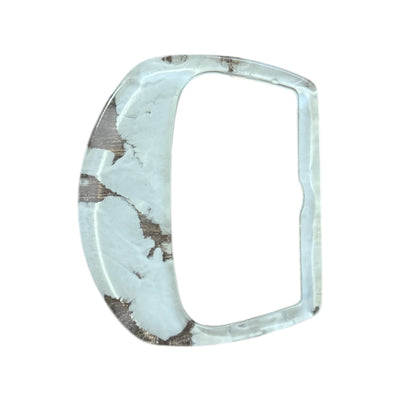
 Rectangular fabric-covered slim buckles FCB0003 – 5 cm
 Polyester buckles PB 0002
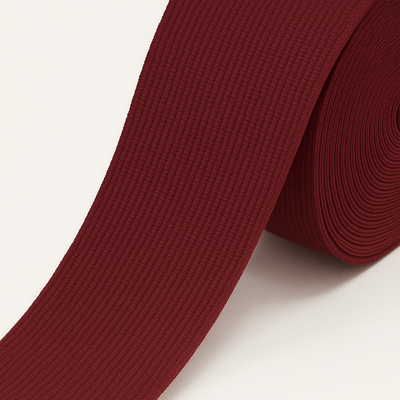
 Wide white knitted elastic band
Myths and facts about OEKO-TEX and trims
| Myth | Fact |
|---|---|
| "My fabric is certified, so my garment is too." | No. A fabric certificate covers the fabric only. The garment can carry the label only if it is certified as a finished product and every component complies. |
| "Metal buttons aren't tested, they're not textiles." | They are. STANDARD 100 covers non-textile accessories such as buttons, zippers, rivets and snaps, including nickel release and heavy metals. |
| "One certificate covers everything a supplier sells." | A certificate has a defined scope listing articles or article groups. Check that your item is in it. |
| "A certificate lasts forever." | It is valid for 12 months. Ask for the current one. |
| "Class I is only for babywear, so it doesn't concern me." | A trim certified to Class I can be used in all lower classes, which helps brands with a broad range. |
The four product classes
Requirements depend on how close the product sits to the skin and who wears it. The more intensive the contact, the stricter the limits.
- Class I: articles for babies and toddlers up to 36 months, such as bodysuits, rompers and bedding, plus their buttons, snaps and labels. The strictest requirements, including saliva fastness.
- Class II: articles in direct contact with skin, such as underwear, T-shirts, shirts and leggings. This covers lingerie elastic, neck labels and shirt buttons.
- Class III: articles with little or no skin contact, such as jackets, coats and padded outerwear.
- Class IV: decoration and furnishing materials such as curtains, tablecloths and upholstery.
Rule: a trim must be certified at least to the class of the finished product. Elastic for baby trousers needs Class I; the same elastic certified to Class II is not enough.
The building-block principle
OEKO-TEX works modularly: every stage and every component can be certified separately. When a garment maker uses fabric, thread, elastic, labels and buttons that already hold valid certificates, the institute can accept them instead of retesting each component. That makes certifying the finished garment faster and cheaper. So if your brand plans to use the OEKO-TEX label, choose certified trims from the very start.
How to request and verify a supplier's certificate
- Ask for a copy of the certificate for the specific item, not a general "we have OEKO-TEX".
- Check the number and the institute. Every certificate has a unique number and names the testing institute.
- Verify it online. The official site offers a free check: OEKO-TEX Label Check. Enter the number to see the company name, scope and expiry date.
- Compare the scope. Your item (for example "woven elastics, polyester/elastane") must fall within the description.
- Check the class. If you make clothing for children up to three years old, look for Class I.
- File it. Keep a copy with the style's tech pack and update it every year.
What it means for each type of trim
Buttons and metal hardware
For metal buttons, rivets and snaps the main focus is nickel release and lead and cadmium content. The legal REACH limit for nickel release from articles in prolonged skin contact is 0.5 µg/cm² per week. Plastic and polyester buttons are tested for phthalates and colourants. See the buttons in our range, including nickel-free models.
Zippers
A zipper combines a textile tape, teeth (metal or plastic) and a slider, and all three are assessed. Pay attention to tape dyes and the plating on metal parts.
Elastics
Elastics contain elastane or rubber and often sit directly against the skin, so they usually need to meet Class II, or Class I for babywear. Some of the woven elastics in our range are described as Oeko-Tex certified; when you order, ask for a copy of the certificate for that exact item.
Labels and ribbons
Woven and satin labels and ribbons are tested as textiles. Watch the print: the ink on a printed label is part of the product too. Among our ribbons, for instance, the GR0019 grosgrain is listed as certified to OEKO-TEX Standard 100.
FAQ
Is OEKO-TEX mandatory for selling in the EU?
No. REACH and other legislation are mandatory. OEKO-TEX is voluntary, but retailers and customers increasingly ask for it.
Can I put "OEKO-TEX" on my label if only the fabric is certified?
No. The OEKO-TEX label with a certificate number may only be used for the product that is certified.
How often should I check certificates?
At least once a year, and whenever you change supplier or item.
Bul-tex manufactures and supplies trims for brands and manufacturers. If you are preparing a collection with OEKO-TEX requirements, contact us and we will confirm which items have current certificates. Read more about metal trim safety in the Manufacturing section.