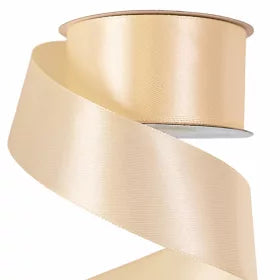
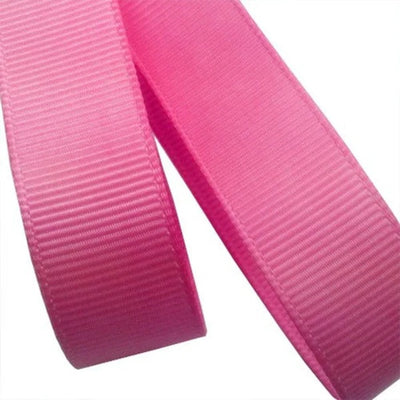
The ribbon bow trend in fashion has moved well beyond little girls' dresses. In recent seasons bows have appeared everywhere – on top straps, on the backs of dresses, on knitwear, shoes, bags and, of course, in hair. Trend forecasts for 2026 highlight individuality and heirloom-style details – bows, brooches and distinctive hardware – while youth trends keep the romantic "coquette" mood going. For a small brand that's good news: a bow is an inexpensive detail that can turn a basic garment into a signature piece. This article covers where the trend comes from, concrete ideas for collections and which ribbon to use for each detail.
Where the trend comes from
Bows have a long history, from 18th-century court dress to ballet costumes and school uniforms. The current wave draws on several sources at once:
- Coquette aesthetic – pastels, lace, pearls and small satin bows.
- Balletcore – ballet flats, fitted knit tops, ribbons that tie around the ankle.
- Quiet elegance and heirloom details – a black grosgrain bow on a white shirt, a velvet ribbon in the hair.
- Personalisation – shoppers add ribbons to their own bags, shoes and jackets, and brands respond with ready-made versions.


10 ideas for small brands
- Ribbon straps on tops and dresses – slim 0.6–1 cm satin tied in a bow on the shoulder.
- A bow at the back of a dress or blouse – wide 3–4 cm satin that makes the back the focal point.
- Ties instead of buttons – on cardigans and blouses, 1 cm ribbon stitched in pairs.
- Mini bows along the neckline of knitwear – 0.3–0.6 cm, hand-stitched.
- Sleeve bows – ribbon threaded through a cuff channel and tied at the side.
- A matching hair ribbon – in the same fabric or ribbon, as an add-on sale.
- Bag accessories – a bow around the handle, easy to swap with the seasons.
- A ribbon belt – wide 4–5 cm grosgrain tied at the waist.
- Bows on shoes and socks – narrow satin ribbon for a ballet look.
- Packaging that continues the design – the same ribbon colour on the box, so the brand experience feels complete.
Which ribbon for which detail
| Detail | Ribbon | Width |
|---|---|---|
| Mini decorative bows | Satin | 0.3–0.6 cm |
| Straps and ties | Double-faced satin or grosgrain | 0.6–1.5 cm |
| Hair clip and hair bows | Satin, grosgrain, organza | 2.5–4 cm |
| Back bow, belt | Wide satin or grosgrain | 3–7 cm |
| Airy spring details | Organza | 1–3 cm |
| Structured "uniform" bows | Grosgrain | 1.5–4 cm |
Satin brings softness and shine, grosgrain gives structure and a matte, crisper look, and organza adds lightness. If you're unsure, make a sample bow in each ribbon and photograph it on the model – the difference on camera is huge.
Production: sewing bows in batches
- Use a template. Make a card template for tail length and loop size. Every bow in the run will match.
- Pre-made bows rather than tying on the garment. Tie the bow separately, secure the centre with a few stitches, then sew it onto the garment. It won't come undone in the wash.
- Bar tack at stress points. On straps and ties, use a short zigzag bar tack – the standard solution in garment production.
- Seal the ends. Cut tails on the diagonal or as a dovetail, and lightly heat-seal synthetic ribbon.
- Wash-test. Wash a sample 3–5 times. A good polyester ribbon shouldn't lose its shape or colour.
Important for childrenswear: bows must be securely attached, and long ties around the neck and hood are restricted by EN 14682, the standard for cords and drawstrings on children's clothing. On baby and toddler garments, sew decorative bows down flat with no loose tails that could be pulled off.
Colours and materials by season
- Spring–summer: powder pink, light blue, cream and white; organza and narrow satin for lightness.
- Autumn–winter: burgundy, forest green, black and brown; grosgrain and wide satin for body.
- All year: a black bow on white and white on black – the best-selling combination in classic styling.
A practical move for a small brand: choose two core ribbon colours that run through the whole collection plus one seasonal accent. You order fewer types, but larger quantities of each.
How not to overdo it
The trend works best when the bow has a purpose. A stylist's rule of thumb: one focal point per garment. If you have bows on the straps, don't add more at the back and on the sleeves. Pick a colour from the collection palette – tone-on-tone looks more expensive, while a contrasting black or white detail is bolder. And remember that trends move on: details that are attached separately let you sell the same base garment next season with just a different ribbon.
FAQ
How much ribbon does one bow take?
Roughly: a mini bow in 0.6 cm ribbon takes 15–20 cm; a hair bow in 3 cm ribbon takes 50–70 cm; a large back bow in 4 cm ribbon takes 1–1.2 m. Make a sample and measure it exactly before ordering for the whole run.
Will the bow trend fade soon?
Specific shapes come and go, but the bow is a classic detail that returns in cycles. Small, elegant bows in neutral colours are the safest bet.
Satin or grosgrain for washable garments?
Both polyester options wash well. Grosgrain is more stable and resists creasing; satin is softer but shows creases more easily.
Where can I find ribbon in lots of colours?
Our ribbons collection has satin and grosgrain from 0.3 to 7 cm and organza from 1 to 3 cm in dozens of colours. For hardware to pair with them – rings, buckles, cord ends – see accessories, and for branded ribbon for your label, contact us.