How are care labels printed? It looks like a simple job – ink on tape – but behind it sit at least three different technologies with different costs, wash durability and ideal run sizes. Thermal transfer, screen printing and flexographic printing can produce labels that look the same on day one and very different after 30 washes. This guide walks through each method from machine to finished label, compares the trade-offs and explains why a printed label is priced on a completely different logic from a woven one.
The base: what gets printed on
The print method is always chosen together with the tape. The most common substrates are:
- Polyester satin – smooth and glossy, holds fine detail and keeps its colour;
- Nylon taffeta – thin, coated, excellent for small type and inexpensive;
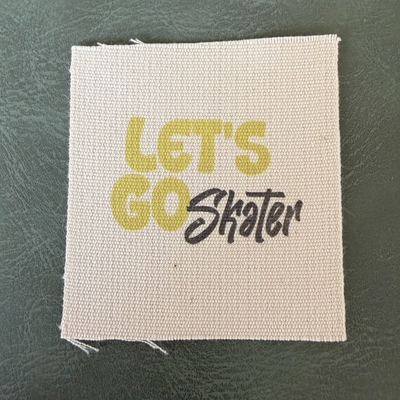
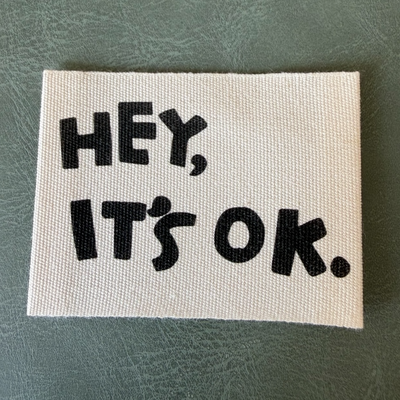
- Cotton tape and canvas – matte with a natural texture; the print is softer but less crisp;
- Non-woven – for home textiles and low-cost items, with a paper-like feel.
These tapes usually carry a coating that helps the ink anchor. Without it, even good print washes out quickly.
 Satin label 14 cm x 5 cm - satin print
 Satin label 3 cm x 6 cm - color print
 Satin label 8 cm x 4 cm – satin printing
Method 1: Thermal transfer
How it works
A thermal transfer printer has a print head with thousands of tiny heating dots, typically 300 dpi for labels. A thin ink-coated ribbon runs between the head and the tape. Wherever a dot heats up, the ink melts and transfers onto the tape. The tape comes on a roll, prints continuously and is then cut into labels with a hot or ultrasonic knife.
What to know
- Textiles need resin ribbons; wax ribbons are for paper and will not survive washing.
- It is usually single-colour – mostly black, sometimes white or another colour on a coloured tape.
- Every label can be different: batch number, size, barcode – ideal for variable data.
- No plates and no set-up, so it suits small and medium runs, even a few dozen pieces.
That is why thermal transfer is the default for content and care labels in garment factories.
Method 2: Screen printing
How it works
In screen printing, a squeegee pushes ink through a fine mesh carrying a stencil of the design. Each colour needs its own screen. The printed ink is then dried and cured with heat. The ink layer is thicker than with the other methods.
What to know
- Excellent opacity – white on black satin, gold on dark canvas.
- The ink has a slight raised feel – lovely on brand labels, less ideal for very small text.
- Making screens takes time, so the method pays off on medium runs, typically from a few hundred pieces upwards.
- Wash durability depends heavily on correct curing; under-cured ink cracks fast.
Method 3: Flexographic printing
How it works
Flexo is a rotary process: flexible photopolymer plates mounted on cylinders pick up ink from an engraved anilox roller and transfer it to tape running continuously through the press. Each colour has its own print station, so a multi-colour label prints in a single pass before the tape is dried and rewound or cut.
What to know
- Very high speed – the method is built for long runs.
- Multi-colour printing with good registration.
- Each colour needs a plate, paid for once – on a short run that cost weighs on every label.
- Content is identical across the run; variable data is added separately, often by thermal transfer.
Comparison table
| Criterion | Thermal transfer | Screen | Flexo |
|---|---|---|---|
| Colours | Usually 1 | 1–4 (one screen per colour) | 1–6+ (one station per colour) |
| Set-up | None | Screens | Plates |
| Typical run | Dozens to thousands | Hundreds to tens of thousands | Thousands to millions |
| Variable data | Yes | No | No (without overprinting) |
| Small text | Very good | Fair | Good |
| Opacity on dark tape | Medium | Excellent | Good |
How long does the print last in the wash?
No print lasts forever. With a quality resin thermal transfer or properly cured screen print, a label stays legible for dozens of washes, but after 50 or more hot washes cracking or fading can appear – especially on cotton bases. What shortens its life: temperatures above 60 °C, bleach, harsh detergents and high-heat tumble drying. If the garment is washed hot and often – workwear, towels, bed linen – consider a woven label for key information, where the text is woven in rather than applied on top.
Pre-production test: wash five samples ten times at the highest temperature on the label, then scratch them with a fingernail. If the ink flakes, change the ribbon or the tape, not the garment.
Why printed labels are priced differently from woven ones
A woven label's price is driven mainly by density, colour count and loom time – every label consumes a certain number of weft picks. A printed label's price is driven by the tape, the ink and the set-up (screens, plates) spread across the run. So printed labels are cheaper for simple artwork in small to medium quantities, while on large multi-colour runs the gap narrows. Print is also thinner and softer, which is why most content labels are printed and most brand labels are woven.
FAQ
Can a full-colour photo be printed on a label?
Yes, with digital or multi-colour flexo printing on satin, but usually at higher minimum quantities. For a one- or two-colour logo it is rarely needed.
Which method is best for a content label?
Thermal transfer – thanks to variable data (size, batch) and zero set-up.
Do printed canvas labels last?
Yes, when the ink is properly cured. Canvas gives a natural, matte look that suits eco and craft brands.
Labels from Bul-tex
In our labels collection you will find printed canvas labels from the LBL series, printed satin labels and woven jacquard labels. For printing with your logo, or content labels with your own data, contact us through the contact page. For more on how trims are made, see our manufacturing articles.