

How do you tell if brass is solid, or whether that gold button is plated zinc alloy or steel? It matters to the tailor replacing buttons on an expensive jacket and to the brand checking whether a delivery matches a quote for "brass buttons". The gold colour tells you almost nothing: brass, zinc and steel can all carry an identical gold finish. Here are six simple checks you can do without a lab, ordered from the least to the most destructive, plus how to describe the metal in a specification so there's no argument later.
First: what are we looking for?
Garment hardware uses four main metals:
- Brass: a copper-zinc alloy, density about 8.4–8.7 g/cm³, non-magnetic, yellow all the way through. Usually stamped from sheet.
- Zinc alloy (Zamak): density about 6.6–6.7 g/cm³, non-magnetic, grey-white inside. Die cast.
- Steel: density about 7.9 g/cm³, ordinary steel is strongly magnetic, grey inside. Used for springs, eyelets and cheap buttons.
- Aluminium: density about 2.7 g/cm³, non-magnetic, very light, silvery.
"Solid brass" means the whole part is brass. It may still be finished with lacquer, gold or an antique effect, but there's yellow metal underneath. "Gold plated" usually means zinc alloy or steel with a thin gold layer.
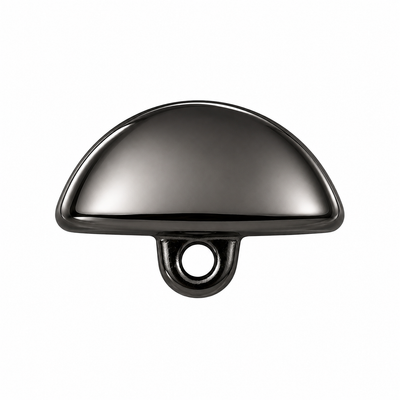
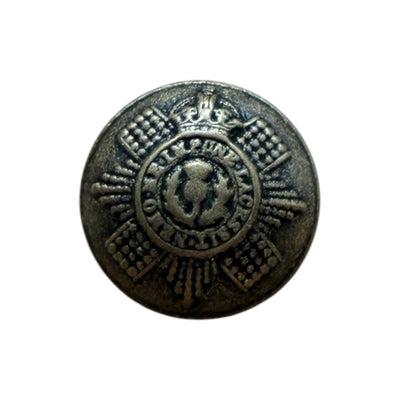
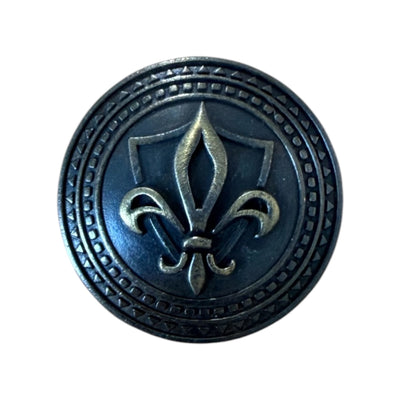
 Gold brass metal buttons 7-M020 Col 406 – 20 mm for designer clothing
 M020 Gun Metal Brass Buttons – 20 mm for coats and jackets
 Black brass metal buttons 24051 – 20 mm for jackets, suits, and coats
Check 1: magnet
Hold a strong magnet (a neodymium one; a fridge magnet is too weak) near the button. If it sticks, the base is steel or at least contains a steel part, which is often just the spring or the tack on a jeans button. If nothing happens, it may be brass, zinc or aluminium. A magnet rules steel out, but it doesn't prove brass.
Check 2: weight in the hand
There's a trap here. By density brass is heavier than zinc. But brass buttons are usually stamped as hollow shells from thin sheet and closed with a back cap, while zinc buttons are cast solid. So a zinc button often feels heavier than a brass one of the same size. A light, "hollow" button with a ringing back cap is most likely stamped brass; a heavy, solid button with relief on both sides is a casting.
Check 3: the construction on the back
- Two parts, a crimped edge, a separate shank: typical of stamped brass.
- One solid part, a shank cast with the body, a gate mark or a fine parting line on the rim: typical of a zinc casting.
- Thin sheet that flexes under pressure: steel or aluminium.
Check 4: sound
Drop the button from a few centimetres onto glass or stone. Brass rings clearly and high; zinc alloy gives a duller thud; aluminium a light clatter. It's subjective, but after a few comparisons with known samples it is surprisingly reliable.
Check 5: worn edges
Use a loupe on spots where the finish has worn: the rim, the top of the relief, the shank. Yellow metal showing through means a brass base. Grey-white means zinc; grey with rust spots means steel. A pinkish copper tone is the copper underlayer of a plated button.
Check 6: a scratch in a hidden spot
If you can sacrifice a sample, make a small scratch with a blade or file on the back. You'll see the base colour. This is the most reliable home check but it damages the part, so do it on a spare button, not one from the garment.
Traps that mislead
- "Brass colour". In catalogues "brass" often means the colour, not the metal. "Antique brass" is a finish that may sit on zinc.
- Brass plating. A zinc casting can have a thin brass layer, so a scratch shows yellow only on the surface and grey deeper down.
- Mixed construction. The button face is brass, but the shank or tack is steel. The magnet reacts, but only to one part.
- Lacquer. A thick lacquer can hide green deposits and wear, and make different metals look the same.
Corrosion as a clue
| What you see | Likely base |
|---|---|
| Green deposit | copper or brass |
| White powder, blisters under the plating | zinc alloy |
| Reddish-brown rust | steel |
| Dull grey darkening with no deposit | aluminium or stainless steel |
Decision tree
- Does it stick to a magnet? Yes: steel (or a steel component). No: go to 2.
- Is it very light for its size? Yes: aluminium or hollow stamped brass; check the edges. No: go to 3.
- Solid, heavy, with cast relief and shank? Yes: probably zinc alloy. No: go to 4.
- Yellow metal under the worn edge or scratch? Yes: brass. No: plated zinc alloy.
What it means for care
Once you know the metal, you know how to look after it. Unlacquered solid brass can be cleaned and polished with metal paste. Plated buttons, whether brass or zinc underneath, should only be wiped with a damp cloth, because paste strips the finish. Zinc alloy dislikes moisture and salty cleaners, and steel needs to dry quickly.
Why this matters for brands
Brass and zinc alloy have different strengths rather than being simply "good" and "bad": zinc allows more complex shapes, brass resists corrosion better. The problem only arises when you pay for one and receive the other. So state the material clearly in the specification:
- Base material: for example "brass CuZn37, stamped, two-piece" or "zinc alloy Zamak, die cast".
- Material of the shank, spring and tack, listed separately.
- Finish: type, colour, nickel-free or not, lacquer.
- How it will be checked: a reference sample, a report, or analysis if in doubt.
If you're ordering custom buttons, ask for a cut sample as well: one button sawn in half. You immediately see the wall thickness, the construction and the base colour, without relying on words.
In a dispute, lab XRF analysis gives the composition of the metal within minutes without destroying the part.
At Bul-tex we name the metal in the product description where it matters, for example on our brass metal buttons. Browse our buckles and button guides as well. If you need a specific alloy for your own design, contact us.