PPWR is now part of every apparel polybag decision: since 12 August 2026, Regulation (EU) 2025/40 on packaging and packaging waste, known as PPWR, applies across the European Union. Unlike the old directive, it is a regulation – it applies directly in every member state without waiting for national law. For clothing brands that means the polybag, the hanger, the sticker and even the e-commerce box all fall under rules with clear deadlines. This article explains what counts as packaging for apparel, which requirements already apply, which arrive in 2028 and 2030, and what a small brand can do right now.
This is a practical overview, not legal advice. Your exact obligations depend on your role (manufacturer, importer, distributor) and on the implementing acts the Commission is adopting step by step. The official text is on EUR-Lex.
What counts as packaging for clothing
PPWR defines packaging broadly – anything that contains, protects, presents or transports the product, whatever the material. For apparel that includes:
- Polybags for individual garments – the most common packaging in the fashion supply chain.
- Hangers sold together with the garment.
- Stickers and self-adhesive labels attached to packaging.
- Textile bags and boxes in which the garment is sold or shipped.
- Cartons, tape and void fill for online orders (e-commerce packaging).
Labels that are part of the garment itself – a woven composition label, a size label, a sewn-in tape – are part of the product, not packaging. They fall under other rules, such as Regulation 1007/2011 on textile fibre names.
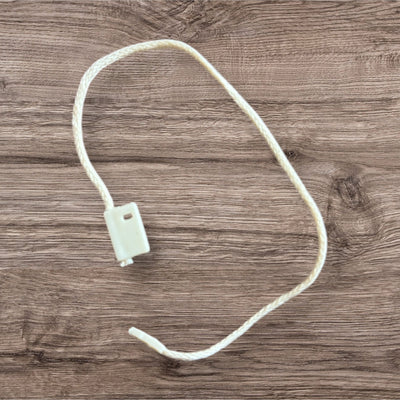
 String fasteners for cardboard tags 01
 String ties for cardboard tags 02
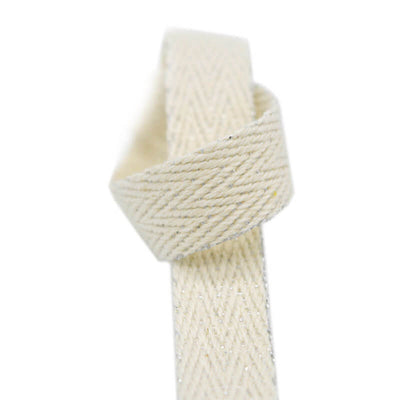
 Cotton herringbone tape ecru HR0002
Timeline: what applies when
| Date | Requirement | What it means for apparel |
|---|---|---|
| 12 Aug 2026 | regulation applies; limits on lead, cadmium, mercury and hexavalent chromium (100 mg/kg combined); ban on fake volume – double walls, false bottoms | check supplier declarations for bags and boxes; no inflated gift boxes |
| 12 Aug 2028 (indicative) | harmonised sorting labels; plastic packaging shows its recycled content share | new print on bags and boxes |
| 1 Jan 2030 | all packaging recyclable (grades A–C); max 50% empty space in grouped, transport and e-commerce packaging; at least 35% recycled content in "other" plastic packaging | mono-material bags with recycled PE; boxes sized to the garment |
| 2035 | recyclability "at scale" | packaging must actually be collected and recycled |
| 2040 | recycled content for "other" plastic packaging rises to 65% | long-term planning |
Some dates depend on secondary legislation, so keep an eye on official European Commission announcements.
The polybag under the microscope
A typical garment bag is LDPE, sometimes perforated, with a self-seal flap and a printed suffocation warning. To meet the 2030 requirements it needs to be:
- Mono-material – polyethylene only, no paper flap, no PET sticker that disrupts recycling.
- Made with recycled content – at least 35% post-consumer recycled (PCR) material from 2030. Many suppliers already offer bags with 30–100% recycled content.
- Minimal in thickness and size – the minimisation principle requires weight and volume to be no more than necessary.
- Correctly marked – with the harmonised sorting symbol from 2028.
"Biodegradable" and "compostable" bags are not an automatic answer: PPWR only allows compostable plastics in specifically listed cases, and a garment bag is usually not one of them.
Hangers, stickers and hang tags
A hanger that travels with the garment to the store is packaging – and must be recyclable or reused. Many retailers already send hangers back to suppliers. Barcode stickers on the bag are part of the packaging too: the adhesive and material must not get in the way of recycling.
The card hang tag is a grey area and depends on interpretation, but it makes sense to treat it the same way: recycled board, no lamination, attached with a textile string instead of a plastic tag pin. Cotton herringbone tape is another plastic-free tie.
Online orders: the empty-space rule
From 2030, e-commerce packaging may not exceed 50% empty space. For a T-shirt folded into a mailer, that means a bag sized to the garment, not a carton full of void fill. If you sell online, start standardising two or three packaging sizes for your core products now.
Who is responsible for compliance
PPWR spreads obligations along the chain. The packaging manufacturer is responsible for its composition and technical documentation. The brand that fills and places the packed product on the market is responsible for choosing the packaging, for empty space and for joining extended producer responsibility schemes – usually a contract with a compliance organisation in each country where you sell. An importer of garments packed outside the EU takes on the manufacturer's obligations for that packaging. So when you order from a third country, ask explicitly what the bag is made of and request declarations. If a sewing factory packs for you, agree the bag specification in writing, just as you agree labels and trims. You will find more practical production ideas in our manufacturing articles.
A seven-step plan for small brands
- List every piece of packaging: bag, hanger, sticker, box, carton, tape, fill.
- Ask suppliers for composition and heavy-metal declarations.
- Remove unnecessary layers – double bags, wrapping paper nobody sees.
- Switch to mono-material bags with PCR content well before 2030.
- Standardise box sizes for online shipments.
- Replace plastic tag pins and ties with textile ones.
- Budget for reprinting packaging in 2028.
FAQ
Does PPWR affect me if I run a small online shop?
Yes. Some relief exists for micro-enterprises, but the core requirements for the packaging itself apply to everyone who places it on the market.
Is a paper mailer better than a polybag?
Not necessarily. Paper is heavier and may need more material for shipping. What matters is recyclability and minimal weight.
Are the labels inside the garment packaging?
No. Sewn-in labels are part of the product; hang tags and stickers on the bag are a different question.
Bul-tex manufactures and supplies garment trims and labels. If you are reworking your branding to cut plastic – textile ties, tapes, labels – get in touch.