Knowing how to clean Velcro is the fastest way to revive a closure that "doesn't stick any more". Nine times out of ten the tape isn't worn out at all – the hooks are simply clogged with hair, lint from the wash and fibres from other clothes. This guide explains how many cycles hook and loop tape lasts, why it loses grip, how to clean it in five minutes, and the signs that tell you it's time to replace it or switch to a different type of closure.
How hook and loop works, and why it stops gripping
Hook and loop fastening (widely known by the trade name Velcro) is made of two tapes. One carries hundreds of stiff nylon hooks per square centimetre; the other is a soft surface of loops. Press them together and the hooks catch the loops; pull them apart and some hooks flex open or release. Tape loses strength for three reasons:
- Contamination – lint, hair, sand and fluff fill the hooks so there are no free loops to catch. This is the most common cause, and it's completely reversible.
- Loop wear – each time you open the closure, a small number of loops break or fuzz up. The soft side gets flattened and worn.
- Hook distortion – high heat (a tumble dryer, an iron) or very hard pulling straightens or snaps the hooks.
 Metal eyelets PE 0001 dome
 Snap fasteners E-2278 Gun Metal 40 mm – 4 pieces, "Teardrop" design, Luxury model
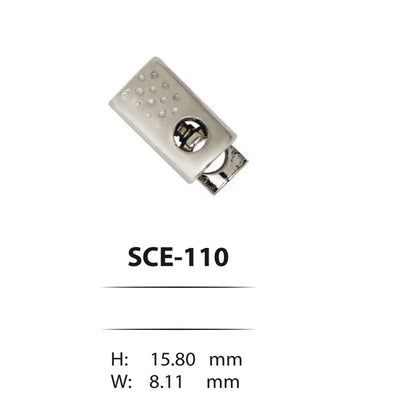
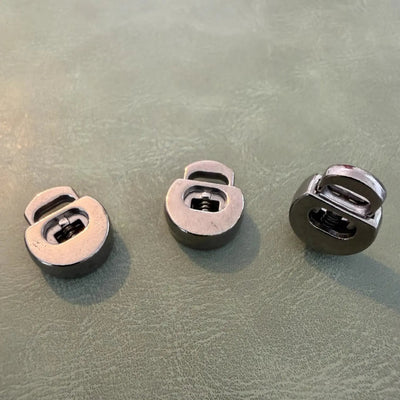
 Metal cord and elastic stoppers 110 – single hole (5 mm), dotted design
How many cycles does it last?
Manufacturers measure tape life in open-close cycles until grip strength falls to half that of new tape. As a rough guide:
| Tape type | Approximate life | Where you'll find it |
|---|---|---|
| Standard woven nylon | A few thousand cycles | Kids' shoes, jackets, bags |
| Cheap tape with moulded plastic hooks | Hundreds of cycles | Packaging, budget accessories |
| Industrial / military grade | 20,000+ cycles | Workwear, protective clothing, gear |
For a garment fastened twice a day, 5,000 cycles is about seven years – usually the surrounding fabric wears out first. If a closure dies within a few months, the cause is almost always dirt or heat, not the cycle count.
How to clean Velcro: 5 methods
1. An old toothbrush
The most versatile method. Brush the hook side in one direction – along the hooks, then back the other way. Lint lifts out in clumps. Works for every width.
2. A fine-tooth comb or pet brush
For long hair and wool fluff. Run the teeth along the length of the tape with the comb at a shallow angle. A metal cat slicker brush is extremely effective, but go gently – too much pressure straightens the hooks.
3. Tweezers
For single threads wound around the hooks. Slow but precise.
4. Tape or a lint roller
Press down wide sticky tape and pull it off sharply. It removes sand and fine dust, but won't shift lint that's tangled deep in.
5. Compressed air
For fine dust and sand in sports shoes and gear – it works brilliantly combined with the toothbrush.
Tip: clean the soft loop side with a soft brush, gently fluffing it against the direction it's been flattened. That restores some of the volume and grip.
Washing without damage
- Fasten the closure before washing. Exposed hooks pick up lint from everything in the drum and snag delicates – knits, tights and jersey.
- Turn the garment inside out or put it in a mesh laundry bag.
- Up to 40 °C is safe for most nylon tapes; hotter washes soften the hooks.
- No high-heat tumble drying. Heat distorts the hooks. If you machine dry, use a low setting.
- Never iron directly on the tape.
When it's time to replace it
Look at the hook side in good light, ideally with a magnifier. Replace the tape if:
- grip is still clearly weaker than new tape after cleaning;
- many hooks are straightened or broken (the surface looks like bristles rather than tiny hooks);
- the loop side is flat, shiny or worn down to the base;
- the stitching around the tape has come loose – re-stitch first, as sometimes that's the whole problem.
To replace it, unpick the old tape with a seam ripper and sew the new one with polyester thread and a straight stitch 2.5–3 mm long, all round the perimeter, 1–2 mm from the edge.
When to consider a different closure
Hook and loop is handy for children, people with limited dexterity and quick adjustment, but it isn't ideal everywhere. If a product keeps coming back with a fluff-clogged closure, consider whether another solution would serve it better:
- Snap fasteners – they don't collect lint, they're quiet when opened and they last many cycles. Good for jackets, childrenswear and cuffs. See Bul-tex snap fasteners.
- Zippers – for openings that must close fully. See our zippers collection.
- Eyelets and cord with stoppers – for backpacks and bags where adjustment matters. Our accessories include metal cord stoppers and cord ends.
You'll find a comparison of closures for kids' and adaptive clothing in other articles in the accessories section of our blog. If you're designing a product and can't decide on the closure for a production run, get in touch – we can help with samples of the snaps and eyelets we stock.
FAQ
Does fabric softener help?
Not in large amounts – it leaves a film on the loops and can reduce grip. Fastening the tape before washing matters far more.
Can I re-stick self-adhesive tape that's come away?
Self-adhesive tapes aren't meant for washable garments – the glue doesn't survive water and heat. For textiles, use sew-on tape only.
Why does new tape grip less than the old one did?
Probably the hook and loop come from different makers or are different types. Grip depends on the two sides being compatible, so always replace both together.