A stuck zipper rarely happens overnight. It is usually the result of months of dust, detergent residue, salt or simply dry teeth wearing against each other. The good news is that a few minutes of care keeps most zips running smoothly for years, and the right lubricant can free a stiff one in seconds. This article is not about repairing a broken zip; it is about prevention: how to wash garments with zips, what to lubricate the teeth with, what never to use, and how to look after coated zips.
Why zips start to stick
- Dirt – dust, sand, hair and lint build up between the teeth and inside the slider.
- Detergent residue – fabric softeners and powder detergents leave a film that stiffens the coil.
- Salt and chlorine – after the sea or the pool, salt crystals act as an abrasive and speed up corrosion on metal zips.
- Oxidation – brass and nickel-plated teeth darken and roughen if they stay damp.
- Overloading – a stuffed bag or a tight garment pulls the teeth sideways and the slider drags.
- A loose or bent slider – lubrication will not help here; it needs repair or replacement.
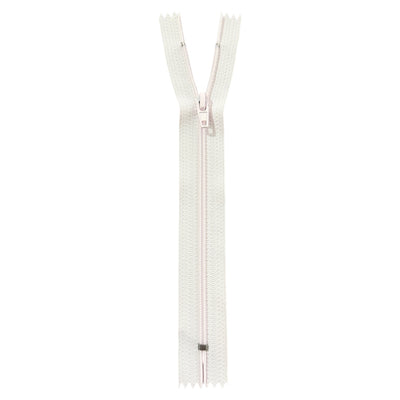
 Grey coil zippers No. 3 TAT TF330 – 13 cm non-separating
 Beige #3 coil zippers TAT TF031 – 12 to 16 cm non-separating for trousers
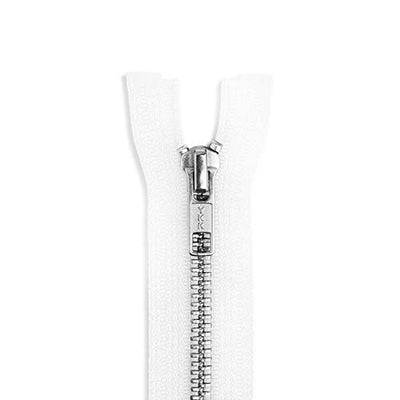
 Metal closed-end zipper orange / gold teeth T5 PMZ1004
Washing checklist for zipped garments
- Close the zip fully before washing. An open zip snags and tears other clothes, and its teeth get bent in the drum.
- Turn the garment inside out, especially if the zip is metal or decorative.
- Keep the temperature moderate – 30–40 °C is enough for most garments and is gentle on the coil.
- Avoid bleach with metal zips – it accelerates oxidation and can discolour the tape.
- Dose detergent carefully and add an extra rinse if needed so no film is left between the teeth.
- Never iron directly over the zip. The coil is nylon or polyester and can deform. Iron around it or through a cloth.
- Dry completely before putting the garment away, especially with metal zips.
What to lubricate a zip with
| Lubricant | How to apply | Best for | Note |
|---|---|---|---|
| Graphite (soft pencil) | Rub the tip along the teeth on both sides, then run the slider a few times | Metal and coil zips | Can lightly mark pale tapes |
| Beeswax | Rub onto the teeth above and below the slider | Metal zips on jeans, bags, leather goods | Also protects against moisture |
| Paraffin candle | Rub onto the teeth above and below the slider | All types | Always to hand; avoid coloured candles |
| Dry bar soap | Rub dry soap along the teeth | Coil zips | A temporary fix; wash out later |
| Dedicated zip lubricant | As directed | Coated and watertight zips | The best choice for technical outerwear |
Tip: less is more. A thin layer of wax or graphite is plenty. Any excess collects dust and within a week the zip sticks again.
What never to use
- Cooking oil and household oils – they soak into the tape, stain it and attract dirt.
- WD-40 and similar sprays – their solvents can damage nylon and polyester and soften coatings.
- Acetone and alcohol – they attack the plastic coil and the polyurethane film.
- Heat – a hair dryer held close, an iron or a radiator will warp synthetic teeth.
- Force – yanking a stuck slider at an angle bends the teeth and spreads the slider.
Caring for coated zips
Water-resistant zips with polyurethane film and watertight zips need a little extra attention. Manufacturers give similar advice:
- rinse the zip with clean water after contact with salt, sand or mud;
- clean the teeth with a soft brush, without harsh detergents;
- do not iron or expose to high heat – the film can delaminate;
- lubricate watertight zips regularly with the lubricant the manufacturer recommends;
- store the garment with the zip closed and without sharp folds across it.
Care by product type
Jeans and work trousers
The metal fly zip is under constant tension and gets washed often. Wash it closed and inside out, and every few months rub the teeth with beeswax. If the pull will not stay down, the semi-auto slider is worn.
Jackets and hoodies
On separating zips the weakest point is the pin and box. Push the pin fully home and straight, without tugging the slider at an angle, and keep the reinforcement film away from the iron.
Bags, backpacks and luggage
Do not overfill – if the zip only closes under pressure, the contents are pulling the teeth sideways. Brush out sand and dust after each trip and lubricate with paraffin.
Childrenswear
Kids' clothes are washed most often. Close the zip before every wash and check that the stops are in place – a loose slider is a small part that should never end up in a toddler's hands.
Storing between seasons
Before you put away winter jackets or summer bags, clean and dry the zip, close it and hang the garment rather than folding it sharply across the chain. Keep metal zips somewhere dry so they do not oxidise.
Quick troubleshooting
The slider drags along the whole length
Clean the teeth with a dry brush and apply graphite or wax. If that does not help, check that the slider actually matches the chain.
It sticks in one spot only
Look for a bent tooth or a thread caught in the slider. Straighten the tooth gently with tweezers.
The zip closes but splits behind the slider
That is not a lubrication problem – the slider is loose or worn. Replace it with a new one of the same gauge.
A metal zip looks dark and feels rough
Clean with a soft brush, dry thoroughly and apply a thin coat of beeswax.
When it is time for a new zip
If teeth are missing, the tape is torn or the pin on a separating zip is bent, no amount of care will help. Our zippers collection offers #3 coil zips in many colours, and the metal zips range has #5 models with gold or silver teeth. For production runs and brand orders, Bul-tex also supplies zips to specification – contact us. Read more about zip types and anatomy in our zipper articles.