PVD vs electroplating is a question that comes up the moment a brand starts sourcing premium buckles or bag hardware. PVD has become a favourite word in product copy for luxury buckles, watches and jewellery: "won't fade", "won't peel", "more eco-friendly". How much of that holds true for garment and bag hardware, and when is classic electroplating perfectly adequate? Below we compare the two technologies point by point and finish with a simple decision tree for brands choosing metal trims.
Two different processes
Electroplating
Parts are immersed in baths of metal salts while an electric current passes through them. Metal ions deposit on the surface layer by layer: copper, nickel, then the colour layer such as gold, chrome or black nickel. A clear lacquer usually goes on last. The process is high-volume, cheap per piece and offers a huge range of colours and effects, including aged and antique finishes.
PVD (Physical Vapour Deposition)
In a vacuum chamber a solid material, usually titanium, zirconium or chromium, is evaporated or sputtered and reacts with a gas such as nitrogen or a hydrocarbon. The result is a ceramic-metallic film, for example gold-coloured titanium nitride, that bonds to the surface at an atomic level. The film is thin, typically under 1–2 microns on decorative parts, but very hard and dense.
Key point: PVD is not applied straight onto zinc alloy. Zamak castings first receive an electroplated base (copper, nickel, often chrome) and only then the PVD layer. So on most buckles and buttons PVD is an upgrade on top of plating, not a replacement for it.
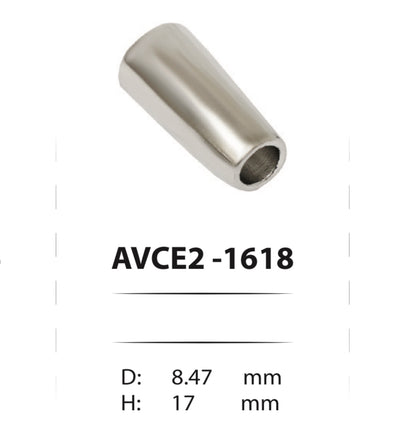
 Metal cord ends for cords and elastic bands 1618
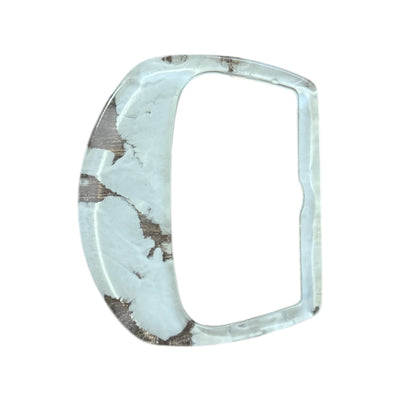
 Polyester buckles PB 0002
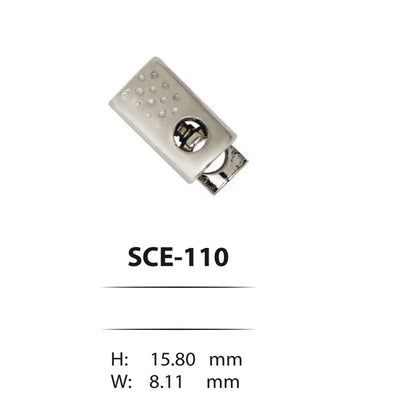
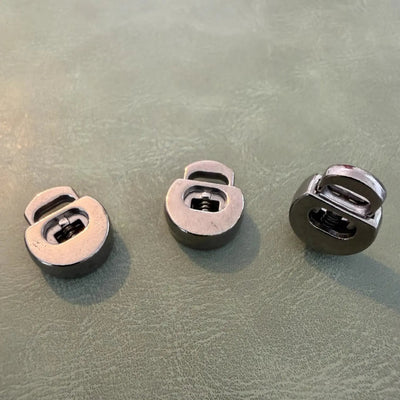
 Metal cord and elastic stoppers 110 – single hole (5 mm), dotted design
Side-by-side comparison
| Criterion | Electroplating + lacquer | PVD |
|---|---|---|
| Surface hardness | typically under 1000 HV | roughly 1500–4500 HV depending on type |
| Scratch resistance | moderate; lacquer scratches first | high; no lacquer needed |
| Salt spray (supplier data) | often 300–500 h for a good stack | often over 1000 h |
| Colour range | very wide, including antique, patina, matte | gold, rose gold, black, gunmetal, bronze, rainbow; no patina |
| Cost per piece | low to medium | higher; batches limited by chamber size |
| Minimum quantities | flexible | usually higher for a specific colour |
| Environmental profile | chemical baths and wastewater needing treatment | dry process for the colour layer; high energy use |
The hardness and salt spray figures come from coating suppliers and vary a lot with surface preparation. Read them as a direction of travel, not a guarantee for a particular part.
Where PVD really wins
- Belt buckles. The prong and frame rub constantly and a belt is worn for years. PVD gold stays gold where plated gold thins out along the frame edge.
- Bag hardware. Rings, trigger hooks and magnetic clasps scrape against tables, keys and zips. Black PVD doesn't reveal a bright underlayer at the first scratch.
- Premium products with a durability promise. If the brand promises a long life, the pricier coating is cheaper than returns.
- Contact with sweat and cosmetics. PVD has no lacquer to crack and let sweat underneath.
Where electroplating is enough (or better)
- Jacket and coat buttons. They see little abrasion and are rarely washed. A good plated stack with lacquer outlives the garment.
- Antique and aged effects. Antique brass, antique silver, hand-relieved highlights: this is the territory of plating and oxidising. PVD gives a uniform, "new" colour.
- Small runs in many colours. If a collection uses five finishes in small quantities, plating is more flexible and faster.
- Snaps and eyelets. Here the mechanics and a nickel barrier matter more than surface hardness.
Decision tree
- Does the part rub or slide constantly (buckle, bag ring, strap slider)?
- Yes: consider PVD, or at least a heavier plating stack.
- No: go on.
- Do you want an antique, patina or hand-relieved effect?
- Yes: plating plus oxidising plus lacquer.
- No: go on.
- Is the quantity per colour below a few thousand pieces?
- Yes: plating; PVD rarely pays off.
- No: compare quotes for both.
- Is it a high-priced product with a long-life promise?
- Yes: PVD is a sensible investment.
- No: quality plating at the right thickness.
The "forever finish" myth
PVD is hard but thin. A heavy knock can dent the base metal underneath and crack the film. If the base is a zinc casting with a weak plated underlayer, PVD will not save the part, because corrosion starts from below. So when you get a PVD quote, ask about the base layer too: what it is, how thick, and what has been tested.
The eco argument, with nuance
PVD doesn't use wet baths for the colour layer, so cyanide or chrome solutions for the final finish disappear. But on Zamak the base is still electroplated, and vacuum chambers use a lot of energy. The honest claim is "fewer wet chemical steps for the final layer", not "a fully green coating". If you use the sustainability angle in marketing, make sure you can document it.
What to ask for in a quote
- The type of PVD film (titanium nitride, zirconium-based, black carbon-based) and its thickness.
- The base underneath: substrate metal, copper and nickel layers, thickness.
- Salt spray data and a scratch or abrasion test on the finished part.
- EN 1811 testing for parts that touch the skin.
- The accepted colour tolerance between batches; PVD gold is more stable, but it still varies.
Compare quotes on these points, not just on price per piece.
FAQ
Is PVD nickel-free?
The PVD film itself contains no nickel, but the base layer beneath often does. A dense PVD film reduces nickel release, yet for skin-contact parts you should still ask for an EN 1811 test on the finished item.
Can brass buttons be PVD coated?
Yes. Brass and stainless steel take PVD more easily than zinc. They still need thorough cleaning and often a nickel base.
How can I tell PVD from plating?
By eye it's difficult. The supplier's documentation and a scratch test with a hard object on a hidden area tell you more.
Browse our metal buckles, accessories and metal buttons in a range of finishes. Bul-tex also makes custom hardware for brands; contact us with your finish and quantity requirements and we will talk through a realistic option.