Silicone gripper elastic is the small detail that separates good cycling shorts from the ones that ride up your thigh after the first ten kilometres. The same principle keeps hold-ups in place, strapless bra edges up, swimwear legs down and ski trouser cuffs where they belong. In this guide for activewear brands we look at the different silicone patterns, where each one works, how to sew gripper without trouble and what to tell customers about washing so the grip lasts.
What it is
Silicone gripper elastic (gripper tape) is a flat elastic band, usually polyester with spandex, with silicone applied to one side. Silicone has high friction against skin and clings lightly without any adhesive. The base gives the stretch, the silicone gives the grip. It's machine washable, because silicone is resistant to water and moderate heat.
 White knitted elastic band PEL 1001, 25 m roll
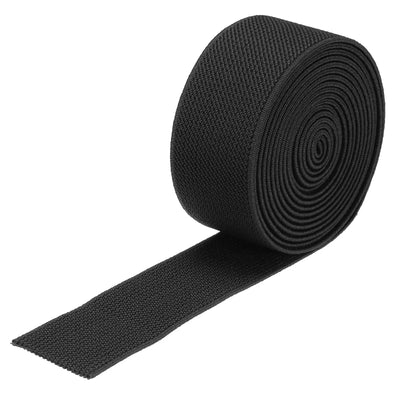
 Black knitted elastic band PEL 1002, 25 m roll
 Black woven elastic band 3 cm WE 1030 – strong and firm elastic with Oeko-Tex certificate
Silicone patterns compared
| Pattern | Grip | Comfort | Typical use |
|---|---|---|---|
| Dots | Medium | High, skin breathes between dots | Lingerie, strapless bras, swimwear |
| Waves (single or triple) | High and even | Good | Cycling shorts, leggings, trouser waists |
| Lengthwise lines | High in the direction of movement | Good | Shirt-stays in trousers, uniforms |
| Solid silicone stripe | Highest | Lower, can trap sweat | Cuffs, braces, technical items |
| Silicone logo | Medium to high | Good | Branded cycling and training shorts |
Where it's used
- Cycling shorts and bibs: wide gripper on the legs, 3–6 cm, keeps the chamois in place.
- Leggings and running shorts: narrow gripper inside the waistband to stop it sliding down.
- Sports bras: along the underband so it doesn't ride up during jumps.
- Lingerie and strapless bras: dots along the top edge.
- Swimwear: leg openings and top edges.
- Shirts and uniforms: an inner band in the trouser waist to keep shirts tucked in.
- Ski and cycling cuffs, knee supports: solid stripes.
Choosing width and power
The wider the gripper, the less pressure per square centimetre it needs to hold. So a wide gripper with moderate power is more comfortable than a narrow, tight one. Good starting points: 4–5 cm for cycling short legs, 2–3 cm for a legging waistband, 1–1.5 cm with dots for lingerie. Choose a spandex base, not rubber, because sweat and heat break rubber down.
How to sew it
- Silicone side to the skin. It sounds obvious, yet it's the most common mistake on a first run. Mark the face side on the pattern.
- Needle: a stretch or jersey needle, size 75–90 depending on thickness. Silicone can drag on the thread, and a stretch needle reduces skipped stitches.
- Foot: a Teflon or walking foot if you sew on the silicone side. A standard metal foot sticks and the elastic won't feed evenly.
- Stitch: zigzag, three-step zigzag, coverstitch or flatlock. Stitch through the base rather than the silicone wherever you can.
- Tension: on leg openings apply the gripper with slight stretch, usually 5–10%. Heavy stretch makes it dig in and leave marks.
- No iron: never press silicone directly. If you must, press from the inside through a cloth on low heat.
Washing and care
Silicone survives machine washing, but grip depends on a clean surface. These are worth putting on your care label or swing tag:
- Wash at 30–40 °C, inside out.
- No fabric softener, which coats the silicone in a thin film and reduces grip.
- No hot tumble drying.
- If the gripper loses grip, wash it with warm water and a little detergent. Body oils and lotions are usually the culprit.
Troubleshooting
- The gripper rides up despite the silicone: the elastic is too narrow or too weak; switch to a wider band with moderate power.
- Red marks on the skin: too much stretch, or a solid silicone stripe; choose dots or waves.
- Silicone peeling: poor application or washing above the recommended temperature.
- Sweating under the gripper: a solid stripe doesn't breathe; dots solve it.
What to specify when ordering
- Width and pattern: with a sample or a drawing of the silicone design.
- Base power: force at 50% extension, so you can compare batches.
- Composition: polyester with spandex, no rubber.
- Base and silicone colour: clear silicone on a black or white base is the most versatile.
- Wash test: the silicone shouldn't peel after 20–30 cycles at 40 °C.
- Minimum and lead time: gripper with a logo needs a screen made first, so plan ahead.
Gripper elastic and Bul-tex
Bul-tex manufactures and supplies flat woven and knitted elastics from 1 to 10 cm wide, in white, black and colours. We don't currently stock silicone gripper elastic. For legging and shorts waistbands you can use our woven elastic combined with a separate silicone print on the fabric. For custom gripper, with your width, pattern and colour, contact us through our contact page. Elastics in stock are in our elastics collection, and for choosing elastic for activewear and swimwear see our other elastic guides.
FAQ
Is silicone safe for skin?
The silicone used in textile grippers is inert and generally well tolerated. For very sensitive skin choose dots rather than a solid stripe and check that the tape has a harmful-substances certificate.
Can silicone be applied directly to fabric?
Yes, a silicone print directly on the leg is an alternative to sewn-in gripper. It gives a flatter finish but needs printing equipment.
How long does gripper last?
With correct washing, as long as the garment. Grip is lost more often to fabric softener than to wear.
Sewn gripper or silicone print: which is cheaper in production?
For small runs, sewn-in gripper usually works out cheaper because it needs no screen or printing equipment. For large runs of a single style, silicone printed straight onto the fabric can cost less per piece and saves a sewing operation.