Trim lead times are rarely the sole reason a collection runs late, but they are almost always the final straw. The fabric arrives, the cut is ready, the sewing room is waiting, and the woven labels are still at sample stage or the metal plates are waiting on a mould. The fix isn't to order "faster". It is to plan backwards: from the launch date in reverse, with realistic lead times for every type of trim and a buffer for approvals and holidays. Here's how.
Typical lead times by trim type
The figures below are typical industry ranges for planning purposes. They apply to custom items and start after the design is approved, not from your first enquiry. The actual lead time is always confirmed in the quote.
| Item | Artwork and sample | Production | Total (guide) |
|---|---|---|---|
| Printed fabric labels (satin, taffeta) | 1–3 days | 2–7 working days | 1–2 weeks |
| Woven (jacquard) labels | 5–10 working days | 7–15 working days | 3–5 weeks |
| Hang tags | 2–5 days | 5–10 working days | 2–3 weeks |
| Metal plates, new mould | 1–2 weeks (mould + sample) | 2–3 weeks | 4–6 weeks |
| Metal plates, existing mould or laser | n/a | 1–3 weeks | 1–3 weeks |
| Logo buttons (metal, corozo, polyester) | 2–3 weeks | 3–5 weeks | 5–8 weeks |
| Elastics and ribbons dyed to Pantone | 1–2 weeks (lab dip) | 2–3 weeks | 3–5 weeks |
| Jacquard logo elastic | 2–3 weeks | 3–4 weeks | 5–7 weeks |
Stock items such as buttons, zips, snaps and elastics in available colours ship within days. So the first planning question is: what genuinely has to be custom, and what can be stock?
 Metal buttons with a pink finish 6104047 Col 255 – 22 mm handmade
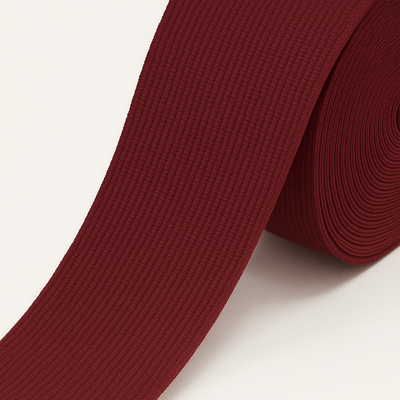
 Bordeaux knitted elastic band PEL 1013 on a 25 m roll
 Snap fasteners 0006 – mini, with a flat cap
The backwards calendar, step by step
- Fix the launch date: the day the goods must be in the shop or warehouse.
- Subtract logistics and packing: usually 1–2 weeks for pressing, packing, photography and distribution.
- Subtract sewing: depends on the factory and quantity; for a small brand often 3–6 weeks.
- Trims must be at the factory before sewing starts: at least one week earlier, to allow incoming inspection.
- Subtract the lead time of the slowest item: usually logo buttons or metal plates.
- Subtract approvals: every artwork or sample sign-off realistically takes 3–5 working days on your side.
- Add a buffer: 10–15% of the total, or at least one week.
Worked example: spring collection launching 1 March
A brand making jackets and T-shirts needs woven labels, hang tags, metal plates from a new mould and stock metal buttons.
- 1 March: launch.
- 15 February: sewing finishes, packing and photography begin.
- 10 January: sewing starts (five weeks).
- 3 January: all labels and trims at the factory; incoming inspection.
- Metal plates (six weeks plus holidays): artwork approved by mid-November at the latest.
- Woven labels (4–5 weeks): artwork approved by the end of November.
- Hang tags (2–3 weeks): print file approved by early December.
- Stock buttons: ordered by mid-December so delivery doesn't fall into the holiday week.
Note that with Christmas and New Year, the last working week of December often simply doesn't exist. If you don't take it out of the calendar, it will eat your buffer.
Tip: send enquiries for all custom items at the same time, not one after another. Label, plate and button artwork can be approved in parallel, which saves weeks.
Buffers: how much and where
A buffer isn't wasted time. It's insurance against things that almost always happen. Put it where the risk is highest:
- New supplier or new type of item: add 1–2 weeks, because a first sample is rarely approved first time.
- Pantone colour matching (dyed elastic, ribbon, thread for a woven label): plan for at least two lab dip rounds.
- Metal from a new mould: one round of shape correction is normal, especially with fine logo detail.
- International shipping: customs and transport delays add days that nobody controls.
A good rule of thumb: the earlier a step sits in the calendar, the bigger the buffer it needs, because any delay there ripples down to every stage that follows.
Where brands lose time
- The file isn't ready: a raster logo, no Pantone reference, unclear dimensions. Every correction costs 2–3 days.
- Approving "from the phone": the sample isn't checked against the fabric, and a new one has to be ordered.
- Unclear quantities: no overage was calculated, so a top-up order triggers a new minimum.
- Care label text isn't final: fabric composition is confirmed late.
- Holidays: August and late December across Europe.
How to shorten lead times
- Repeat orders: with an approved design and an existing mould, artwork and sampling drop out. Metal moulds are usually kept for reorders.
- Stock instead of custom: laser-engraved metal labels instead of a casting, and buttons from our existing range in your hardware colour instead of logo buttons for a first collection.
- Printed instead of woven for an urgent capsule. See our labels.
- A central trim sheet listing code, supplier, lead time and minimum for every item, so the answer to "when will it be ready" is one line away.
FAQ
Can labels arrive after sewing has started?
Labels are sewn in during assembly, so a delay either stops sewing or means garments have to go back on the line. That costs more than express shipping.
How much overage should I order?
Typically 3–5% for labels and 5–10% for buttons and small metal parts, to cover sewing rejects and losses.
Do lead times include delivery?
Not always. Within the EU, DHL Express adds a few working days; allow more outside Europe.
Bul-tex manufactures and supplies labels, buttons and trims and takes custom orders from brands. Send us your item list and launch date via our contact page and we will give you realistic lead times for your calendar. There's more on brand orders in our production articles.