
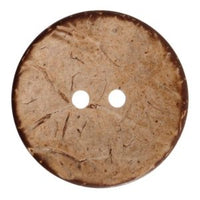


Tagua, also known as vegetable ivory, is the seed of a South American palm and the raw material behind corozo buttons. In recent years it has become a favourite of sustainable fashion brands, and for good reason. But precisely because the eco story is so appealing, it is often told inaccurately. This article separates fact from myth, explains where tagua's sustainability really comes from, and gives you ready-made wording your brand can use to describe corozo buttons honestly in product copy.
What tagua is
Tagua is the common name for palms of the genus Phytelephas — Greek for "elephant plant". The species most associated with buttons is Phytelephas aequatorialis, which grows along the Pacific coast of Ecuador. The palm produces large, spiky fruit clusters, each holding several seeds. When young, the seeds contain a liquid similar to coconut water. As they mature, this liquid hardens into a dense, white, very hard mass — the "vegetable ivory". Once dried it can be cut, turned and dyed like real ivory, which is why in the late nineteenth and early twentieth centuries tagua was a mass-market button material across Europe and the Americas.
 SHELL 17 WHITE – Classic 4-hole river shell buttons, durable and designer-made
 SHELL 07 BROWN – Brown mother-of-pearl shirt button with 4 holes, thin rim, luxurious and natural
 Mother-of-pearl buttons River 02
Why it is considered sustainable
Tagua's sustainability rests on a handful of concrete points that are easy to check:
- No trees are felled. The seeds are gathered after the ripe fruit falls to the ground. The palm keeps producing for years.
- A slow but renewable cycle. A palm needs around 15 years before it starts to fruit, after which it yields a harvest every year. That makes the resource renewable, provided the forests are protected.
- Biodegradable. Corozo is an entirely plant-based material and breaks down naturally, unlike plastic buttons.
- Waste gets used. Production offcuts — shavings and dust — are used as animal feed, so very little material is thrown away.
- Income for local communities. Tagua gathering provides rural income and gives people an economic reason to keep forests standing rather than clearing them for pasture.
Myths vs facts
| Myth | Fact |
|---|---|
| "Corozo is 100% natural, so every corozo button is eco." | The raw material is natural, but coloured buttons are dyed and some are lacquered. The overall footprint also depends on dyes and finishing. |
| "Tagua lasts forever." | Corozo is hard but organic. It is sensitive to heat, long soaking and drum impacts during dry cleaning. |
| "Every beige patterned button is corozo." | Plenty of polyester buttons imitate corozo. Real corozo feels denser, has fine natural lines, and a pale matt core often shows beneath the polished surface. |
| "Corozo replaces ivory, so it saves elephants." | Historically tagua was indeed a cheaper ivory substitute. Today the ivory trade is tightly restricted, so this is not a credible modern marketing argument. |
| "Corozo is always far more expensive." | It costs more than standard polyester, but per garment the difference is often small compared with its effect on perceived quality. |
From nut to button in brief
In short: the seeds are collected and dried for weeks to lose their moisture; they are then peeled, sliced into discs and dried again. The button shape is turned from these discs, the holes are drilled, and finally the buttons are polished, dyed or left natural. Because dye penetrates only the outer layer, every button shows natural lines and slight tonal variation — exactly what sets tagua apart from plastic. We cover the full process in a separate article on how corozo buttons are made; here the focus is sustainability.
How to write honest copy about corozo buttons
EU rules on environmental claims are getting stricter. Directive (EU) 2024/825 on empowering consumers for the green transition applies from 27 September 2026 and bans generic claims such as "eco", "green" or "nature-friendly" when they can't be backed by recognised excellent environmental performance. In practice, it is safer to state specific, verifiable facts than to use broad labels.
Wording that works
- "These buttons are made from corozo — the seed of the tagua palm, gathered without felling the tree."
- "Corozo is a plant-based, biodegradable material."
- "Each button shows natural lines and slight variations in tone because it is cut from an individual seed."
- "The buttons are dyed; to keep the colour, follow the care label instructions."
Wording to avoid
- "100% eco-friendly button" — without data on dyes and processing, this is a generic claim.
- "Climate neutral" — this needs evidence across the whole life cycle.
- "Fully sustainable" — sustainability is relative and depends on the whole supply chain.
Tip: ask your supplier for information on the origin of the raw material and the dyes used. If the buttons carry a certificate such as OEKO-TEX Standard 100, name it precisely with the certificate number rather than writing a vague "safe".
Which garments suit corozo
Thanks to its hardness and warm look, corozo works on jackets, coats, trousers, waistcoats and premium shirts. White and light corozo is a classic for summer jackets and linen, while dark shades suit wool coats. Our corozo buttons include four-hole models in a range of colours, and for the full natural palette browse our natural buttons in shell, wood and coconut. If you want a wooden alternative, take a look at our wooden buttons.
Frequently asked questions
Are tagua and corozo the same thing?
Yes. Tagua is the name of the palm and its seed; corozo is the trade name of the button material.
Can corozo be laser engraved?
Yes. Corozo engraves cleanly, with the logo appearing lighter or darker than the surface. For logo buttons, contact us.
How should corozo buttons be cared for?
Avoid high heat, long soaking and direct pressing. For dry cleaning, it's best to remove or protect the buttons.
If you are building a sustainable collection and want buttons with a story you can actually prove, drop us a line. More on natural buttons is in our button advice section.


