Tech pack trims are where most factory questions and delays begin. The fabric is usually described in detail, but the zipper is "black, 60 cm" and the elastic is "2.5 cm". The trims section of the tech pack – the BOM, or bill of materials – needs to be just as precise as the fabric page. This guide explains how to write it so every line can only be read one way: naming conventions, units, materials, colour references, placement, consumption and tolerances. At the end you will find example rows for a lightweight jacket.
What the BOM is and how it links to the trim card
The BOM is a table of every material in a style: shell fabric, lining, fusing and trims. The trim card is its physical twin, with the actual samples attached. Good practice is to give every BOM line a number that matches the sample number on the trim card. When the factory asks about "item 7", everyone knows it is the cuff button and not the pocket button.
 Beige coil zippers #3 TAT TF334 – 10, 11, 13, 14, 15 cm non-separable
 Snap fasteners 0006 – mini, with a flat cap
 Satin label 14 cm x 5 cm - satin print
Rule 1: name every trim the same way
Use a fixed word order for every trim: type – subtype – size – material – colour/finish – code. For example:
- Zipper – coil, closed-end – #5, 18 cm – polyester – black – supplier code
- Button – 4-hole – 24L (15 mm) – corozo – dark brown matt – code
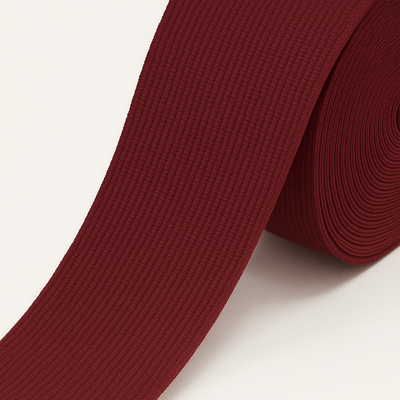
- Elastic – knitted – 25 mm – polyester/elastodiene – white – PEL code
- Label – jacquard, centre fold – 50 × 20 mm (folded) – polyester – black ground/white text – artwork number
A consistent pattern makes the table easy to sort and compare across styles, and suppliers can see at a glance what is missing.
Rule 2: units that cannot be misread
| Trim | How it is measured | Watch out for |
|---|---|---|
| Buttons | Diameter in mm or lignes (1 ligne = 0.635 mm) | Give both: 18L = 11.5 mm, 24L = 15 mm, 32L = 20 mm, 40L = 25 mm |
| Zippers | Gauge (#3, #5, #8) + length in cm | State whether length includes the end stops and whether it is open-end |
| Elastic, tape | Width in mm + length per garment in cm | Give the relaxed length |
| Labels | Width × height in mm | Finished, folded size plus fold type |
| Thread | Ticket number or tex | Different counts for seaming, overlocking and topstitching |
| Drawcords | Diameter in mm + length in cm | State whether the length includes the aglets |
Rule 3: material and finish, not just "metal"
"Metal button" is not a specification. State the base material (zinc alloy, brass, aluminium) and the finish (nickel, gunmetal, antique brass, black oxide), and for garments sold in the EU add "nickel-free" for any part in prolonged skin contact. For textile trims, name the raw material: rubber or spandex elastic, polyester or cotton tape, satin or taffeta label. Material decides how a trim behaves in washing, ironing and dry cleaning, so it is part of the spec, not a detail.
Rule 4: colour with a reference
Give every trim a colour reference: Pantone TCX for textiles, the supplier's shade-card code for zippers and thread, and the finish name for metal parts. Add a "matches" column – for example "zipper matches shell" or "buttonhole thread matches button". When a style comes in several colourways, add one column per colourway instead of separate tables, so the differences sit side by side on one line.
Rule 5: placement with a drawing
"On the back" or "at the side" is not enough. Attach a placement page to the BOM: a sketch of the garment with arrows, numbers that match the table rows, and distances in mm – for example "main label: centre back, 15 mm below neck seam" or "care label: left side seam, 10 cm above hem". For buttons, give spacing between them and distance from the edge.
Rule 6: consumption and tolerances
For each line give quantity per garment and the unit (pcs, cm, m). For trims sold by length – elastic, tape, cord – consumption depends on size: a waistband of 70 cm on a size S and 86 cm on a size L is not "1 pc". Add a waste allowance – 2–5% for small trims and around 3% for trims sold by the metre – and list it separately so it is clear who orders it.
Tolerances matter just as much: zipper length ±0.5 cm, elastic width ±1 mm, label size ±1 mm, colour as per approved sample. Without a tolerance, every small deviation turns into an argument at goods-in.
Example: trims for a lightweight jacket
| # | Trim | Specification | Placement | Qty/garment |
|---|---|---|---|---|
| 1 | Front zipper | Coil, open-end, #5, 60 cm, black | Centre front | 1 |
| 2 | Pocket zipper | Coil, closed-end, #3, 16 cm, black | Side pockets | 2 |
| 3 | Snap fastener | 4-part, 15 mm, nickel-free, matt black | Storm flap, cuffs | 6 |
| 4 | Elastic | Knitted, 25 mm, black | Hem, 2 × 12 cm | 24 cm |
| 5 | Main label | Jacquard, 50 × 20 mm, centre fold | Centre back, 15 mm below collar | 1 |
| 6 | Care label | Printed satin, 30 × 60 mm | Left side seam of lining | 1 |
| 7 | Size label | Woven, 15 × 15 mm | Next to main label | 1 |
| 8 | Thread | Polyester, ticket 120, black | All seams | as consumed |
| 9 | Hang tag | With string, to artwork | Left sleeve | 1 |
Tip: give metal hardware (buttons, rivets, snaps) its own detailed sheet. It needs more fields – face, back, attachment method, REACH compliance – than fit comfortably in the general table.
The gaps we see most often in trims sections
- No zipper gauge or type (invisible, coil, metal).
- Button size only in lignes while the supplier works in mm, or the other way round.
- No colour given for buttonhole and topstitching thread.
- Labels described without fold type or finished size.
- No size-by-size consumption for elastics and tapes.
- The spare button is forgotten.
Bul-tex trims for your tech pack
Bul-tex manufactures and supplies zippers, elastics, buttons and labels, and every stock item has its own code you can drop straight into your BOM. For labels, buttons or elastics made to your design, contact us and we will finalise the spec together before it goes into production. More practical guides are in our manufacturing section.