

Are shell buttons sustainable? The question sounds easy: mother-of-pearl is a natural, biodegradable, plastic-free material. The real answer depends on where the shell comes from, how it is harvested and how the fishery is managed. This article takes an honest look at shell supply: the wild trochus harvest, its history of overfishing, quotas and hatcheries, and shell from pearl farms. It ends with concrete questions for suppliers and advice on describing shell buttons in brand communication without sliding into greenwashing.
Where button shell comes from
| Source | How it is obtained | Main risk | Sustainability upside |
|---|---|---|---|
| Trochus | Wild harvest from shallow Indo-Pacific reefs | Overfishing | Renewable when well managed |
| Akoya and other pearl oysters | Shell from pearl farms | Depends on farm practice | By-product; animals are not raised for buttons |
| Freshwater mussels (river shell) | Mostly from freshwater pearl farms | Water quality at farms | By-product |
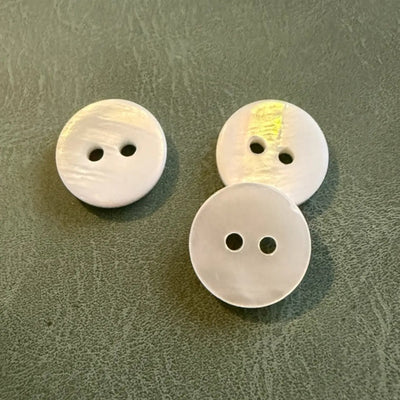
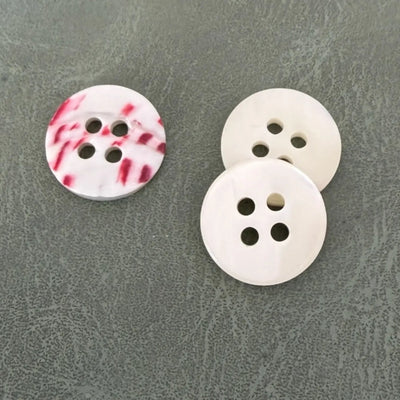
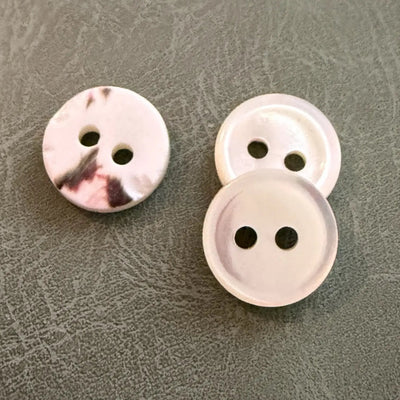
 SHELL 17 WHITE – Classic 4-hole river shell buttons, durable and designer-made
 SHELL 19 WHITE – White river shell buttons for men's shirts, 2- hole, flat, natural and designer
 SHELL AGOYA CLASSIC 2H – Classic 2-hole Akoya mother-of-pearl buttons, durable and elegant
Trochus: valuable resource, vulnerable species
The FAO estimates global demand for trochus shell at about 7,000 tonnes a year. For many Pacific communities trochus is one of few export products and an important source of income. The problem is that the species is particularly prone to overfishing wherever it is harvested commercially: the snails live in shallow water, are easy to collect and grow slowly. In a number of areas populations fell sharply after uncontrolled collection.
The good news is that some models work. The best-managed fisheries combine:
- a minimum shell size, so snails can breed at least once before they are taken;
- very short seasons, sometimes only about two weeks a year;
- quotas on the total catch;
- bans on scuba harvesting, so deeper populations remain as a breeding reserve.
In Australia, the One Arm Point community in Western Australia runs the country's only trochus hatchery to keep its fishery sustainable. Projects like this show that a natural material can also be responsible, but only when the supply chain is transparent.
Pearl farms: shell as a by-product
A large share of button shell comes from oysters and mussels farmed for pearls. Once the pearl is harvested, the shell remains, and turning it into buttons converts waste into a valuable product. That is a strong sustainability argument, but there are nuances: aquaculture affects the water environment and farm conditions vary. "From a pearl farm" is better than "unknown origin", but it is not an automatic sustainability certificate.
Shell vs plastic: an honest comparison
- End of life. Shell is calcium carbonate and leaves no microplastic. Polyester buttons are petroleum-based.
- Durability. Shell is more brittle and can chip. But a well-sewn shell button lasts years, and garments with natural buttons tend to be repaired rather than thrown away.
- Sourcing. With shell the risk is biological (overharvesting); with plastic it is fossil feedstock and waste.
The takeaway: shell can be the more sustainable choice, but not by default. Origin is decisive.
Questions to ask your supplier
- Which shell is it – trochus, akoya, freshwater mussel?
- Which country or region does the raw material come from?
- Is it wild-harvested or a by-product of pearl farming?
- Is there information on fishing quotas or permits in the harvesting region?
- Are the buttons dyed, and with what? Are there tests for harmful substances (for example to OEKO-TEX)?
- Can you get a written material description for the product's technical file?
How to talk about shell buttons in marketing
Since 27 September 2026 the EU has applied new rules under Directive (EU) 2024/825, which ban generic environmental claims such as "eco", "green" or "sustainable" without evidence. That includes product descriptions. Safe wording describes facts:
- "Natural trochus shell buttons" instead of "eco buttons".
- "Mother-of-pearl from pearl-farm shell" – only if your supplier confirms it in writing.
- "Plastic-free" – true for the button if it has no plastic parts (a metal shank is not plastic, but an adhesive might be).
Rule: say what the material is and where it comes from, not what feeling it creates. Specifics are also more convincing to customers.
Sustainability also means a longer garment life
The most sustainable button is the one that never needs replacing. Shell buttons usually go on better shirts, jackets and knitwear, garments that are worn for years and repaired. Sewn properly, with a thread shank on thicker fabrics and a buttonhole of the right size, the risk of breakage is small. Good practice is to attach a spare button to the garment, so the customer can replace a lost or chipped one rather than discard the garment or swap every button for plastic.
FAQ
Is mother-of-pearl biodegradable?
Shell is a mineral material based on calcium carbonate with a small amount of organic protein. It does not break down quickly the way organic matter does, but it does not fragment into microplastics either; over time it returns to soil and sediment like any natural shell.
Are freshwater shell buttons more sustainable than trochus?
If they come from pearl farms, they are a by-product and put no pressure on wild populations. That does not make them automatically greener, since the farm's own impact matters, but the overharvesting risk is lower.
What should I write on the product page?
Example: "Natural mother-of-pearl (trochus) buttons, sewn with polyester thread. A spare button is included." Short, verifiable, and free of generic environmental claims.
Alternatives for a natural look with lower risk
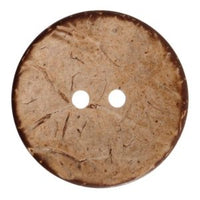
If the shell's origin cannot be confirmed, consider corozo (the tagua palm nut, collected from the ground without felling the tree), coconut shell (a by-product of the coconut industry) or wood. They offer a natural look and a supply chain that is simpler to explain.
The Bul-tex natural buttons collection includes trochus, akoya and river shell buttons, along with corozo buttons and coconut buttons. For details on a specific style or a large order, contact us. More on materials is in our button articles.