Hook and loop tape types vary far more than most people realise. The fastener shows up on kids' shoes, workwear cuffs, backpacks, medical braces and uniform patches, but behind the generic "Velcro" name (actually a trademark that became a household word) are very different products: sew-on and self-adhesive, woven and moulded hooks, narrow and wide, soft and stiff. Choosing the wrong one gives you tape that peels off within a week, scratches the skin or lets a bag pop open with every step. This guide explains how the types differ and how to pick the right one for your product.
The two sides: hook and loop
Every hook and loop fastener has two parts, sold separately or as a set:
- Hook side – the stiff, rough tape covered in thousands of tiny hooks. It does the gripping.
- Loop side – the soft, fuzzy tape with small loops. It gets gripped.
The rule for garments: put the soft loop side on the part that touches the skin or other clothes, and the hook side on the flap that closes over it. That way the hooks do not scratch the wearer or snag knits in the wash.
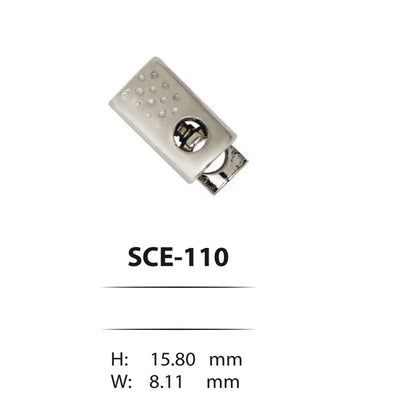
 Metal cord and elastic stoppers 110 – single hole (5 mm), dotted design
 Sewing thread red No. 80
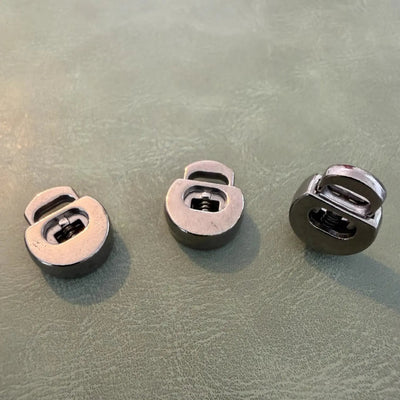
 Metal stopper E-2131 Gun Metal 1.5 cm – Single hole, Round padlock-style model
Woven vs moulded hooks
Woven hooks
The hooks are formed from monofilament yarns woven into the base and then cut. The tape is flexible, soft and easy to sew. It suits clothing, footwear, accessories and anything that bends.
Moulded hooks
The hooks are moulded from plastic together with the base. The profile is low, the grip is strong and clean, and the surface feels less scratchy. Moulded hooks are used in medical products, nappies, packaging and technical applications that need high strength in a thin profile.
Attachment methods
| Type | How it is fixed | Pros | Cons | Best for |
|---|---|---|---|---|
| Sew-on | Stitched around the edge | Strongest, survives washing | Needs a machine | Garments, bags, backpacks |
| Self-adhesive, rubber-based | Peel and stick | High initial tack | Weakens with heat and moisture | Indoor use, card, plastic |
| Self-adhesive, acrylic | Peel and stick | Better heat and moisture resistance | Takes about 24 hours to reach full strength | Metal, glass, outdoor use |
| Iron-on | Heat-activated with an iron | No sewing | Not for all fabrics, weak in the wash | Patches, light decoration |
Tip: self-adhesive tape is not for washable garments. Water and detergent break down the adhesive, and if you try to sew it, the glue gums up the needle and the machine starts skipping stitches.
Widths
The most common widths are 16, 20, 25, 38 and 50 mm, with 100 mm and wider for technical uses. In the trade the tape is usually sold in 25 m rolls. As a rough guide:
- 16–20 mm – cuffs, kids' clothing, small flaps, baby bibs;
- 25 mm – the all-rounder for garments, pocket flaps, footwear;
- 38–50 mm – workwear, backpacks, straps, braces, uniform patches;
- 100 mm – technical products, upholstery, packaging.
Strength and durability
Holding power depends on the contact area, the hook type and the direction of load. The tape is strongest in shear – when the two sides try to slide past each other – and weakest in peel, when it is lifted from an edge. For standard industrial hook tape, manufacturers quote shear strength in the region of 14 lb per square inch (roughly 1 kg/cm²) and a life ranging from thousands to more than 20,000 open-close cycles, depending on the type.
The practical takeaway: if the fastener must carry weight, increase the area and design it so the load is in shear, not peel.
Typical applications
Clothing
Jacket cuffs, pocket flaps, waist adjusters, kids' clothes and shoes, name patches on workwear. On childrenswear, hook and loop is a safe alternative to cords in the neck area.
Bags and backpacks
Flaps, internal dividers, cable and bottle holders. Here width and strength matter more than softness.
Medical products
Braces, supports and blood pressure cuffs, which use low-profile moulded hooks and soft loops that do not irritate the skin.
Special types
- Back-to-back tape – hooks on one face and loops on the other of a single tape. Used for cable ties, bundling and adjustable straps.
- Stretch loop tape – the soft side is woven with elastic yarn so it moves with the body. Good for braces and sports accessories.
- Flame-retardant tape – for protective and workwear where every material must meet flame-resistance requirements.
- Self-engaging tape – hook and loop functions on the same surface, so two pieces of the same tape grip each other.
Common mistakes
The most common mistake is using self-adhesive tape on something that will be washed. The second is a tape that is too narrow for a load-bearing spot, such as a backpack flap over a laptop. The third is the hook side facing the body: it scratches skin, ladders tights, tears knits and collects lint. The fourth is cheap tape with a low hook density that loses grip noticeably after a few hundred openings. For production runs, ask for a sample and test it on the real product before ordering the full quantity.
Quick selection checklist
- Will the product be washed? If yes – sew-on tape only.
- Does it flex? If yes – woven hooks.
- What load does it carry? For weight – a wider tape loaded in shear.
- Skin contact? Soft loop side towards the body.
- Colour – white, black or matched to the fabric.
Sewing supplies and trims from Bul-tex
Bul-tex manufactures and supplies garment trims. To sew hook and loop tape you need strong polyester sewing threads, and our accessories collection has cord locks, aglets, rings and adjusters that often sit alongside hook and loop closures on bags and sportswear. If you are preparing a production run and need a full trim package, get in touch. To learn how to sew the tape on by machine, see our accessories articles.