Types of belt buckles are usually described by shape and colour – round, rectangular, gold, gunmetal. For a designer or a workroom, though, something else matters more: how the buckle holds the strap. The mechanism decides whether a belt adjusts smoothly or in steps, whether it slips under load, how quickly it wears the leather, and whether it works with your chosen material at all. In this guide we treat buckles not as decoration but as small machines – prong, roller, centre-bar, slide, friction, interlocking, cam and side-release.
Start with the vocabulary
- Frame – the outer outline the strap passes through. Its inner opening sets the maximum strap width.
- Bar – the cross piece the strap folds around and is stitched to. It can sit at the back edge or in the middle of the frame.
- Prong (tongue) – the moving pin that goes into the belt holes.
- Roller – a rotating cylinder on the front edge of the frame.
- Keeper (loop) – a separate loop behind the buckle that holds the loose end.
If you need to know how to stitch or rivet a buckle onto a belt, browse our accessories articles – here we focus purely on mechanisms.
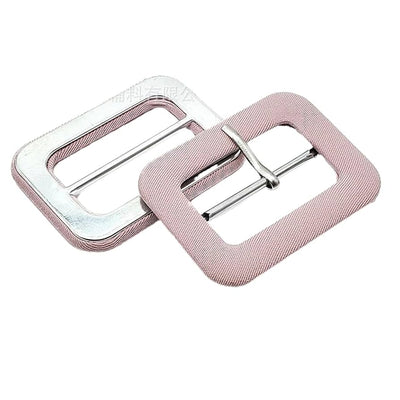
 Rectangular fabric-covered slim buckles FCB0003 – 5 cm
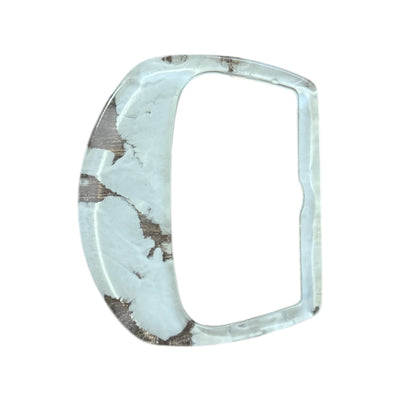
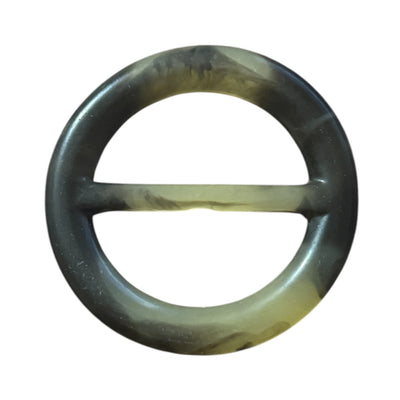
 Polyester buckles PB 0002
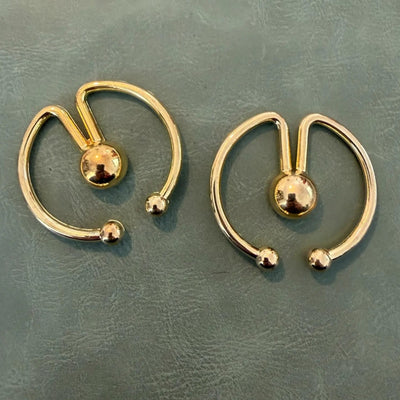
 Metal buckle E-2312 Gold-tone 4 cm – Sea Snail Shape, Designer buckle for Belts and Clothing
The mechanisms, one by one
1. Classic prong buckle with heel bar
The most common type: the bar sits at the back of the frame, the strap folds around it and the prong goes through the holes. Adjustment is stepped – usually 2.5 cm between holes. It is simple, strong and intuitive. The downside is that the whole load sits on one hole, so thin or soft leather stretches there over time. For 3–4 cm belts this is the default construction.
2. Roller buckle
The front edge of the frame is replaced by a rotating cylinder. When you pull the belt, the strap rolls over it instead of dragging across fixed metal. The result is less friction, easier fastening and slower wear on both the leather and the plating. Roller buckles are the natural choice for thick leather (3.5–4 mm), work belts and the equestrian tack they originally came from.
3. Centre-bar buckle
The bar carrying the prong runs through the middle of the frame, and the strap folds around it. The frame is symmetrical – like two half-rings facing each other. It looks heavier and more traditional and is common on uniforms, western belts and bag straps. Bonus: the load is spread more evenly because the strap bears on both sides of the frame.
4. Frame (slide) buckle without prong
A frame with a bar but no tongue. The strap passes through and is held by friction or by a keeper. Adjustment is stepless, with no holes. You see it on dress and coat belts that are tied or tucked, on fabric belts and on straps. Keep in mind that without a prong it cannot hold much tension – it is closer to a decorative guide. Fabric-covered buckles are almost always of this type.
5. Plate buckle
A solid plate with a hook or stud on the back that engages a hole in the belt. The face is free for engraving, a logo or relief, which is why it is the favourite for branded belts. The weak spot: the hook is small, and with a poorly placed hole the belt can come undone.
6. Friction (box) buckle
The strap is clamped between the frame and a moving plate or a toothed bar. It adjusts to the millimetre with no holes. It suits textile webbing of 25–40 mm; on leather the teeth leave marks.
7. Interlocking (two-piece) buckle
Two parts – male and female – that hook into each other. Each is stitched to its own end of the strap, so the length is fixed at the sewing stage. Typical uses: dress belts, swimwear, sandals and shoe straps. It reads as jewellery and needs no holes.
8. Cam buckle
An eccentric lever clamps the strap when closed. Cam buckles come in widths from roughly 25 to 100 mm and are mainly used on load and technical straps, with small versions on backpacks. In apparel they are rare.
9. Side-release buckle
Usually plastic: the male part slides into the female and opens by squeezing two side tabs. It is the standard on backpacks, outdoor gear and dog collars. One-handed and fast, but it does not carry the look of metal.
Quick comparison
| Mechanism | Adjustment | Load | Best for |
|---|---|---|---|
| Prong, heel bar | Stepped (holes) | High | Leather belts 2.5–4 cm |
| Roller | Stepped | High, low friction | Thick leather, work belts |
| Centre-bar | Stepped | High, even | Uniforms, bag straps |
| Frame without prong | Stepless | Low | Dress and coat belts, decoration |
| Plate | Stepped | Medium | Branded belts |
| Friction | Stepless | Medium | Textile webbing |
| Interlocking | None | Medium | Dresses, swimwear, shoes |
| Cam | Stepless | Very high | Technical straps |
| Side-release | Via separate slider | Medium | Backpacks, outdoor |
How to choose: a short decision tree
- Does the belt carry load? If yes (jeans, workwear, a heavy bag strap) – prong, roller or centre-bar. If not (a dress or coat belt) – frame, interlocking or fabric-covered.
- Leather or webbing? Leather works best with a prong and holes; webbing is better with a slide or friction buckle, where there are no holes to fray.
- How often will it be adjusted? Daily – a roller or stepless design. Once – an interlocking buckle.
- Do you need a logo? Plate buckles and wide frames give the largest surface for engraving.
- What width? The inner opening should be 1–2 mm larger than the strap. A "4 cm" buckle takes straps up to 40 mm, not 45.
Tip: with leather over 3.5 mm thick, check the height of the frame opening – leather folded around the bar is twice as thick and often simply will not pass.
Material and plating on moving parts
The moving parts – prong and roller – wear first. On zinc alloy castings the prong needs to be thick enough (at least 2.5–3 mm on a 4 cm belt) or it bends. Plating on the roller edge and the prong tip rubs off fastest, so on everyday belts darker finishes such as gunmetal and antique brass are more forgiving than mirror nickel. If the piece touches skin, look for a nickel-free specification.
What you will find at Bul-tex
Our buckles collection includes metal buckles with and without a prong, interlocking two-piece models, designer shapes for belts and garments, fabric-covered buckles and polyester buckles in several widths. For straps and adjustment add matching rings and sliders, and for fixing the strap use rivets. Planning a logo belt or a buckle in a specific finish for a collection? Get in touch with the strap width, material and quantity.