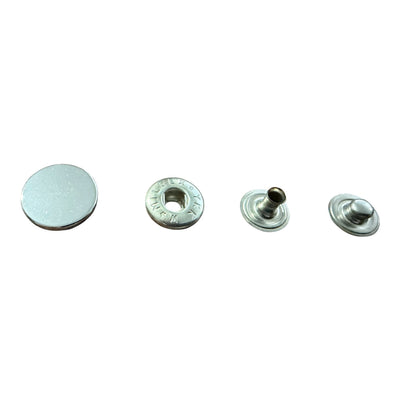
A jeans button nickel allergy is so common that dermatologists recognise it at a glance: an itchy red patch right below the navel, sometimes with tiny blisters or flaking, that won't clear up as long as you keep wearing your favourite pair. The good news is that the cause is clear and the fixes are simple. This guide explains why the rash appears, how to stop it now and what to check before your next purchase.
Why right below the navel?
The back of a jeans button, and the tack that holds it, sits directly on your skin all day. Sweat is slightly salty and acidic, and it dissolves microscopic amounts of nickel from the metal surface. Friction as you move wears away protective lacquer and plating. The result is a steady dose of nickel ions on the same patch of skin, and in sensitised people the immune system responds with allergic contact dermatitis.
Metal on clothing remains one of the main causes of nickel dermatitis. Between 8% and 19% of European adults are allergic to nickel, and women are affected far more often, partly because of earlier and more frequent contact with jewellery and metal accessories.
 BMJ 112 jeans buttons – 18 mm Nickel Free matte
 4-part snap fasteners 9665 – 12.5 mm Nickel Free
 Classic sew-on snap buttons SP517 – 15 and 23 mm Nickel Free
Symptoms: how to recognise a nickel allergy
- Itching and redness matching the size and shape of the button or rivet.
- Small blisters and weeping, later dryness and flaking.
- Darkened or thickened skin with long-term contact.
- The reaction usually appears 12–48 hours after contact and fades slowly.
- Often other clues too: reactions to belt buckles, watch backs or cheap earrings.
Important: this article is not medical advice. If the reaction is severe or persistent, see a dermatologist; a patch test confirms the allergy.
Quick fixes for clothes you already own
1. A fabric barrier
Stick or sew a small cotton circle or an iron-on patch over the inside of the button. Ready-made covers for jeans buttons exist. It's quick and cheap, but needs replacing after a few washes.
2. A clear coating
Paint a thin layer of clear nail varnish or a dedicated barrier coating over the back of the button and tack. Let it dry completely. It wears off over time, so reapply every few weeks.
3. Tuck in your top
The simplest temporary fix: wear a T-shirt or vest tucked into your trousers so there is fabric between the button and your skin.
4. Replace the button (the lasting fix)
A jeans button is fixed with a tack from behind, so it can't be unpicked like a sewn button. A tailor or alterations shop can remove it and fit a new nickel-free jeans button. If you're handy you can do it at home with pliers and a suitable button-and-tack set, though on heavy denim a professional job is safer.
Tip: check the rivets on the pockets, any eyelets and the zip too. If they touch your skin, they can also cause irritation.
How to check your own clothes at home
If you're not sure which garments are to blame, you can test them yourself. Pharmacies sell dimethylglyoxime kits: put a drop of solution on a cotton bud and rub it on the metal for about 30 seconds. If the bud turns pink, the metal is releasing nickel. Check:
- the back of the button and the tack head inside the waistband;
- snaps on shirts, jackets and bodysuits;
- belt buckles and the metal rivets on pockets;
- the zip, if it's metal and touches your skin.
Mark the garments that test positive and apply one of the fixes above. The test is only a screen: a negative result doesn't guarantee that worn plating won't start releasing nickel months later.
Prevention going forward
Skin under a button is more vulnerable when damp, so avoid tight jeans with a metal button during heavy sweating. Wash new clothes before first wear and check labels for nickel-free hardware. If you already have a diagnosed allergy, the rule is simple: no bare metal of unknown origin in prolonged contact with your skin.
What doesn't help
- Washing the button with soap: the nickel comes from the metal itself.
- Wearing it "until you get used to it": nickel allergy doesn't fade with exposure; it tends to get worse.
- Assuming a premium label means safe: not always, so look for a nickel-free claim.
What to look for when buying
- A "nickel free" claim on the label or in the product description.
- A button with a closed back: some models have a plastic or fabric-covered underside.
- Brass or antique brass without nickel plating, which carries less risk than bright nickel-plated silver buttons.
- Drawstring or adjustable waistbands instead of a metal button if you are highly sensitive.
For makers and small brands
If you make jeans, trousers or childrenswear, the button you choose is your responsibility to the customer. In the EU, metal parts in prolonged skin contact must release less than 0.5 µg/cm² of nickel per week. The safest route is to specify jeans buttons and snaps marked Nickel Free from the start, so you don't depend on the plating staying intact. For more detail, see our articles on snap fasteners.
FAQ
Why didn't my jeans bother me before, but they do now?
Sensitisation can develop at any point, and one strong exposure, such as a new pair with a nickel-plated button, can be enough to trigger it.
Do silver-coloured buttons always contain nickel?
No, but many are nickel-plated. A silver look can also be achieved with nickel-free plating.
Can my baby react to a bodysuit with snaps?
Yes, if the snaps release nickel. For baby and childrenswear, choose nickel-free snaps only.
Can I swap the metal button for a plastic one?
A regular sew-on button in plastic or corozo is safe, but a jeans waistband is designed for a metal button with a tack. If you prefer a sewn button, the tailor should reinforce the spot so it takes the strain.
Bul-tex stocks jeans buttons, snap fasteners and eyelets, including Nickel Free models. For production quantities, get in touch and we'll help you choose skin-safe trims.