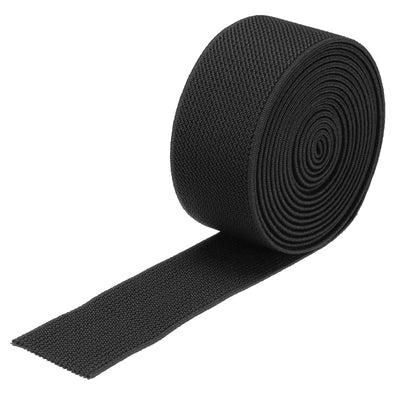
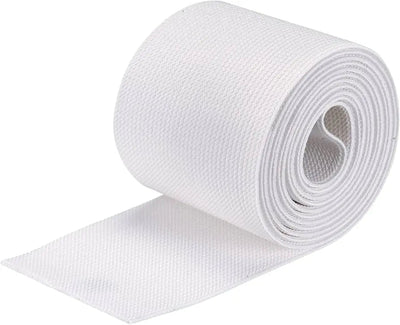
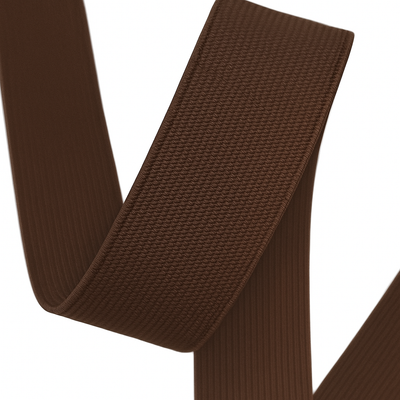
Elastic makes trousers and skirts comfortable, but it stretches out over time. The good news is that replacing it is easy. Here are three ways to insert elastic.
What width of elastic to choose
- 1–2 cm – pajamas, children's trousers, underwear;
- 2.5–3 cm – women's trousers and skirts;
- 4–5 cm – sweatpants, trousers with a wide waistband;
- 6–10 cm – belts, corsets, support garments.
For a waistband, woven elastic is most commonly used – it does not twist and retains its shape.
Method 1: Elastic in a casing (the easiest)
- Fold the top edge of the trousers twice, 0.5 cm wider than the elastic, and sew it, leaving a 3–4 cm opening.
- Attach a safety pin to the end of the elastic and thread it through the casing.
- Overlap the ends of the elastic by 2 cm and sew them with a zigzag stitch.
- Sew the opening shut.
Method 2: Directly sewn elastic
Divide the elastic and the waistband into 4 equal parts and mark them. Attach the elastic to the inside of the waistband at the marked points and sew with a zigzag stitch, stretching the elastic between the points. Suitable for sportswear and underwear.
Method 3: Replacing an old elastic
Unpick 3–4 cm of the inner waistband seam, cut the old elastic, and sew the end of the new one to the old one. Pull out the old one – the new one will follow into place.
How long should I cut the elastic?
Waist circumference minus 5–10% (for a snug fit) plus 2 cm for overlapping.
Frequently asked questions
Woven or knitted elastic for trousers?
Woven is more stable and does not narrow when stretched – it is better for waistbands.