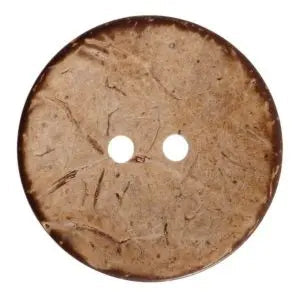
Coconut buttons are natural buttons made from the hard shell of the coconut. They have a warm brown colour, a slightly fibrous texture and a unique natural grain – no two buttons are exactly alike. That makes them a favourite for linen shirts, summer clothing, knitwear and any design where you want a relaxed, natural look.
How coconut buttons are made
The coconut shell is cleaned and cut into plates, and discs are punched out of them. The buttons are then drilled (usually with 2 or 4 holes), sanded and polished. Some are finished with a thin layer of wax or lacquer for an even sheen. Because the shell is only so thick, coconut buttons tend to be thin and light, with a gentle curve that follows the shape of the nut.


Benefits of coconut buttons
- Natural material – ideal for linen, cotton, hemp and wool, where plastic would look out of place;
- Light yet tough – the shell is very hard and does not break easily in the wash;
- One-of-a-kind look – each button has its own shade and pattern;
- Neutral colour – brown tones go with white, beige, green, blue and almost every earthy shade.
Sizes and what to use them for
Coconut buttons come in a wide range of sizes. Here is a quick guide:
| Size | Approx. ligne (L) | Use |
|---|---|---|
| 9–12 mm | 14–18 L | Shirts, blouses, kids' clothing |
| 15–18 mm | 24–28 L | Cardigans, dresses, summer jackets |
| 20–22 mm | 32–36 L | Jackets, knitted cardigans, trousers |
| 25–34 mm | 40–54 L | Coats, ponchos, decorative accents |
At Bul-tex you'll find coconut buttons with 2 and 4 holes from 9 to 18 mm, as well as larger 25–34 mm models for coats.
2 holes or 4 holes?
Two-hole buttons look simpler and are quicker to sew – great for shirts and lightweight garments. Four-hole buttons sit more securely and do not tilt, so they are better for cardigans, jackets and anything buttoned often. On knitwear, leave a small thread shank under the button to make room for the thick fabric.
Caring for garments with coconut buttons
- Wash at a low or medium temperature (up to 40 °C) – long soaking in hot water can dry out and fade the material;
- Avoid bleach and harsh detergents;
- Iron on the reverse side or around the buttons rather than pressing directly on them;
- If the buttons lose their sheen, rub them lightly with a drop of oil or beeswax.
Coconut or wooden buttons?
Both materials are natural, but they differ in look and behaviour. Coconut buttons are thinner, harder and have a distinctive fibrous texture with tiny dark specks, so they look finer on shirts and summer clothes. Wooden buttons are usually thicker with a smoother grain, which suits knitwear and children's clothing. If you are sewing a linen shirt or a summer dress, go for coconut; for a chunky knitted cardigan, choose wood or a larger four-hole coconut button. If in doubt, place the button on the fabric and check how it looks in daylight.
Frequently asked questions
Can coconut buttons go in the washing machine?
Yes, on a normal cycle up to 40 °C. Avoid very high temperatures and long soaking.
Will all buttons in one order be the same colour?
Not exactly – as a natural material, each button varies slightly in tone and grain. That is part of their charm.
Are they suitable for children's clothing?
Yes, they are light and have no sharp edges. Sew them on firmly and check regularly that the thread has not loosened.
Browse all coconut buttons, compare them with our other natural buttons, or explore the full buttons collection.