Metal or plastic zipper – it's a choice everyone faces when making or mending jeans, a jacket or a bag. All three main types – metal, coil (nylon) and moulded plastic – close reliably, but they differ in strength, weight, flexibility and look. Here is a quick comparison and specific recommendations for the most common projects.
The three types at a glance
- Metal zipper – individual metal teeth (brass, aluminium or nickel) clamped onto a woven tape. Classic, rugged look; handles heavy loads.
- Coil (nylon) zipper – a continuous spiral of polyester or nylon monofilament stitched to the tape. Light, flexible and quiet.
- Moulded plastic zipper – chunky individual plastic teeth injection-moulded straight onto the tape. Strong, light and resistant to moisture and cold.
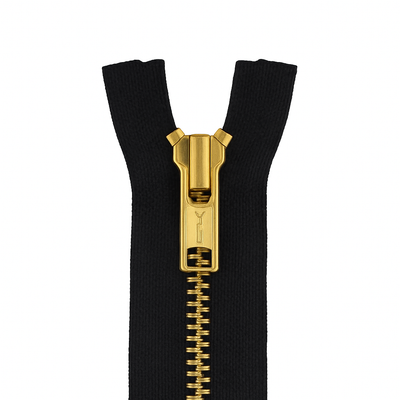
 Metal closed-end zipper orange / gold teeth T5 PMZ1004
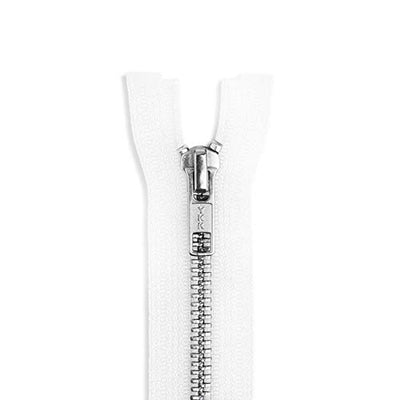
 Metal closed-end zipper white / silver teeth T5 PMZ0001
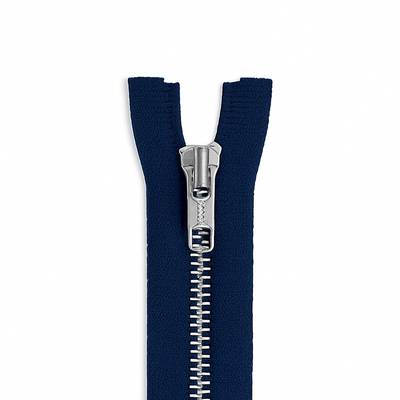
 Non-separable metal zipper green / silver teeth T5 PMZ0009
Comparison
| Feature | Metal | Coil | Moulded plastic |
|---|---|---|---|
| Strength | very high | good | high |
| Weight | heaviest | lightest | light |
| Flexibility | low | very high | medium |
| Hot washing | excellent | good | good |
| Moisture and salt resistance | depends on the metal | excellent | excellent |
| Repair if it splits | harder | easy (often just a new slider) | moderate |
| Works on curves | no | yes | limited |
Which zipper for jeans
The standard for jeans is a closed-end No.5 metal zipper, usually 15–20 cm long. It survives frequent washing, ironing and the strain of sitting, and the metal finish – silver, gold or antique – matches the rivets and jeans button. Coil zips appear on lighter trousers and children's jeans, but for heavy denim metal is the longer-lasting option.
Which zipper for jackets
- Denim or leather jacket – a metal separating zip for an authentic look.
- Sports and winter jackets – a No.5–No.8 moulded plastic zip: light, won't freeze and doesn't feel cold to the touch.
- Hoodies and fleece – a No.5 coil separating zip that flexes with the soft fabric.
Which zipper for bags and backpacks
For bags, load is the deciding factor. For backpacks, holdalls and shoppers, go for moulded plastic or metal No.5 and up. For pouches, purses and small cases, a No.3 coil is enough – it follows curves and soft corners. A metal zip with a decorative puller gives leather and fabric bags a finished look.
Which zipper for dresses, skirts and cushions
Here the No.3 coil zipper almost always wins – light, quiet and discreet, and as an invisible zip it disappears into the seam completely. Metal zips are used only as a visible design feature, for example down the back of a dress in a heavier fabric.
How to make your zipper last longer
- Close the zipper before washing and turn the garment inside out – the teeth won't snag other clothes and the slider won't get bent.
- Don't force the zip while the fabric is under tension – bring both sides together with your hand first, then close it.
- If a metal zip runs stiffly, rub the teeth with pencil graphite or a piece of wax and run the slider up and down a few times.
- Never press a coil or plastic zip directly with a hot iron – put a cloth over it.
- If the zip starts splitting behind the slider, the slider has usually spread – gently squeeze both sides with pliers before replacing the whole zipper.
Frequently asked questions
Is a metal zipper stronger than a plastic one?
At the same gauge metal has the highest tensile strength, but moulded plastic comes very close and is lighter. For everyday clothing, both are strong enough.
Do metal zippers rust?
Good-quality brass or aluminium zips don't rust with normal washing. It's a good idea to close them before washing so they don't snag other clothes.
Are coil and nylon zippers the same thing?
Yes. "Coil" describes the shape of the teeth and "nylon" the material. The terms are often used interchangeably.
See our metal zippers with silver and gold teeth, plus all our zippers. For jeans you'll also find matching jeans buttons.