Metal buttons rusting is one of the most frustrating faults on clothing: a reddish stain around a jacket snap, a darkened rivet on your jeans or a greenish film on a brass blazer button. The cause is almost never simply "bad metal". It is a combination of material, plating quality and storage conditions. This troubleshooting guide explains which metals rust and which merely tarnish, what triggers corrosion and how to prevent it, both at home and in garment production.
Rust, tarnish or white corrosion: what are you looking at?
Different metals corrode in different ways, and the type of defect points to the cause:
| What you see | Likely metal | What is happening |
|---|---|---|
| Red-brown spots that stain the fabric | Iron and plain steel (springs, tacks, inner parts) | True rust: iron oxide that transfers to the fabric |
| Darkening, brown or black tone | Brass, copper, silver | Surface oxidation, a patina that is usually harmless |
| Greenish film | Brass and copper in damp, salty conditions | Copper salts (verdigris), which can mark fabric |
| White powdery deposit, flaking finish | Zinc alloy (Zamak) | Zinc corrosion under damaged plating |
| No change even after years | Stainless steel, anodised aluminium | A passive protective layer |
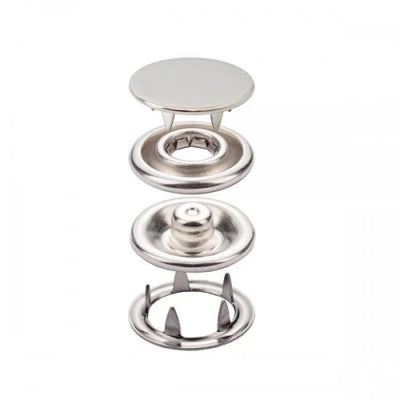
Note that snaps and jeans buttons are often made of several metals. The visible cap may be brass while the socket spring or the tack is steel. If that steel part is poorly plated, it rusts first, even when the button face looks perfect.
 Concealed snap fasteners 202D 13 mm nickel-free with hidden caps
 Snap fasteners E-2278 Gun Metal 40 mm – 4 pieces, "Teardrop" design, Luxury model
 Special HK 305 ring-type snap fasteners – 18 mm and 22 mm, Gun Metal
The main causes of rust on buttons
1. Moisture and poor drying
Moisture is the biggest enemy. Clothes left wet in the washing machine, folded damp into a wardrobe or stored in a basement create ideal conditions for corrosion. A sealed plastic bag with a slightly damp garment inside is especially risky.
2. Chlorides: sweat, sea water, pools
Salt speeds up corrosion dramatically. Sweat contains sodium chloride, sea water far more, and chlorinated pool water is aggressive on top of that. That is why rusty buttons are a common complaint on swimwear, beach shirts and sports jackets.
3. Damaged plating
Plating is the only protection steel and zinc have. A scratch, a knock during setting or abrasion in the wash opens a window for corrosion to get under the layer. From there it spreads and the finish starts to flake.
4. Polluted air and harsh products
Sulphur dioxide, dust and heat accelerate oxidation. Bleach, strongly alkaline detergents and some fabric softeners also attack plating.
5. Contact between dissimilar metals
When two different metals touch in the presence of moisture, for example a steel spring and a brass cap, they form a tiny galvanic cell and the more active metal corrodes faster.
Prevention at home: eight rules
- Take clothes out of the washing machine as soon as the cycle ends.
- Dry them completely in a well-ventilated place before putting them away.
- Close snaps and zips before washing so they knock against the drum less.
- Wash garments with metal hardware inside out, with a mild detergent and no bleach.
- After the beach or pool, rinse the garment in clean water before it dries.
- Don't store clothes in plastic bags or damp rooms.
- For long-term storage, wrap metal buttons in paper or a cotton cloth.
- At the first sign of rust, replace the button before it stains the fabric.
Tip: if there is already a rust stain around a button, treat it straight away, because the longer it sits the harder it is to shift. But remember that it will come back as long as the rusting button stays on the garment.
Prevention for brands and garment factories
Choice of material
For garments that will get wet, such as swimwear, beachwear, workwear, childrenswear and outdoor clothing, choose hardware whose inner parts aren't plain steel. Stainless steel performs far better in wet, salty and high-humidity use, while brass and aluminium don't rust at all, although brass will tarnish.
Plating quality
Ask your supplier about the number of layers, the lacquer and the neutral salt spray (ISO 9227) result. A difference of a few dozen hours in that test is often the difference between a button that lasts the season and one that rusts after its first summer.
Setting
Set up your snap press correctly. Too much force cracks the plating on the socket and spring; too little leaves a loose joint that rubs. Use the correct dies for each size.
Packing and warehousing
Never pack garments that aren't fully dry after washing or steam pressing. Add silica gel to cartons for long sea freight, because container condensation is a classic cause of rust before the goods even reach the shop.
A simple sample test before bulk production
If you don't have access to a lab, you can run a rough check in the workroom. Attach a few sample buttons to a piece of the actual fabric. Dampen the fabric with salt water (about a teaspoon of salt per cup of water), seal it in a box and leave it at room temperature for 48 hours. Then look for:
- red or brown marks on the fabric around the button;
- white deposits or blistering on the finish;
- any colour change on the snap socket and spring.
It doesn't replace a salt spray test, but it quickly weeds out weak samples. Repeat it after the sample has been washed a few times to see how the finish copes once the lacquer has worn.
FAQ
Can a rusty button be saved?
Surface tarnish on brass can be cleaned. True rust on steel parts, however, means the plating has failed, and the reliable fix is replacement.
Why does only one half of a snap rust?
The socket with the spring usually contains steel while the stud does not, and the spring also takes the most stress when the snap is closed.
Does stainless steel really never rust?
In normal wear, practically never. Prolonged contact with chlorine and salt can cause occasional pitting, but it is rare.
Browse Bul-tex snap fasteners, eyelets and metal buttons. If you already have stains on a garment, see our button care articles. For hardware designed for damp conditions, get in touch.