The REACH nickel release limit is one of the few chemical rules that hits every brand selling clothing in the EU directly: the jeans button, the snaps on a baby bodysuit, the pocket rivets and the metal zip must all release no more than 0.5 µg of nickel per cm² per week. This guide explains in plain language what the rule says, which parts are in scope, who is responsible and which documents to request from your trim supplier.
Where the restriction comes from
The rule isn't new. It dates back to the 1994 Nickel Directive (94/27/EC), introduced because nickel allergy had become so widespread. In 2009 the requirements were moved into Regulation (EC) No 1907/2006, REACH, as entry 27 of Annex XVII. Since then they have applied directly and identically in every member state. The full text is published on EUR-Lex.
 BMJ 112 jeans buttons – 18 mm Nickel Free matte
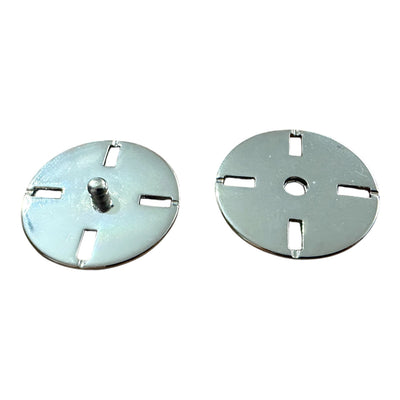
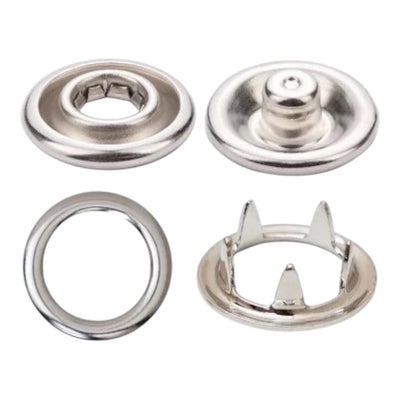
 Classic sew-on snap fasteners 20-405006 – 10 mm Nickel Free
 Luxury sew-on snap buttons MC 333 – 23 mm, 24 mm, and 25 mm Nickel Free
What the rule says: three limits
| Type of article | Nickel release limit |
|---|---|
| Piercing posts inserted into pierced parts of the body during healing | 0.2 µg/cm²/week |
| Articles in direct and prolonged skin contact, including buttons, rivets, zips and metal marks on garments | 0.5 µg/cm²/week |
| Articles with a non-nickel coating | The coating must keep release below 0.5 µg/cm²/week for at least two years of normal use |
The key point is that REACH restricts nickel release (migration), not nickel content. A button with a nickel underlayer can be fully compliant if the top layers and lacquer keep release below the limit. Conversely, a button that looks bright and well made may fail.
Which garment parts are in scope
The REACH text explicitly lists rivet buttons, tighteners, rivets, zippers and metal marks when used in garments. In practice brands should review every metal part that can touch the skin:
- Jeans and trouser buttons, especially the back and the tack.
- Snap fasteners on bodysuits, shirts, jackets and underwear.
- Decorative rivets on pockets and seams.
- Metal zips: teeth, slider and stops.
- Eyelets, rings and buckles on belts and straps.
- Metal labels and badges sewn on the inside.
- Hooks and eyes on bras and lingerie.
What "direct and prolonged contact" means
The European Chemicals Agency (ECHA) publishes guidance on interpretation. In summary, contact is considered prolonged if the article touches the skin for more than 10 minutes on three or more occasions within two weeks, or for 30 minutes or more on one or more occasions within two weeks. For clothing, that covers almost any metal part that can touch the body during wear. A decorative button on the outside of a coat usually isn't in prolonged contact, but a waistband button and the snaps on a baby bodysuit certainly are.
Practical approach: if you're not sure whether a part is in scope, treat it as if it is. The cost of compliant hardware is small compared with the risk.
How compliance is tested
EN 1811: the nickel release test
This is the reference method. The article is immersed in artificial sweat for one week at a controlled temperature, then the nickel released per unit area is measured and compared with the limit, taking measurement uncertainty into account.
EN 12472: simulated wear
For coated articles, accelerated wear and corrosion simulating roughly two years of use is carried out before the EN 1811 test. It checks that the protective layer won't wear through and expose nickel underneath.
The dimethylglyoxime spot test
Useful for goods-in checks: a cotton bud turning pink indicates nickel release. It is a screening tool only and does not replace a lab report.
Who is responsible
Under REACH, responsibility lies with anyone placing the article on the EU market: the garment manufacturer, the importer and the distributor. For a fashion brand that means the brand answers to market surveillance authorities and customers, even when the hardware was bought from a third party. The button supplier is responsible for its own product but cannot control how it is used, which is why the documentary chain in your contracts matters so much.
Products with excessive nickel release turn up regularly in Safety Gate, the EU rapid alert system. The consequences for a brand are recalls, returns and reputational damage.
Documents to request from your trim supplier
- A declaration of conformity with REACH Annex XVII entry 27 for the specific item and finish.
- An EN 1811 test report (for coated parts, preceded by EN 12472) from an accredited lab, ideally recent and for the same finish.
- An SVHC declaration stating whether the item contains Candidate List substances above 0.1%.
- An OEKO-TEX Standard 100 certificate, where available, which includes nickel release testing for metal accessories.
- Batch identification: item and colour code, so you can link each document to a delivery.
Keep these documents with the technical file for each style. If an authority checks, you will need to show quickly on what basis you accepted the hardware as compliant.
Brand checklist
- List every metal part on every style.
- Flag the ones in prolonged skin contact.
- For those, require a nickel-free or documented nickel-compliant finish.
- For baby and childrenswear, lingerie and jeans waistbands, prefer nickel-free.
- Test samples after several washes, since lacquers and platings wear.
- Repeat checks whenever the supplier, finish or colour changes.
FAQ
Does the limit apply to goods sold online?
Yes. Any article made available on the EU market, including through a webshop, must comply.
Is gunmetal, antique brass or gold automatically compliant?
No. These are colours, not chemistries. The specific plating and its test result decide.
Do I need to test every batch?
The regulation doesn't set a frequency, but good practice is to test each new item, new supplier or finish change, plus periodic spot checks.
Bul-tex manufactures and supplies trims for brands and offers models marked Nickel Free, including snap fasteners, jeans buttons, buckles and metal zips. For production runs with compliance requirements, contact us.