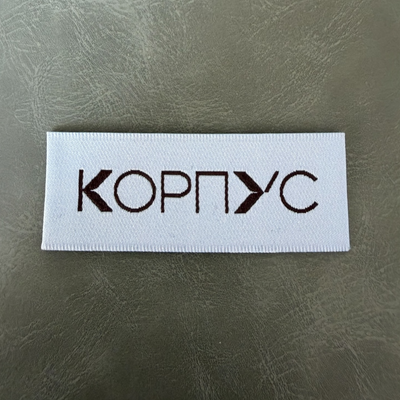
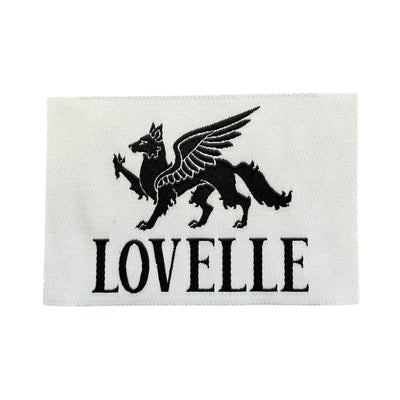
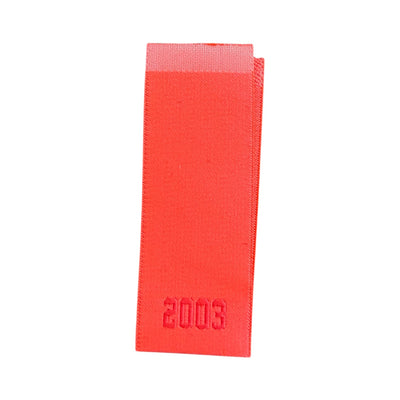
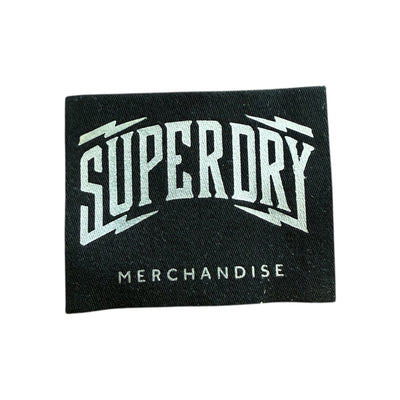
Taffeta vs damask vs satin labels is the first technical decision you face when ordering a woven label for your brand. All three are woven on jacquard looms, but they differ in yarn thickness, weaving density and the way light falls on the surface. The result is a difference in detail, softness, sheen and price. In this article we compare the three side by side and give you a table that tells you at a glance what suits your product.
The three types in brief
Taffeta
Taffeta is the simplest and most economical weave. It uses thicker yarns at lower density, so the surface is slightly coarser and fine details have rougher edges. Taffeta is excellent for size labels, simple wording and care instructions where the text is fairly large. As a rule of thumb, keep fonts above about 7 pt.
Damask
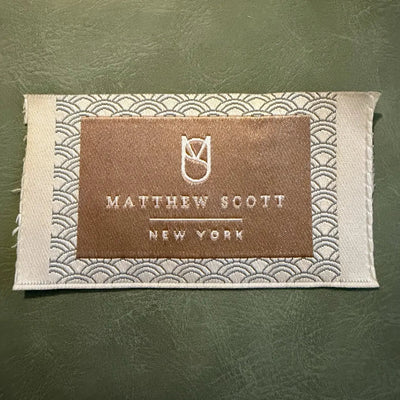
Damask uses many fine, low-denier yarns woven at high density. The result is the highest detail, the smoothest surface and the softest handle of the three. That's why damask is the standard for brand labels on premium clothing, lingerie and children's wear. Small lettering, thin lines and intricate logos come out cleanest on damask.
Satin weave
A satin-weave label has its base woven in a satin structure, with long floating yarns that give a smooth, glossy surface. Density is higher than taffeta but lower than damask, so detail is medium. It's chosen mainly for its sheen and softness and suits eveningwear, lingerie and elegant accessories.
Don't confuse a satin-weave label with a printed satin label. On the first the image is woven in; on the second it's printed onto satin tape.
 Jacquard woven label LBL 0037 9 x 4 cm – white with black design, woven letters, soft premium style, with logo
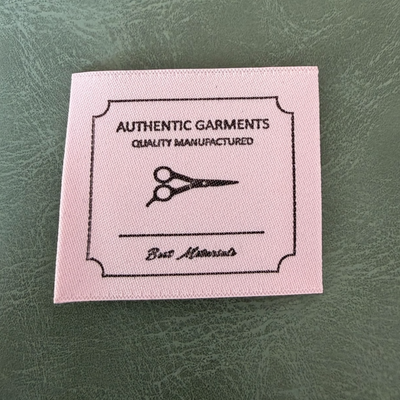
 Jacquard woven label LBL 0058 4 x 3.5 cm – pink base with black letters, soft premium design, with logo
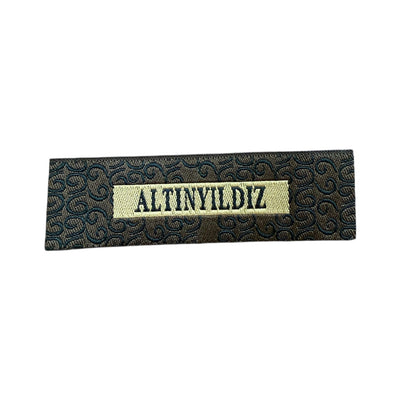
 Jacquard woven label LBL 0024 8 x 4.5 cm – gold effect, premium wavy design, with logo
Comparison table
| Feature | Taffeta | Satin weave | Damask |
|---|---|---|---|
| Density | Low | Medium | High |
| Detail | Low, simple text | Medium | Highest, small text and fine lines |
| Softness | Firmer | Soft | Very soft |
| Sheen | Matt | Glossy | Slight lustre or matt |
| Minimum text (guide) | About 7 pt and up | About 6 to 7 pt | About 6 pt |
| Cost | Lowest | Medium | Highest |
| Typical use | Sizes, care, workwear | Lingerie, eveningwear, accessories | Brand labels, premium and kidswear |
Which label for which product
| Product | Recommendation | Reason |
|---|---|---|
| Branded T-shirts and sweatshirts | Damask | Soft at the neck, crisp logo detail |
| Baby and children's clothing | Damask | Softest option, gentle on skin |
| Lingerie and nightwear | Damask or satin weave | Softness and an elegant look |
| Workwear and uniforms | Taffeta | Economical and durable, large text |
| Size labels | Taffeta or damask | Simple symbol, high volume |
| Evening dresses, scarves | Satin weave | Sheen that matches the fabric |
| Denim, jackets, bags | Damask or a metal label | Detail and toughness under heavy use |
| Multilingual composition | Printed satin label | Fits lots of text in a small area |
Decide in three questions
- How small is the smallest element in your design? If you have text under 7 pt or thin lines, rule out taffeta and go for damask.
- Will the label touch the skin? If so, choose damask or satin weave with a fold or a sealed edge.
- How much does unit cost matter? For large runs of workwear or size labels, taffeta saves money with no visible loss of quality.
Details that matter more than the weave
Edge finishing
Woven labels are cut with a hot knife or ultrasonically, which seals the edge so it won't fray. Cut edges can feel firmer, though. For neck labels consider a fold, whether end fold, centre fold or mitre, so the cut edge disappears into the seam.
Number of colours
Whatever the weave, the best results come from 2 to 5 yarn colours. More colours thicken the label in places and make the design look busy.
Effects
Metallic yarns, neon colours and raised lettering are all possible, but they look best on a dense base such as damask. Our catalogue includes jacquard labels with a gold effect, silver lettering and double-sided designs.
What happens to one logo in three weaves
Take an example: a logo with the brand name at 9 pt, a thin underline and a small mark above it, on a 5 x 2.5 cm label. On damask every element comes out clearly: crisp letter edges, an unbroken line and a mark that keeps its shape. On satin weave the name and mark look good, but the line may be slightly uneven and the glossy base softens the contrast. On taffeta the name is still readable, but the thin line will probably need thickening and the mark simplifying. The takeaway: if your design is minimal and bold, taffeta is perfectly adequate; if it relies on fine detail, damask is the only safe choice.
Questions customers often ask
Can I mix types within one collection?
Yes, and that's normal practice: damask for the brand label, taffeta or printed satin for size and care. Just coordinate the base colours so the collection looks consistent.
Is damask always better?
Not always. For simple, large text, taffeta does the same job for less. Damask is worth it when you have fine detail or the label is visible and touches the skin.
How long do woven labels last?
All three usually last as long as the garment, because the image is made of yarn rather than ink.
Woven labels from Bul-tex
Bul-tex manufactures and supplies woven and jacquard labels with the customer's logo, as well as printed satin and canvas labels. See real designs and sizes in our labels collection, and for decorative touches our satin and grosgrain ribbons. If you're not sure which weave to pick, send us your artwork and we'll recommend the right one. You'll find more tips in our label articles.