Snap fasteners for jackets have to cope with far more strain than those on shirts – thick layers, wadding, being fastened with gloves on and constant pulling as you move. That makes the choice of system, size and reinforcement critical. Here is how to pick snaps for a jacket, parka or coat that will last for years.
What makes a snap right for a jacket
- Strong hold – the snap should not come undone in the wind or when you bend over.
- A long post – it must pass through every layer (shell, lining, interfacing) and still leave room to close.
- A durable finish – gunmetal, black oxide and antique finishes hide scratches better.
- Ease of use – a larger cap is easier to grip with gloves.
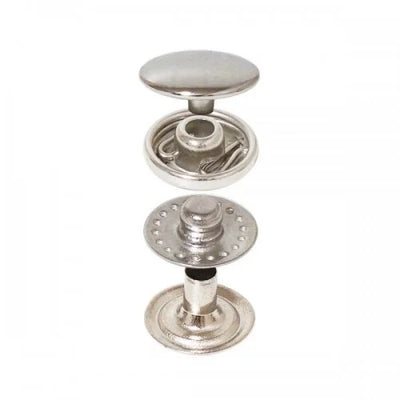
 Snap fasteners 0009 – standard
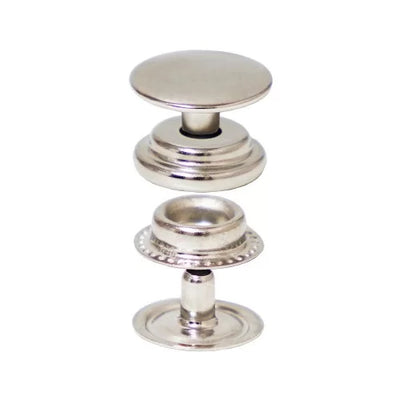
 Snap fasteners 0012 - 61 system / cap
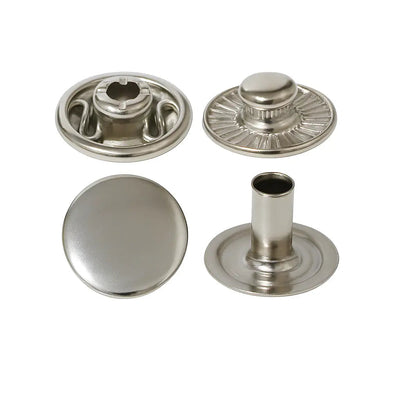
 Snap fasteners 0013 - 61 system with flat cap
Systems: spring vs. ring spring
Outerwear usually uses four-part snaps. There are two main socket designs:
- S-spring snaps – a bent wire inside the socket grips the stud. They suit light jackets, windbreakers and gilets.
- Ring-spring snaps (the "61 system") – a sturdier design with a much stronger hold. It is the standard on denim jackets, workwear and winter jackets. At Bul-tex you will find the domed Snap 0012 in 12.5 to 20 mm and the flat-cap Snap 0013 in 15 and 17 mm.
For the heaviest materials such as canvas, oilcloth and thick leather there are dedicated models, like the 21 mm Chico PS 0001 made for heavy garments, tarpaulins and umbrellas.
Size by jacket type
| Garment | Recommended size |
|---|---|
| Windbreaker, light shell | 12.5–15 mm |
| Denim jacket, work jacket | 15–17 mm |
| Parka, winter jacket, heavy coat | 17–22 mm |
| Pocket flaps and cuffs | 12.5–15 mm |
| Decorative front, overcoat | 22–25 mm |
How to reinforce the fabric
The most common reason a jacket snap pulls out is not the snap itself but torn fabric around it. So:
- Add interfacing or an extra strip of fabric between the layers where the snap goes.
- Never set a snap through wadding or down – remove the filling at that spot or work in a stitched-off strip.
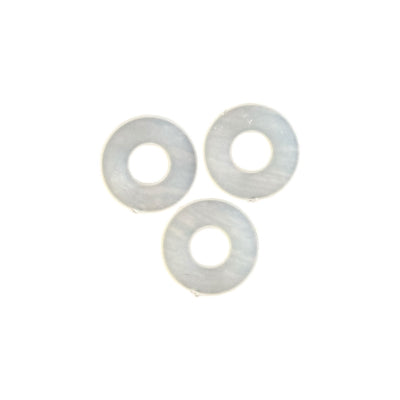
- On thin or slippery materials, use plastic washers for snap fasteners – they spread the load and protect the fabric.
- Keep at least 1.5 cm from the fabric edge.
Colour and finish for outerwear
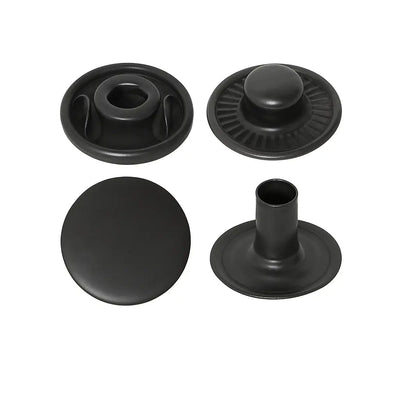
On a jacket the snaps are front and centre, so colour matters as much as strength. Silver tones look clean on sporty and technical jackets. Gunmetal is the classic for denim and workwear, while black oxide is perfect for dark parkas and leather jackets because it almost disappears. Gold and antique finishes add character to coats and fashion pieces. If the jacket has a metal zip, match the snaps to it.
Think about care as well. Jackets are washed less often but face rain and road salt in winter. Snaps with a quality finish and a nickel-free alloy will not rust or stain the fabric. At the end of the season, dry the jacket thoroughly and store it unfastened so the springs keep their shape.
Frequently asked questions
How many snaps does a jacket front need?
Usually 5–7 snaps spaced 7–10 cm apart. Parkas with a zip and storm flap often have 4–6 snaps on the flap.
Can I combine a zip and snaps?
Yes, that is the classic set-up – the zip closes the jacket and the snaps hold the windproof flap over it. Choose a zip and snaps in the same metal tone.
Why does my jacket snap keep opening?
Usually the spring has weakened or the snap is too small for the fabric. Replace it with a ring-spring model or a larger diameter.
Choose sturdy models from our snap fasteners, and to complete the jacket browse the zips (including metal zips) and eyelets at Bul-tex.