Zinc alloy vs brass buttons is the first real decision any designer faces when specifying metal buttons for a blazer, coat, pair of jeans or bag. Once plated, the two metals look almost identical, yet they feel different in the hand, behave differently in the wash and age very differently over years of wear. This comparison walks through composition, weight, casting detail, corrosion behaviour and cost, and finishes with a decision table by garment type.
What the two metals actually are
Brass
Brass is an alloy of copper and zinc. Copper content varies widely, from roughly 60.5% up to 97%, with zinc making up most of the rest. More copper means a warmer, redder tone and a more ductile metal. Button makers usually work with alloys in the 63–70% copper range because they stamp and deep-draw well from sheet without cracking. Brass has a density of about 8.4–8.5 g/cm³, so a solid brass button feels noticeably heavy.
Zinc alloy (Zamak)
In the trims industry, "zinc alloy" almost always means Zamak: zinc with around 4% aluminium plus small additions of magnesium and sometimes copper. It melts at about 380–390 °C, which makes it ideal for high-pressure die casting into steel moulds with excellent precision. Its density is about 6.6–6.7 g/cm³, so for the same volume a zinc button is roughly 20% lighter than solid brass.
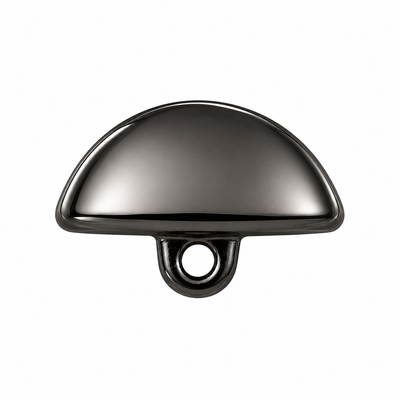
 M020 Gun Metal Brass Buttons – 20 mm for coats and jackets
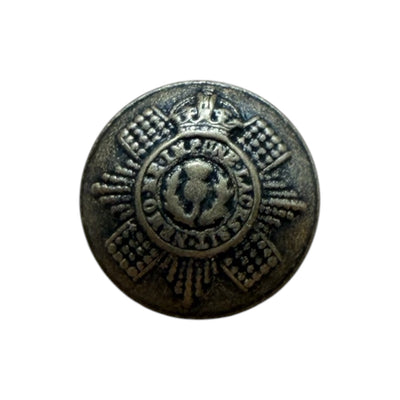
 Black brass metal buttons 24051 – 20 mm for jackets, suits, and coats
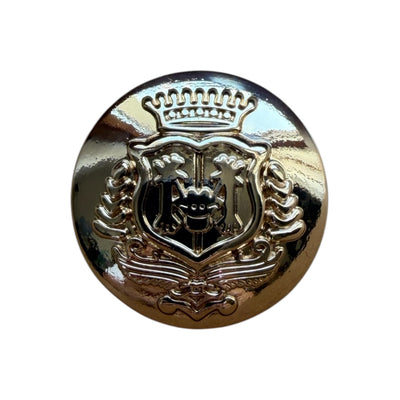
 Gold brass metal buttons 7-M020 Col 406 – 20 mm for designer clothing
Side-by-side comparison
| Criterion | Zinc alloy (Zamak) | Brass |
|---|---|---|
| Process | Die cast in a steel mould | Stamped from sheet or cast; often a hollow two-piece button |
| Detail and relief | Excellent: crests, logos, 3D shapes, fine lettering | Good when stamped, more limited for complex volumes |
| Weight | Medium, dense casting | Solid is heavy; stamped hollow is light |
| Corrosion | Depends entirely on plating quality | Develops a patina, more durable long term |
| Polishing after years | No, grey zinc lies under the plating | Solid brass can be polished |
| Cost for complex designs | Lower | Higher |
| Typical uses | Fashion buttons with relief, buckles, decorative parts | Classic blazers, uniforms, jeans buttons and rivets |
Detail: why Zamak wins on complex shapes
Molten zinc alloy fills even the finest recesses of a mould, so crests, monograms, woven-look textures and sculpted logos come out crisp and repeatable from the first piece to the ten-thousandth. The same design in brass would need more expensive tooling or thicker sheet, pushing up the unit price. That is why most designer buttons with rich relief are zinc alloy, and how brands get an intricate shape at a sensible cost.
Corrosion: where brass has the edge
Over time brass darkens and forms a patina, a thin oxide layer that largely protects the metal beneath. Zinc is more reactive: once the plating cracks or wears through, white corrosion appears and the finish starts to flake. Put simply, the durability of a zinc button is the durability of its plating, meaning layer thickness, number of layers and lacquer. A well-plated Zamak button lasts for years; a cheaply plated one shows its weakness after a handful of washes.
Tip: if a garment will be washed often at 40–60 °C or worn in damp conditions, ask about the plating build-up and lacquer, not just the base metal.
Weight and perceived quality
Customers tend to equate weight with quality. A solid 20 mm zinc alloy button has enough heft to sit confidently on a jacket. Brass blazer buttons, on the other hand, are often stamped from thin sheet and hollow. They are light but very tough, because brass is a resilient metal. If you want the lightest possible hardware for a linen jacket or a shirt, hollow brass is an excellent choice.
Nickel and skin contact
Both metals are usually electroplated, and many classic finishes contain nickel. What matters is not the core metal but whether the finished part meets the EU REACH nickel release limit of 0.5 µg/cm² per week for items in prolonged skin contact. For waistband buttons, jeans and childrenswear, choose models marked Nickel Free.
How to check a sample before you order
Whichever metal you choose, a few simple checks on the sample will save you disappointment in bulk:
- Weigh ten buttons and compare them with another supplier's: a big difference at the same size reveals hollow versus solid construction.
- Inspect the edge and shank for sharp flash that could cut the sewing thread.
- Wash the sample several times at the temperature on the garment's care label and see whether the finish changes colour.
- Compare the colour with the other metal parts, such as the zip, eyelets and buckles, in daylight.
- Ask about the finish: is it lacquered, and has it been tested for nickel release?
That way you will know whether a zinc alloy button is properly plated, or whether a brass model is solid or hollow, before you pay for thousands of pieces.
Decision table by garment type
| Product | Recommendation | Why |
|---|---|---|
| Jeans and workwear | Brass, or steel with a brass cap | Copes with abrasion, washing and waistband stress |
| Blazers and suits | Brass (classic) or zinc alloy with a crest | Brass for a traditional look, Zamak for detailed relief |
| Coats | Zinc alloy, 22–25 mm, with a shank | Volume and weight at a reasonable price |
| Bags and accessories | Zinc alloy | Complex shapes, logos and buckles |
| Childrenswear | Nickel-free finish, lighter models | Skin safety and lower weight |
| Nautical and summer lines | Lacquered brass or stainless parts | Better tolerance of moisture and salt |
FAQ
Can I tell brass from zinc by eye?
Not once it is plated. Weight, the supplier's specification and, on solid parts, a scratch in a hidden spot will tell you: brass shows yellow metal underneath, zinc alloy shows grey.
Is zinc alloy a "cheap" material?
No. It is the fashion industry standard for detailed buttons and buckles. Quality comes down to the casting, the finishing and the plating.
Which should my brand choose?
Decide on function first (stress, washing, skin contact), then on looks. Often the best answer is a mix: brass for the jeans, zinc alloy for decorative pieces.
Browse our metal and other buttons, jeans buttons and snap fasteners, and find more ideas in our button articles. Bul-tex manufactures and supplies trims for brands and takes orders for logo buttons, so get in touch with your design and quantities.