The country of origin label on clothing is one of the most debated topics among small brands: should it say "Made in Bulgaria", "Made in EU" or nothing at all? The short answer is that the European Union has no general obligation to put "Made in" on apparel. The longer answer is more interesting, because if you choose to show origin it must be accurate and not misleading, and for some export markets, the US in particular, origin is compulsory. This article compares the rules and gives you a simple decision tree.
What EU law says
No mandatory "Made in" for clothing
Regulation (EU) 1007/2011 only covers fibre composition and says nothing about country of manufacture. There is no general harmonised EU requirement for origin marking on non-food consumer products either. The European Parliament backed a proposal for compulsory "Made in" labels on textiles from non-EU countries back in 2011, but it never became law, and a later attempt in the product safety package was not adopted either.
But the claim must not mislead
The Unfair Commercial Practices Directive 2005/29/EC treats false or deceptive information about a product's geographical or commercial origin as a misleading practice. In other words, "Made in" is voluntary, but if you use it, it has to be true. A "Made in Italy" label on a garment where the only Italian step was sewing in the label is a textbook example of a problem.
Please note: this article summarises the general rules and is not legal advice. For a specific product or export, check with a customs broker or lawyer.
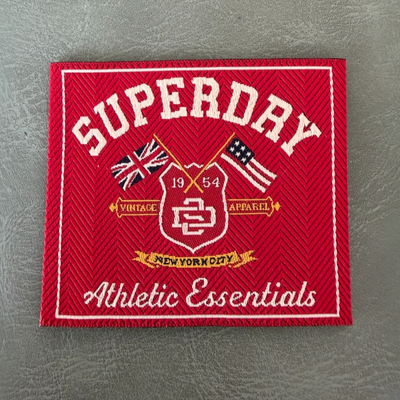
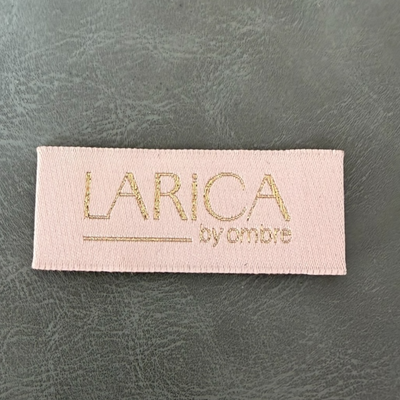
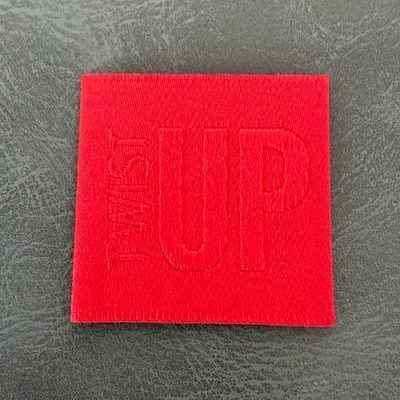
 Woven label 8 cm x 4 cm – jacquard, folded
 Woven label 9 cm x 4.5 cm – for brands
 Jacquard woven label LBL 0039 5.5 x 4.5 cm – branded design with woven letters, soft premium style, with logo
How origin is determined for a garment
The question we hear most often: the fabric comes from Turkey, the thread from Italy and the garment is sewn in Bulgaria, so where is it from? For customs purposes the EU applies non-preferential origin rules. The basic principle is that goods produced in more than one country originate where the last substantial, economically justified processing took place. For apparel in chapters 61 and 62 of the customs nomenclature, the list rules in Delegated Regulation (EU) 2015/2446 generally require "complete making-up", meaning all operations after the fabric is cut.
In practice, if you cut, sew and finish the garment in Bulgaria, it is normally considered made in Bulgaria even with imported fabric. If you only add buttons or a label to a finished garment, that is not enough.
EU vs US at a glance
| Question | European Union | United States |
|---|---|---|
| Is origin mandatory on the label? | No, generally voluntary | Yes, for textile products |
| Mandatory fibre composition? | Yes (Reg. 1007/2011) | Yes (Textile Act) |
| Language | Official language of the country of sale | English |
| Manufacturer identification | Manufacturer or importer details under product safety law | Company name or RN number |
| Misleading origin claims | Prohibited (Directive 2005/29/EC) | Prohibited, enforced by the FTC |
In the US, the Federal Trade Commission requires apparel to show its country of origin. A garment sewn in the US from imported fabric would say something like "Made in USA of imported fabric". So if you sell into the US, "Made in Bulgaria" on the label stops being optional. The FTC's own guide, Threading Your Way Through the Labeling Requirements, covers the US side in detail.
Decision tree: should I add "Made in"?
- Selling only within the EU?
- You don't want to state origin: that's fine. Focus on composition and manufacturer details.
- You do want to state it: keep going.
- Was the garment fully cut and sewn in the country you want to name?
- Yes: "Made in [country]" is justified.
- No, it was only finished or labelled there: don't use that country. Name the real country of making-up.
- Want to highlight materials?
- Use precise wording such as "Sewn in Bulgaria from Italian fabric". Avoid vague phrases like "Italian quality" if they create a false impression.
- Exporting to the US or another market with an origin requirement?
- Yes: origin is mandatory, so check the exact wording for that market.
Tip: keep records of your supply chain, such as fabric invoices and your contract with the sewing workshop. If anyone questions your "Made in" claim, they are your evidence.
Is "Made in EU" usable?
Yes, some brands use "Made in EU", especially when the supply chain spans several member states. For customs purposes origin is normally a single country, but in marketing "Made in EU" is common. Keep in mind that shoppers often expect a specific country, and "EU" can sound vague. If production is entirely in Bulgaria, "Made in Bulgaria" is the stronger message.
Where to put origin on the garment
"Made in" usually sits on the care and composition label, but many brands also add it to the main brand label, for example a woven logo label with a bottom line reading "Made in Bulgaria". Jacquard labels work especially well here because the text is woven in and won't fade. Another option is a metal label for denim and bags – a stock E-series label with laser engraving, or a custom shape with a moulded relief logo. Browse our labels and accessories, and for a custom label with your logo and origin line contact us; Bul-tex manufactures labels to the customer's design. If you're curious how labels are produced, see our manufacturing articles.
Frequently asked questions
Will I be fined for not having "Made in" on clothing sold in Bulgaria?
Generally no, because origin marking on apparel isn't mandatory in the EU. What is mandatory is the composition in Bulgarian and the manufacturer or importer details.
Can I write "Designed in Bulgaria" if the garments are sewn abroad?
That is a true statement if the design really was created in Bulgaria. Just make sure your packaging and website don't suggest that manufacturing also happens there.
I sew garments in Bulgaria from Turkish fabric. Can I say "Made in Bulgaria"?
If you cut and sew entirely in Bulgaria, the general rule for apparel normally supports it. For a specific export, confirm with a customs broker.